
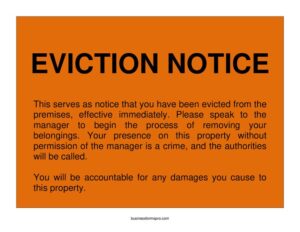
Eviction Notice
Free eviction notice template in PDF & DOCX. See what an eviction notice is, the types, how to write and serve one correctly, and download a printable copy.
PDF
DOCX
1 downloads
0
likes
Download Files
- DOCX
An eviction notice is the formal written warning a landlord gives a tenant before starting the legal process to remove them from a rental property. It states why the tenancy is ending and how long the tenant has to act. Download the free eviction notice below in PDF or DOCX, fill it in, and serve it correctly. No signup or email required.
What Is an Eviction Notice?
An eviction notice — also called a notice to quit or notice to vacate — is the first formal step in ending a tenancy. It tells the tenant what the problem is, what they must do to fix it if a cure is allowed, and the deadline to comply or move out. Importantly, the notice itself does not remove anyone. It’s the document a landlord must serve *before* asking a court for an eviction order. Skipping or botching this step is one of the most common reasons an eviction case is dismissed and has to start over.
Types of Eviction Notices
The right notice depends on why you’re ending the tenancy:
- Pay rent or quit — used when rent is overdue. It gives the tenant a set number of days to pay the balance or move out.
- Cure or quit — used for a fixable lease violation, such as an unauthorized pet or guest. The tenant is given time to correct the problem.
- Unconditional quit — used for serious issues like major damage or repeated violations, where no chance to fix is offered (allowed only in certain situations and states).
- No-cause or end-of-term — used to end a month-to-month tenancy or decline to renew, where the tenant hasn’t done anything wrong but you’re ending the arrangement.
When Do You Need an Eviction Notice?
- A tenant has fallen behind on rent and you must give formal notice to pay or quit
- A tenant has broken a lease term — unauthorized pets, subletting, or property damage
- You’re ending a month-to-month tenancy and need to give proper notice
- You need a dated, documented record before filing in court
- A tenant is holding over, staying past the end of the lease without permission
How to Fill Out an Eviction Notice
- Enter the date and the tenant’s full name and rental address.
- State the reason for the notice — nonpayment, a specific lease violation, or end of term — clearly and factually.
- If it’s rent-related, list the exact amount owed and how the tenant can cure it (pay by the deadline), if a cure period applies.
- Give the deadline — the number of days the tenant has to pay, fix the issue, or vacate. This number is set by your state and local law.
- Add a line noting the tenant is responsible for any property damage and explaining the next step if they don’t comply.
- Sign and date, keep a copy, and serve the notice using a method your jurisdiction allows.
How Much Notice Must You Give?
There’s no single national answer — required notice periods are set by state and local law and depend on the reason. Pay-or-quit notices are often short (commonly 3 to 5 days), while no-cause notices to end a month-to-month tenancy are frequently 30, 60, or even 90 days. Using the wrong number is a frequent, costly mistake, so always confirm the current requirement for your state and city before you serve.
How to Serve an Eviction Notice
Serving means officially delivering the notice in a way the law recognizes — typically personal delivery to the tenant, posting it on the door (often combined with mailing), or certified mail. Whatever method your state allows, keep proof: a photo of the posted notice, a certified-mail receipt, or a witness. If the case goes to court, you’ll need to show the notice was served properly and on time.
Common Mistakes to Avoid
- Using the wrong notice period for your state or the reason
- Being vague about the violation or the amount owed
- Trying to remove a tenant yourself instead of letting the court process run
- Serving the notice improperly or keeping no proof of service
- Accepting partial rent after serving, which can reset the process in some states
What Happens After the Deadline
If the tenant pays, fixes the violation, or moves out by the deadline, the matter usually ends there. If they don’t, the notice has done its job and you can move to the next stage: filing an eviction lawsuit — often called an unlawful detainer — with your local court. From there, a judge, not the landlord, decides the case, and only law enforcement can carry out a removal if the court orders one. Never change the locks, remove a tenant’s belongings, or shut off utilities to force someone out. These “self-help” evictions are illegal in most states and can expose you to fines and damages even when the tenant is clearly in the wrong. Following the formal process protects you as much as it does the tenant, and a properly written, properly served notice is the foundation the whole case rests on.
Frequently Asked Questions
What is an eviction notice? It’s a landlord’s formal written notice telling a tenant why their tenancy may end and how long they have to pay, fix the issue, or move out. It precedes any court action.
How do I write an eviction notice? Include the date, tenant name and address, the reason, any amount owed, the deadline set by your state, and your signature. The template above covers each part.
Do you have 30 days after an eviction notice? Not always. Notice periods range from a few days for unpaid rent to 30+ days for no-cause notices, depending on your state and the reason. Check your local rules for the exact timeline.
Can I pay rent after an eviction notice? Often yes, within a pay-or-quit cure period — paying the full amount by the deadline usually stops the process. Once a court case is filed, rules vary, so act quickly and get any agreement in writing.
How do you serve an eviction notice? Use a method your state allows — personal delivery, posting on the door, or certified mail — and always keep proof of how and when you served it.
How much does an eviction notice cost? This template is free. Court filing fees, if you proceed to eviction, are separate and set by your local court.
Related Forms
Late Rent Notice · Notice to Vacate · Lease Termination Letter · Notice of Overdue Rent · Security Deposit Return Letter
This template is provided for general informational purposes only and is not legal advice. Eviction rules vary by state and city — consult a qualified attorney or your local court for your situation.
Official resource: for the rules that apply to your situation, see HUD.
Related Forms
- Notice of Overdue Rent
- Consent To Assignment Of Lease
- Tenant Utilities Increase Letter
- Agreement On Tenant Alterations To Rental Unit
- Landlord Maintenance Request
- Request for Landlord Repairs
Browse more in Landlord Documents.