
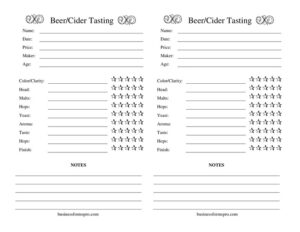
Beer Cider Tasting Log
Record beer and cider tastings with this free Beer Cider Tasting Log template covering aroma, malts, hops and finish — free download in PDF and DOCX.
PDF
DOC
1 downloads
0
likes
Download Files
- DOC
A Beer Cider Tasting Log is a structured sheet for recording your sensory impressions of each beer or cider you sample, from its color and head to its aroma, malts, hops, and finish. People most often use it to remember which brews they loved and why, so they can rebuy favorites and refine their palate over time. It’s free to download here in PDF and DOCX, with no signup required.
What Is a Beer Cider Tasting Log?
A Beer Cider Tasting Log is a tasting record that captures the appearance, smell, flavor, and overall character of a single beer or cider in one organized place. It’s used by hobbyist drinkers, homebrewers, beer club members, and aspiring judges who want to evaluate brews systematically rather than relying on memory. Each entry documents identifying details like the beer’s name, maker, price, and age alongside structured sensory fields for color, clarity, head, aroma, and taste. By logging these notes consistently, you build a personal reference library that reveals your preferences, tracks how a cellared beer changes with age, and sharpens your ability to describe what’s in the glass.
When Do You Need a Beer Cider Tasting Log?
This log fits a wide range of situations where remembering the details matters more than a quick mental note. Consider reaching for one when:
- You’re attending a beer or cider festival and want to compare a dozen samples without confusing them later.
- You belong to a tasting club and need consistent notes to share and discuss with fellow members.
- You’re a homebrewer evaluating your own batches against commercial benchmarks to improve future recipes.
- You’re cellaring bottles and want to track how aroma, taste, and finish evolve as each one ages.
- You’re studying for a beer judging or cicerone-style certification and need to practice structured sensory evaluation.
- You simply want to keep a running record of new releases so you know which ones to buy again.
What a Beer Cider Tasting Log Should Have
A complete tasting entry separates objective identification from subjective sensory impressions. Identification fields — name, maker, date, price, and age — let you find and rebuy the exact product. Appearance fields like color, clarity, and head describe what you see before the first sip. Flavor-building fields capture the contributions of malts, hops, and yeast, while aroma and taste record your nose and palate impressions. The finish notes how the beer leaves the mouth, and a free-form notes area ties everything together with overall impressions, food pairings, or whether you’d buy it again. Good logs keep these categories distinct so each entry is easy to scan and compare.
How to Fill Out a Beer Cider Tasting Log
- Enter the Name of the beer or cider exactly as it appears on the label, including the style if listed.
- Record the Date you tasted it so you can track aging and seasonal releases.
- Note the Price you paid, which helps judge value for money later.
- Write the Maker — the brewery or cidery — to group entries by producer.
- List the Age, such as the bottling date, vintage, or how long you’ve cellared it.
- Describe Color/Clarity, from pale straw to deep mahogany, and whether it’s bright, hazy, or cloudy.
- Note the Head: its color, size, texture, and how long it retains.
- Record the Malts you detect — bready, caramel, roasty, or biscuity character.
- Note the Hops in the body: citrus, pine, floral, or earthy notes and bitterness level.
- Capture Yeast contributions such as fruity esters, spicy phenols, or clean fermentation.
- Describe the Aroma you smell before drinking, then the Taste on the palate.
- Note the Hops again as they appear in flavor and aftertaste, then the Finish — dry, sweet, lingering, or crisp — and finally add overall Notes.
Building a Useful Tasting Vocabulary
The value of a tasting log grows with consistency, and consistency starts with the words you use. For appearance, settle on a reliable scale for color (straw, gold, amber, copper, brown, black) and clarity (brilliant, clear, hazy, cloudy). For aroma and taste, lean on descriptors that match the field categories — malt terms like toast, caramel, and chocolate; hop terms like grapefruit, mango, resin, and grass; and yeast terms like banana, clove, or barnyard for certain styles. Cider tasters can adapt these to apple-forward notes such as tart, jammy, tannic, or funky. Using the same vocabulary across entries makes your log searchable in your own memory: when you later crave a “resiny, dry-finish” IPA, your notes point you straight to the right bottle.
Beer Versus Cider Notes
While the same log serves both drinks, the fields read a little differently for each. For beer, malts, hops, and yeast are the core building blocks, and head retention is a meaningful quality cue. For cider, you’ll often repurpose the malt and hop lines to describe apple variety character, sweetness, tannin, and acidity, while yeast notes capture fermentation funk or fruitiness. The aroma, taste, finish, and color fields apply cleanly to both. Treat the structured fields as flexible prompts rather than rigid requirements — the goal is a complete, comparable picture of what’s in your glass.
Common Mistakes to Avoid
- Tasting too many in a row — palate fatigue dulls your senses, so rinse with water and rest between samples.
- Leaving the maker or age blank — without them you can’t reliably rebuy or track how a beer ages.
- Writing only “good” or “bad” — vague notes help no one; describe specific aromas and flavors instead.
- Serving at the wrong temperature — too cold mutes aroma and flavor, skewing your impressions.
- Skipping the appearance step — color, clarity, and head reveal a lot before you ever taste.
- Forgetting to date entries — dates anchor your notes to releases, batches, and cellaring timelines.
Frequently Asked Questions
What is a Beer Cider Tasting Log used for? It’s used to record structured sensory impressions of each beer or cider you try, including appearance, aroma, taste, and finish. The log helps you remember favorites, track how brews age, and develop a more refined palate over time. It works equally well for casual enjoyment and serious evaluation.
How do I fill out the malts, hops, and yeast fields? These fields prompt you to identify the flavor contributions of each ingredient: bready or caramel notes for malts, citrus or pine for hops, and fruity or spicy character for yeast. Use simple descriptors that make sense to you, and try to stay consistent across entries. For ciders, repurpose these lines for apple variety, tannin, and fermentation character.
Do I need to be an expert to use this log? Not at all. The fields are designed to guide beginners through a logical tasting sequence, from what you see to what you smell, taste, and feel in the finish. As you log more entries, your descriptions naturally become more detailed and confident.
What’s the best order to evaluate a beer or cider? Start with appearance — color, clarity, and head — then bring the glass to your nose for aroma. Take a sip to assess taste, the interplay of malts, hops, and yeast, and finally note the finish. Recording details in this order keeps your impressions organized and repeatable.
Can I use this log for both beer and cider? Yes, the template covers both. The appearance, aroma, taste, and finish fields apply directly to either drink, while the malt, hop, and yeast lines flex easily to describe cider’s apple, sweetness, and acidity characteristics.
How much does this Beer Cider Tasting Log cost? It’s completely free to download here in both PDF and DOCX formats, with no signup or payment required. Print it for a tasting event or edit the DOCX version to add your own fields and rating scales.
This template is a general example provided for informational purposes only and is not professional advice. Tasting preferences, serving practices, and applicable regulations vary by location — please drink responsibly and follow local laws.
Related Forms
- Coin Collector Log
- Publication Submission Tracker
- Photo Log
- Amateur Radio Station Log
- Cash Envelope Tracker
- Store Opening Procedure Checklist
Browse more in Log and Inventory.