
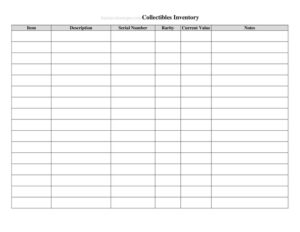
Collectibles Inventory
Track and document your collection with a free Collectibles Inventory template, available as a PDF and DOCX free download for insurance and resale.
PDF
DOCX
6 downloads
0
likes
Download Files
- DOCX
A Collectibles Inventory is a simple but powerful document that records every item in your collection along with its details, condition, and value. People most commonly use it to keep an organized record for insurance, estate planning, or resale, and you can get started right away with our free Collectibles Inventory template available as a PDF and DOCX download with no signup required.
What Is a Collectibles Inventory?
A Collectibles Inventory is a structured list that documents the items in a collection — coins, stamps, comic books, trading cards, action figures, vinyl records, sports memorabilia, antiques, or fine art. It is typically maintained by the collector, but it may also be created by an appraiser, estate executor, or insurance agent. The inventory captures identifying details for each piece, such as its description, acquisition date, purchase price, current value, and condition. By gathering everything in one place, the document turns a scattered hobby into a verifiable asset record. It serves as proof of ownership, a basis for insurance coverage, and a reference point when buying, selling, or passing items on to heirs.
When Do You Need a Collectibles Inventory?
Whether your collection fills a single display case or several rooms, a written inventory protects your time, money, and memories. Common situations include:
- Insuring your collection — insurers often require an itemized list with values before issuing or paying out on a policy covering valuables.
- Filing a claim after theft, fire, or flood — a detailed inventory with photos and values speeds up reimbursement and reduces disputes.
- Estate planning and probate — heirs and executors need to know what exists, where it is, and what it’s worth.
- Buying or selling — a clear record of condition and provenance supports fair pricing and builds buyer trust.
- Tracking appreciation over time — recording purchase price against current value shows how your collection performs as an asset.
- Lending or displaying pieces — when items leave your possession for a show or loan, an inventory confirms what went out and came back.
Types of Collections This Inventory Suits
The template is intentionally flexible so it works across hobbies. Coin and stamp collectors can log grade, year, and mint mark in the description. Comic and trading-card collectors can note issue numbers, sets, and slab grades. Antique and art collectors can record artist, era, and provenance. Memorabilia and toy collectors can capture authentication details and packaging condition. Whatever you collect, the same core columns — description, value, condition, and location — keep everything consistent and easy to scan.
What a Collectibles Inventory Should Have
A complete and useful inventory generally includes the following for each item:
- A unique item number or ID so entries can be referenced quickly.
- A clear description, including make, model, year, edition, or maker where relevant.
- The category or type of collectible.
- The date acquired and the source or seller.
- The purchase price and the current estimated or appraised value.
- The condition or grade of the item.
- The storage location and any serial numbers, certificates, or photos.
- A notes field for provenance, authentication, or repair history.
How to Fill Out a Collectibles Inventory
Work through your collection one item at a time and complete a single row for each piece:
- Assign an item number. Give every entry a unique ID so you can cross-reference photos, receipts, and certificates later.
- Write the description. Be specific — include the name, maker or artist, year, edition, set, or model number that distinguishes the piece.
- Record the category. Note the type of collectible (coin, card, art, antique) to make sorting and totaling easier.
- Enter the date acquired and source. Document when and where you obtained it, which supports provenance and tax records.
- List the purchase price. Capture what you originally paid as a baseline for tracking gains.
- Add the current value. Use a recent appraisal, market guide, or comparable sale, and note the valuation date.
- Note the condition or grade. Describe wear, defects, or a professional grade so value is supported.
- Record the location and serial/certificate numbers. State where the item is stored and any authentication details.
- Use the notes column. Add provenance, restoration, or anything that affects value, then total the values at the bottom.
Tips for Keeping Your Inventory Accurate
An inventory is only as good as its upkeep. Photograph each item from multiple angles and store the images alongside the file, naming them by item number. Keep digital scans of receipts, certificates of authenticity, and appraisal letters in the same folder. Review values at least once a year, because collectible markets can shift dramatically, and update the valuation date whenever you do. Save a backup copy off-site or in the cloud so a fire or theft does not destroy both your collection and its record. If you maintain the DOCX version, the table format makes it easy to sort, filter, and add new rows as your collection grows.
Inventory vs. Appraisal: What’s the Difference
A Collectibles Inventory is a record you create and maintain yourself, listing what you own and your best estimate of value. A formal appraisal is a valuation performed by a qualified, often credentialed, appraiser and carries more weight with insurers and courts. The two work together: your inventory organizes the collection and flags high-value pieces, while professional appraisals back up the figures for your most important items. For routine tracking the inventory is enough, but for high-dollar or rare pieces, an independent appraisal is worth the investment.
Common Mistakes to Avoid
- Vague descriptions — “old coin” or “comic book” won’t help an insurer or buyer identify the exact item.
- Skipping photos — without images, proving condition and ownership after a loss is far harder.
- Letting values go stale — markets move, so an outdated value can leave you under- or over-insured.
- Storing the only copy with the collection — a single disaster could wipe out both.
- Omitting acquisition details — missing dates and sources weaken provenance and complicate taxes.
- Forgetting to record where items are — large collections spread across rooms, safes, or storage units are easy to lose track of.
Frequently Asked Questions
What is a Collectibles Inventory used for? It is used to document the items in a collection, their condition, and their value in one organized record. Collectors rely on it for insurance, estate planning, resale, and simply keeping track of what they own. It also serves as proof of ownership if items are lost, stolen, or damaged.
How do I fill out a Collectibles Inventory? List one item per row and complete the columns for item number, description, category, date acquired, purchase price, current value, condition, and location. Add serial numbers, certificates, and notes where they apply. Photograph each piece and store the images with the file for the most complete record.
Do I need an appraisal to complete the inventory? No — you can estimate values using price guides, recent comparable sales, or your own judgment. For high-value or rare items, however, a professional appraisal strengthens your records and is often required by insurers. Note the valuation date next to each figure so you know how current it is.
Is a Collectibles Inventory legally binding? The inventory itself is a record rather than a contract, so it is not a binding legal agreement. That said, it can serve as important supporting evidence for insurance claims, estate matters, and ownership disputes. Keeping it accurate and backed by photos and receipts makes it far more useful.
How much does this template cost? It is completely free to download from Business Forms Pro in both PDF and DOCX formats, with no signup or account required. You can print the PDF to fill out by hand or edit the DOCX on your computer. Use and copy it as many times as you need for your collection.
How often should I update my inventory? Review it at least once a year, and update it whenever you buy, sell, or gift an item or get a new appraisal. Collectible markets can change quickly, so refreshing values keeps your insurance coverage and records aligned with reality. Always save a backup copy in a separate location.
This Collectibles Inventory template is provided as a general example for informational purposes only and does not constitute legal, financial, tax, or insurance advice. Requirements and valuation standards vary by jurisdiction and by insurer, so consult a qualified appraiser, insurance professional, or attorney about your specific situation.
Related Forms
- Aquarium Maintenance: Schedule & Free Log
- Auto Maintenance Log
- Telephone Time Tracker
- Auction Sell List
- Employee Covid Vaccine Log
- Evidence Inventory
Browse more in Log and Inventory.