
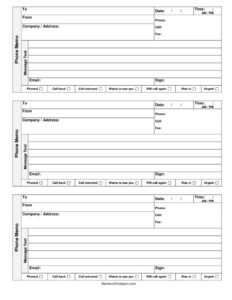
Phone Memo
Use our free Phone Memo template to record callers, messages, and follow-ups so nothing slips through the cracks — free download in PDF and DOCX.
PDF
DOC
0
likes
Download Files
- DOC
A Phone Memo is a simple, structured note used to capture the details of an incoming phone call so the intended recipient knows exactly who called, why, and what action to take. The most common reason people use one is to relay an accurate message when the person being called is away from their desk or on another line. This template is free to download in PDF and DOCX, with no signup required.
What Is a Phone Memo?
A Phone Memo, often called a “while you were out” slip, is a short office document that records the essential facts of a telephone call on behalf of someone who could not take it. It is typically filled out by a receptionist, assistant, or coworker and left on the recipient’s desk or sent electronically. The memo documents who the call was for, who called, their contact details, the time of the call, and what the caller wanted. By standardizing this information, a Phone Memo ensures messages are passed along clearly and consistently, reducing missed callbacks and confusion. It serves as both a reminder and a small record of communication within an office.
When Do You Need a Phone Memo?
A Phone Memo is useful any time a call needs to be documented and handed off. Common scenarios include:
- A receptionist answers a call for a manager who is in a meeting and needs to leave a message.
- A coworker steps away from their desk and you take a call from a client on their behalf.
- You need to relay an urgent request and want a written record so it isn’t forgotten.
- A vendor or customer calls back about an order, and you want to log the contact details for follow-up.
- A busy front desk fields dozens of calls a day and needs a consistent way to track who needs to be called back.
- You want a paper trail showing a message was delivered, including the date and time it was taken.
In each case, the memo bridges the gap between the caller and the recipient, making sure no detail or follow-up slips through the cracks.
What a Phone Memo Should Have
A complete Phone Memo captures both the people involved and the purpose of the call. The key elements include the name of the person the message is to, the date the call came in, who the message is from, and the caller’s contact information — company/address, phone, cell, fax, and email. Just as important are the quick-check action boxes: whether the caller wants to be called back, whether the call was returned, whether they want to see you, whether they will call again, whether they simply were in, and whether the matter is urgent. A signature line confirms who took the message. Together these fields turn a fleeting conversation into a clear, actionable note.
How to Fill Out a Phone Memo
- In the To field, write the name of the person the message is intended for.
- Enter the date the call was received, and add a time if your office tracks it.
- In the From field, write the caller’s full name as they gave it to you.
- Record the caller’s company/address so the recipient knows the context of the call.
- Fill in the caller’s phone, cell, fax, and email as applicable — capturing more than one method makes the callback easier.
- Check the appropriate action boxes: call back, call returned, wants to see you, will call again, or was in.
- Mark the urgent box if the caller indicated the matter needs prompt attention.
- Sign the memo in the sign field so the recipient knows who took the call and can ask questions.
- Deliver the memo promptly — on the desk, by email, or through your office’s usual channel.
Tips for Taking Accurate Phone Messages
The value of a Phone Memo depends on the accuracy of what you write down. Repeat names and numbers back to the caller to confirm spelling and digits before you hang up. Note the time of the call alongside the date, since some messages are time-sensitive and the recipient may need to prioritize. If the caller leaves a detailed request, summarize it in clear, neutral language rather than guessing at intent. When a call is marked urgent, don’t just leave the slip — try to alert the recipient directly if possible. Keeping a small stack of blank memos near each phone makes consistent message-taking effortless across the whole office.
Phone Memo vs. General Memo
It’s worth distinguishing a Phone Memo from a standard office memo. A general memo communicates announcements, policies, or instructions to a group, and is usually written by the sender on their own initiative. A Phone Memo, by contrast, is a record of someone else’s call, written by a third party to be handed to the recipient. The Phone Memo is reactive and contact-focused, built around the caller’s details and the action they expect. Using the right document keeps internal communication tidy and prevents important call details from getting buried in longer memos or email threads.
Common Mistakes to Avoid
- Forgetting to record the date or time, which makes urgent callbacks harder to prioritize.
- Writing the caller’s phone number without confirming it, leading to wasted callback attempts.
- Leaving the action boxes blank so the recipient doesn’t know what the caller actually wants.
- Omitting your own signature, leaving no one to ask if a detail is unclear.
- Summarizing the message inaccurately or adding your own interpretation of the caller’s words.
- Setting the memo aside instead of delivering it promptly, especially when it’s marked urgent.
Frequently Asked Questions
What is a Phone Memo used for? A Phone Memo is used to record the details of a telephone call for someone who could not take it. It captures the caller’s name, contact information, and the reason for the call, then is passed to the intended recipient so they can follow up.
How do I fill out a Phone Memo? Start with the name of the person the message is for and the date of the call, then record the caller’s name and contact details. Check the relevant action boxes such as call back or urgent, summarize the request, and sign the slip before delivering it.
What does “urgent” mean on the memo? The urgent box signals that the caller wants a prompt response and the message should be prioritized over routine ones. When you check it, it’s best practice to alert the recipient directly rather than relying on the slip alone.
Is a Phone Memo a legally binding document? No, a Phone Memo is an internal communication tool, not a contract or legal agreement. It simply documents that a call occurred and what was discussed, which can be helpful as an informal record but carries no binding force.
Should I keep copies of completed Phone Memos? Many offices keep memos briefly as a record of who called and whether the call was returned. Whether you retain or discard them depends on your workplace’s record-keeping practices and the importance of the calls.
Is this Phone Memo template free to download? Yes. You can download this Phone Memo template for free in both PDF and DOCX formats, with no signup required, and customize it to match your office’s needs.
This Phone Memo template is provided as a general example for informational purposes only and does not constitute legal, financial, or professional advice. Office and record-keeping requirements vary by organization and jurisdiction — consult a qualified professional for guidance specific to your situation.
Official resource: for the rules that apply to your situation, see the U.S. Small Business Administration.
Related Forms
- Annual Appointment Reminder Card
- Postal Holidays
- Beauty Salon Appointment
- Room Reservation Form
- 2024 Postal Holidays
- Market Map Services
Browse more in Office.