
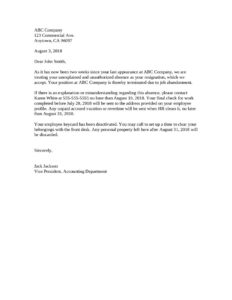
Employee Termination For Job Abandonment
Download a free Employee Termination for Job Abandonment letter template in PDF and DOCX to formally document an employee's unexplained absence.
DOCX
3 downloads
0
likes
Download Files
- DOCX
An Employee Termination for Job Abandonment letter is a formal notice an employer sends to document that an employee has been separated from the company after failing to report to work for a defined period without notice or authorization. It is most commonly used when a worker stops showing up and does not respond to attempts to reach them, leaving the employer no choice but to treat the position as abandoned. This template is free to download in both PDF and DOCX with no signup required.
What Is an Employee Termination for Job Abandonment Letter?
An Employee Termination for Job Abandonment letter is a written communication issued by an employer, usually through human resources or a direct manager, that confirms an employee’s employment has ended because of unexcused, consecutive absences. It documents the dates the employee missed, the company’s attempts to make contact, the policy that defines abandonment, and the effective date of separation. Unlike a standard termination letter tied to performance or conduct, this letter specifically establishes that the employee effectively resigned by abandoning their duties. It serves as an official record for the personnel file, supports decisions about final pay and benefits, and protects the organization if the separation is later questioned by the employee or an unemployment agency.
When Do You Need an Employee Termination for Job Abandonment Letter?
- An employee misses several consecutive scheduled shifts without calling in, requesting leave, or providing any explanation.
- A staff member fails to return from an approved vacation or leave of absence by the agreed date and cannot be reached.
- A worker stops responding to phone calls, emails, and certified mail after repeated outreach attempts by the company.
- An employee verbally suggests they may quit but never formally resigns and simply stops appearing for work.
- A remote or field employee goes dark, missing meetings and deliverables while ignoring all communication channels.
- Your attendance policy defines a specific number of no-call, no-show days as automatic abandonment, and that threshold has been reached.
What the Letter Should Include
A complete job abandonment termination letter leaves no ambiguity about why the employment relationship ended. It should clearly identify the company and the employee, state the specific dates the employee was absent without notice, and reference the company policy that defines abandonment. It must note the documented efforts the employer made to contact the employee, the effective date of termination, and instructions regarding final wages, benefits continuation, and the return of company property. A respectful, factual tone is essential because the letter may be reviewed by third parties such as unemployment offices or legal counsel.
How to Fill Out an Employee Termination for Job Abandonment Letter
- Enter the date the letter is written and the company’s name, address, and contact details at the top.
- Add the employee’s full name, mailing address, job title, and employee ID number if applicable.
- Open with a clear statement that the employee’s employment is being terminated due to job abandonment.
- List the specific dates the employee was absent without notice or authorization, presenting them as consecutive scheduled workdays.
- Describe each attempt the company made to contact the employee, including phone calls, emails, and any certified mail, with dates.
- Reference the attendance or job abandonment policy and the threshold (for example, three consecutive no-call, no-show days) that was met.
- State the effective date of the termination, which is often the last day worked or the date the policy threshold was reached.
- Provide instructions on final paycheck delivery, benefits or COBRA information, and the return of company equipment, keys, or badges.
- Close with a contact name and number for questions, then have an authorized manager or HR representative sign and date the letter.
Documenting Contact Attempts
The strength of a job abandonment letter often rests on how well you documented your efforts to reach the employee before declaring abandonment. Before sending this letter, keep a simple log noting the date, time, method, and outcome of each contact attempt. Phone calls should be followed by a voicemail when possible, and emails should be saved. Many employers also send a written warning by certified mail giving the employee a deadline to respond before the termination becomes final. This paper trail demonstrates good faith and helps establish that the separation was the result of the employee’s actions rather than an employer decision to dismiss without cause.
Job Abandonment vs. Standard Termination
It helps to distinguish abandonment from other forms of separation. A standard termination is an employer-initiated action based on performance, conduct, or business needs, and the employee is typically present and notified directly. A resignation is employee-initiated and voluntary. Job abandonment sits in between: the employee never formally resigns, yet their unexplained absence is treated as a voluntary quit. This distinction can affect eligibility for unemployment benefits and the wording of the final notice. Because abandonment is generally treated as a voluntary separation, the letter should describe the facts neutrally rather than assigning fault, allowing the documented absences to speak for themselves.
Common Mistakes to Avoid
- Declaring abandonment too quickly before the absence meets the threshold defined in your policy.
- Failing to document contact attempts, which weakens the record if the decision is later challenged.
- Using an angry or accusatory tone instead of a factual, professional one.
- Forgetting to address final pay, which is governed by strict timing rules in many states.
- Omitting instructions for returning company property such as laptops, phones, badges, or uniforms.
- Not having a written attendance or abandonment policy in place to reference and support the decision.
Frequently Asked Questions
What is considered job abandonment? Job abandonment generally occurs when an employee fails to report to work for a set number of consecutive scheduled days without notifying the employer or requesting time off. Most companies define the exact threshold in their attendance policy, commonly two or three no-call, no-show days. Because there is no universal standard, the definition should be drawn from your own written policy.
How many days of absence count as abandonment? There is no single legal number; it depends entirely on your company policy and any applicable employment rules. Many employers use three consecutive no-call, no-show days as the trigger, but some use two and others more. Define the threshold clearly in your handbook so the letter can reference it consistently.
Should I try to contact the employee before sending this letter? Yes. Making and documenting reasonable attempts to reach the employee by phone, email, and sometimes certified mail before issuing the termination strengthens your record. It shows good faith and helps confirm that the employee genuinely abandoned the position rather than being unreachable due to an emergency you could have accommodated.
Does a job abandonment termination affect unemployment benefits? Because abandonment is usually treated as a voluntary quit, it can affect the employee’s eligibility for unemployment benefits, though outcomes vary by jurisdiction and the specific facts. Unemployment agencies will often review your documentation, so accurate dates and contact records are important. The agency, not the employer, makes the final eligibility determination.
Is this termination letter legally binding? The letter itself is a formal notice that documents the end of the employment relationship; it does not create a contract. Its legal weight comes from the facts it records and your underlying policies. To ensure it complies with local notice, final-pay, and recordkeeping requirements, have it reviewed against your jurisdiction’s rules.
How much does this template cost? This Employee Termination for Job Abandonment letter template is completely free to download from Business Forms Pro in both PDF and DOCX formats with no signup required. You can edit it to match your company name, policy thresholds, and the specific dates involved before sending it to the employee.
This template is provided as a general example for informational purposes only and does not constitute legal, financial, or employment advice. Employment laws and requirements vary by jurisdiction. Consult a qualified attorney or HR professional before relying on this document.
Related Forms
- Notice of Impending Action
- Follow Up Letter
- Landlord Unauthorized Guest Warning
- Employee Termination For Gross Misconduct
- Recall To Work Letter
- Partial Shipment Notification
Browse more in Business Letters.