
Final Demand For Payment
Download a free Final Demand For Payment letter template in PDF and DOCX to collect overdue debts before pursuing legal action — free download, no signup.
DOCX
3 downloads
1
likes
Download Files
- DOCX
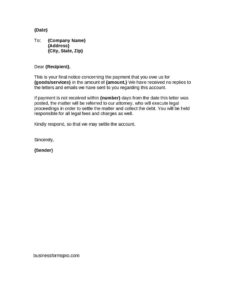
A Final Demand For Payment is a formal letter sent as a last written warning to a debtor before legal action is taken, most often used when earlier invoices, reminders, and emails have gone unanswered. It is free to download here in both PDF and DOCX formats, with no signup required.
What Is a Final Demand For Payment?
A Final Demand For Payment is a written notice issued by a creditor — a business, supplier, freelancer, or service provider — to a customer or client who has failed to settle an outstanding balance. It documents the amount owed, the goods or services it relates to, and a firm deadline by which payment must be received. Unlike a friendly reminder, this letter signals that the account is now at a critical stage: if the debtor does not respond, the matter will be referred to an attorney for legal collection. It serves both as a final opportunity for the debtor to resolve the debt voluntarily and as evidence that the creditor made a good-faith effort to collect before escalating.
When Do You Need a Final Demand For Payment?
This letter is appropriate once routine collection efforts have clearly failed and you are prepared to escalate. Common situations include:
- A client has ignored multiple invoices and email reminders for goods delivered or services completed.
- An account has remained unpaid well past its due date and any agreed grace period.
- A customer has stopped responding to phone calls and earlier collection notices.
- You intend to refer the debt to an attorney or collection agency and want a documented final warning on record.
- A business partner or vendor owes a fixed, undisputed amount that they have not addressed despite repeated contact.
- You need to establish a clear paper trail showing you gave the debtor a fair chance to pay before filing suit.
What a Final Demand For Payment Should Have
A complete and effective final demand leaves no room for confusion. It should clearly identify the creditor and the debtor, state the exact amount owed, and describe what the debt is for. It must reference prior unsuccessful attempts to collect, set a specific deadline for payment, and spell out the consequences of non-payment — namely referral to legal counsel and responsibility for legal fees. A professional, factual tone is important: the letter should be firm but never threatening or abusive, since the document may later be reviewed by a court. Including the date and a clear method for the debtor to respond rounds out a credible, enforceable-looking demand.
How to Fill Out a Final Demand For Payment
- Date: Enter the date the letter is being sent. This anchors the deadline you set later in the letter.
- Company Name: Write the full legal name of the debtor — the individual or business that owes the money.
- Address and City, State, Zip: Add the debtor’s complete mailing address so the notice is properly directed and can be proven as delivered.
- Recipient: Address the letter to a specific person where possible (for example, the owner, accounts payable contact, or named individual) rather than a generic title.
- Goods/Services: Describe what the debt is for — the product supplied or work performed — so there is no dispute about the basis of the charge.
- Amount: State the exact outstanding balance, including any late fees or interest if applicable. Use a precise figure, not an estimate.
- Number (of days): Specify the deadline — for example, 7, 10, or 14 days from the posting date — within which payment must be received before legal proceedings begin.
- Sender: Sign off with your name, title, and company so the debtor knows exactly who issued the demand and how to respond.
How a Final Demand Differs From Earlier Reminders
It helps to understand where this letter sits in the collection process. A first reminder is usually polite and assumes an oversight. A second notice firms up the language and may add late fees. The Final Demand For Payment is the last step before escalation — its defining feature is the explicit warning of legal action and the statement that the debtor will bear legal fees and charges. Because of this, you should only send it when you genuinely intend to follow through. An empty threat that you never act on weakens your credibility and the value of future demands.
Delivery and Keeping Records
How you send the letter matters as much as what it says. Many creditors send a final demand by a trackable method such as certified mail with a return receipt, or email with read confirmation, so they can later prove the debtor received it. Keep a dated copy of the letter along with proof of postage and any prior reminders. This file becomes valuable evidence if the matter does proceed to court or to a collection agency, demonstrating that you communicated clearly and gave reasonable notice. Note that debt collection is regulated in many jurisdictions, so the tone and content should remain factual and lawful.
Common Mistakes to Avoid
- Vague amounts: Failing to state the exact balance, or leaving out late fees you intend to claim, invites disputes and delay.
- No firm deadline: Writing “as soon as possible” instead of a specific number of days removes the urgency and any clear trigger for action.
- Threatening or abusive language: Aggressive wording can violate collection rules and undermine your position if the dispute is reviewed.
- Bluffing about legal action: Threatening lawsuits you will not pursue erodes your credibility with this and future debtors.
- No proof of delivery: Sending the letter with no tracking leaves you unable to show the debtor was warned.
- Skipping the prior steps: Sending a “final” demand without earlier reminders can look unreasonable and premature.
Frequently Asked Questions
What is a Final Demand For Payment letter? It is a formal, last-chance notice telling a debtor exactly how much they owe and warning that legal action will follow if payment is not received by a set deadline. It is the final written step before referring the matter to an attorney or collection agency.
How do I fill out the template? Enter the date, the debtor’s name and full address, a description of the goods or services, the exact amount owed, the number of days they have to pay, and your name as sender. Be precise with the amount and deadline, since these are the most important details.
Is a Final Demand For Payment legally binding? The letter itself is a notice, not a contract or court order, so it does not by itself compel payment. However, it can serve as important evidence that you gave the debtor fair warning, which courts and collection agencies often expect before legal proceedings begin.
How long should I give the debtor to pay? A common window is 7 to 14 days from the date the letter is posted, but the right period depends on your prior dealings and any contract terms. Choose a deadline that is firm yet reasonable, and be prepared to act once it passes.
Does this letter need to be notarized or witnessed? No, a final demand for payment does not require notarization or witnesses to be valid. What matters most is that it is clear, accurate, and that you keep proof it was sent and received.
How much does this template cost? It is completely free to download from Business Forms Pro in both PDF and DOCX formats, with no signup required. You can edit it to match your specific debt, amount, and deadline before sending.
This template is provided as a general example for informational purposes only and is not legal, financial, or debt-collection advice. Debt collection laws and notice requirements vary by jurisdiction, so consult a qualified attorney or professional before acting on an unpaid account.
Related Forms
- Order Exceptions
- Speaker Invitation
- Landlord Temporary Repairs
- Price Increase Announcement
- Furlough Letter
- Congratulations on Promotion
Browse more in Business Letters.