
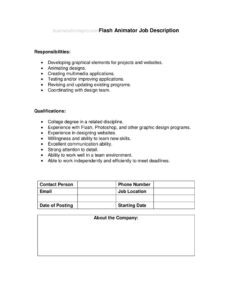
Flash Animator Job Description
Download a free Flash Animator job description template in PDF and DOCX to clearly outline responsibilities, qualifications, and hiring expectations.
PDF
DOCX
0
likes
Download Files
- DOCX
A Flash Animator job description is a hiring document that defines what an animator using Flash-based or vector animation tools will do on your team and the skills they need to succeed. Companies use it most often to attract qualified creative candidates and set clear expectations before posting a role. You can download this template free in both PDF and DOCX, with no signup required.
What Is a Flash Animator Job Description?
A Flash Animator job description is a structured outline that explains the duties, skills, and experience associated with an animation role centered on Flash or comparable 2D/vector animation software. It is typically written by a hiring manager, creative director, or HR team and used to recruit talent for studios, agencies, e-learning companies, game developers, and marketing departments. The document communicates what the animator is responsible for day to day and the qualifications a strong applicant should bring. Because it focuses on two core areas—Responsibilities and Qualifications—it gives candidates a clear picture of the job while giving employers a consistent basis for screening and comparing applicants.
When Do You Need a Flash Animator Job Description?
This template is useful any time you need to formalize an animation role before recruiting or onboarding begins. Common situations include:
- Posting a new opening for a Flash or 2D animator on a job board, careers page, or LinkedIn.
- Briefing a recruiter or staffing agency so they understand exactly the kind of creative talent you want.
- Defining a freelance or contract animation role with clear scope and deliverables.
- Restructuring a creative team and clarifying who handles animation, character motion, or motion graphics.
- Setting performance expectations and review criteria for an existing animator on staff.
- Documenting an internal transfer or promotion into an animation position.
Types of Animation Roles This Covers
While the title says “Flash Animator,” the framework adapts easily to related creative positions. You can repurpose it for a 2D animator, motion graphics designer, e-learning animator, character animator, or junior animation artist. The key is to keep the two sections—responsibilities and qualifications—tailored to the specific tools, deliverables, and seniority of the role. A senior position will emphasize leadership, mentoring, and creative direction, while an entry-level listing focuses on technical fundamentals and a willingness to learn.
What a Flash Animator Job Description Should Have
A complete and effective animation job description usually includes the following:
- A clear job title and, ideally, a short summary of the role and where it fits in the team.
- A Responsibilities section listing the animator’s primary duties and deliverables.
- A Qualifications section covering required software skills, experience, and education.
- Specific software and technical proficiencies (animation tools, vector editing, frame-by-frame and tweened animation).
- Soft skills such as creativity, attention to detail, time management, and collaboration.
- Optional details like reporting structure, work location, portfolio requirements, and how to apply.
How to Fill Out a Flash Animator Job Description
This template centers on two fillable sections. Work through them in order:
- Add a job title and summary. Although the template starts with the core sections, lead with the exact role title (for example, “Flash Animator” or “2D Motion Animator”) and one or two sentences describing the position.
- Complete the Responsibilities section. List the concrete duties: creating frame-by-frame and tweened animations, designing characters and backgrounds, producing animated banners or e-learning sequences, collaborating with designers and developers, optimizing assets for web or video, and meeting project deadlines.
- Complete the Qualifications section. Specify required and preferred skills: proficiency in animation software, experience with vector graphics, knowledge of motion principles, a relevant degree or equivalent portfolio, and the number of years of experience you expect.
- Layer in soft skills and culture fit. Note communication, teamwork, and the ability to take creative feedback.
- Add logistics and a call to action. Include reporting lines, employment type, portfolio submission, and application instructions before publishing.
Tips for Writing a Description That Attracts Talent
Strong creative candidates skim dozens of listings, so clarity wins. Use active verbs in the responsibilities (“design,” “animate,” “optimize,” “collaborate”) and keep each bullet to a single duty. In the qualifications, separate must-haves from nice-to-haves so applicants can self-assess accurately. Always request a portfolio or reel—animation is a visual craft, and samples reveal more than a résumé ever will. Avoid an overly long wish list; padding the qualifications with every conceivable skill discourages otherwise excellent candidates from applying. Finally, mention whether the role is remote, hybrid, or on-site, since location flexibility is often a deciding factor for creative professionals.
Flash Animator vs. Related Roles
It helps to distinguish this position from neighboring titles. A graphic designer focuses on static visual assets, while an animator brings movement and timing to life. A motion graphics designer often works in After Effects on broadcast or marketing content, whereas a Flash or 2D animator may emphasize character animation, web interactivity, or e-learning. Being explicit about which skills matter most prevents mismatched applications and keeps your candidate pool relevant.
Common Mistakes to Avoid
- Listing vague responsibilities like “handle animation” instead of specific deliverables such as “create animated explainer videos and web banners.”
- Overloading the qualifications with too many required tools, which narrows your applicant pool unnecessarily.
- Forgetting to request a portfolio or demo reel for a visual, skill-based role.
- Failing to indicate seniority level, so junior and senior candidates can’t tell if they fit.
- Omitting employment type, location, or how to apply, which causes qualified people to drop off.
- Copying a generic template without tailoring duties to your actual projects and tools.
Frequently Asked Questions
What does a Flash Animator job description include? It includes two main sections—Responsibilities and Qualifications—along with a job title and summary. The responsibilities describe day-to-day animation duties, while the qualifications outline the software skills, experience, and education a candidate needs.
How do I write the responsibilities section? List concrete, action-oriented duties such as creating frame-by-frame and tweened animations, designing characters and assets, optimizing files for web or video, and collaborating with designers and developers. Keep each bullet focused on one task so candidates can quickly understand the role.
Is this job description template legally binding? A job description is generally a planning and recruiting document, not a contract. It sets expectations and informs candidates, but employment terms are governed by your offer letter and applicable laws, so review those separately.
Can I use this template for a 2D or motion graphics animator? Yes. The structure works for many animation roles—simply swap in the relevant software, deliverables, and experience level. Adjust the title and qualifications to match the specific position you are hiring for.
Should I require a portfolio? Almost always, yes. Animation is a visual discipline, and a portfolio or demo reel shows a candidate’s actual ability far better than a written résumé. Add a line in the qualifications or application instructions requesting work samples.
How much does this template cost? It is completely free to download from Business Forms Pro in both PDF and DOCX formats, with no signup required. You can edit the DOCX version to match your company’s branding, role details, and hiring process.
This template is a general example provided for informational purposes only and is not legal, HR, or employment advice. Hiring requirements and labor regulations vary by jurisdiction, so consult a qualified professional before finalizing or publishing any job description.
Official resource: for the rules that apply to your situation, see the U.S. Department of Labor.
Related Forms
- Accountant Job Description
- Hotel Front Desk Staff Job Description
- Web Developer Job Description
- Marketing Coordinator Job Description
- Quality Assurance Engineer Job Description
- Sales Manager Job Description
Browse more in Job Descriptions.