
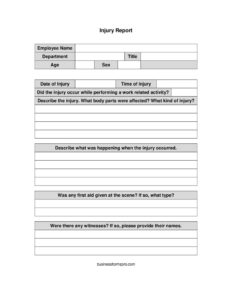
Injury Report
Document workplace injuries clearly with our free Injury Report form template, capturing details, witnesses, and treatment — free download in PDF and DOCX.
PDF
DOCX
8 downloads
0
likes
Download Files
- DOCX
An Injury Report is a workplace document used to record the details of an employee injury, from what happened and which body parts were affected to any first aid given and witnesses present. Employers and supervisors most often use it immediately after an incident to create an accurate, timestamped record. You can download this Injury Report template for free in both PDF and DOCX formats — no signup required.
What Is an Injury Report?
An Injury Report is a standardized form that documents the facts surrounding a workplace injury or illness. It is typically completed by a supervisor, manager, safety officer, or the injured employee shortly after an incident occurs. The report captures who was hurt, when and where it happened, how the injury occurred, what part of the body was involved, and what treatment was provided. Beyond simply describing the event, the form serves as an official internal record that may support workers’ compensation claims, safety reviews, insurance documentation, and regulatory reporting. By gathering consistent details every time, an Injury Report helps organizations respond appropriately and identify hazards that could lead to future incidents.
When Do You Need an Injury Report?
This form should be completed any time an employee is hurt on the job, no matter how minor the injury may appear at first. Common situations include:
- An employee slips, trips, or falls on company premises and sustains a sprain, bruise, or fracture.
- A worker is cut, burned, or struck by equipment or materials while performing job duties.
- Someone experiences a repetitive strain or lifting injury during normal work tasks.
- An employee reports symptoms such as back pain or a strained shoulder after handling heavy items.
- A near-miss results in a minor injury that requires first aid at the scene.
- An incident sends a worker to a hospital, clinic, or urgent care for evaluation or treatment.
Even when an injury seems small, documenting it promptly protects both the employee and the employer. A thorough record made on the day of the incident is far more reliable than one reconstructed weeks later.
What an Injury Report Should Have
A complete Injury Report should clearly identify the injured person, the time and place of the incident, and the nature of the injury. It should include a factual description of what was happening when the injury occurred, the specific body parts affected, and the type of injury sustained. Strong reports also document whether first aid was given, whether witnesses were present, and where the employee received any medical treatment. Finally, the form should note whether the employee missed work and be dated and signed to confirm its accuracy. Objective, specific language — rather than opinions or assumptions about blame — makes the report more useful and credible.
How to Fill Out an Injury Report
- Employee information: Enter the injured employee’s name, department, job title, age, and sex so the record is properly attributed.
- Date and time of injury: Record the exact date and time the injury happened, not when the report is written.
- Work-related activity: Answer whether the injury occurred while performing a work-related activity, which is key for compensation and classification.
- Describe the injury: Write a clear, factual description of the injury itself.
- Body parts and injury type: Note which body parts were affected and what kind of injury occurred (for example, laceration, sprain, or burn).
- What happened: Describe what was taking place when the injury occurred, including equipment, tasks, and conditions.
- First aid: Indicate whether first aid was given at the scene and, if so, what type.
- Witnesses: Record whether anyone witnessed the incident and list their full names.
- Medical transport and treatment: If the employee went to a hospital or clinic, list its name and describe the treatment provided.
- Lost time and notes: State whether the employee missed work, add any additional notes, then enter the date and have the employee sign.
Why Prompt Documentation Matters
The value of an Injury Report depends heavily on how quickly and accurately it is completed. Details fade fast, and witnesses may become unavailable, so capturing the account while it is fresh produces the most reliable record. A timely report can also support a workers’ compensation claim, demonstrate that the organization took the incident seriously, and provide a clear paper trail if questions arise later. Just as importantly, the information collected — what was happening, which equipment was involved, and what conditions existed — can help safety teams spot patterns and prevent similar injuries from recurring.
Keeping Reports Consistent and Confidential
Because Injury Reports may contain sensitive medical and personal information, they should be stored securely and shared only with those who need access, such as HR, safety personnel, or insurers. Using the same form for every incident also keeps reporting consistent across departments, which makes it easier to compare incidents and track trends over time. Encourage supervisors to stick to observable facts, avoid speculating about fault, and attach photographs or diagrams when they help clarify what happened.
Common Mistakes to Avoid
- Waiting days to complete the form, so important details and timing become inaccurate.
- Writing vague descriptions like “hurt at work” instead of specifying the task, equipment, and body part.
- Failing to list witnesses or omitting their full names, making follow-up difficult.
- Leaving the work-related activity question or the medical treatment section blank.
- Recording opinions or assigning blame rather than documenting objective facts.
- Forgetting to date and sign the report, which weakens its reliability as an official record.
Frequently Asked Questions
What is an Injury Report used for? An Injury Report documents the facts of a workplace injury, including how it happened, what was injured, and what treatment was given. It serves as an internal record that can support workers’ compensation claims, insurance documentation, and safety reviews. Keeping a complete report also helps employers identify and correct hazards.
Who should fill out the Injury Report? Typically a supervisor, manager, or safety officer completes the form, often with input from the injured employee. The injured employee usually signs the form to confirm the account is accurate. In some workplaces, the employee may complete it directly and have a supervisor review it.
How soon should the form be completed after an injury? It should be completed as soon as possible after the incident, ideally the same day. Prompt documentation captures accurate details while memories are fresh and witnesses are available. Delays can make the report less reliable and may complicate any related claims.
Does the Injury Report need to be signed? This template includes a date and employee signature line to confirm the information recorded. While a signature is not legally required in every situation, it adds credibility and acknowledges the employee’s involvement. Your organization or insurer may have its own signature requirements.
Is reporting required for minor injuries? Even minor injuries should be documented, because symptoms can worsen and small incidents can reveal larger hazards. Recordkeeping and reporting requirements vary by jurisdiction and by the severity of the injury. Check your local regulations and your employer’s internal policy to be sure.
Is this Injury Report template free to download? Yes. You can download this Injury Report template for free in both PDF and DOCX formats with no signup required. You are welcome to customize the fields to match your workplace’s reporting and safety procedures.
This Injury Report template is provided as a general example for informational purposes only and does not constitute legal, medical, or safety advice. Workplace injury reporting and recordkeeping requirements vary by jurisdiction and industry. Consult a qualified professional or your relevant regulatory authority to ensure your reporting practices comply with applicable rules.
Official resource: for the rules that apply to your situation, see the U.S. Department of Labor.
Related Forms
- Consent To Drug Test
- Employee Warning Letter
- Employee Self Evaluation
- Vacation Request Form
- Employee Pay Rate and Title History Change
- Sexual Harassment Complaint
Browse more in Employment.