
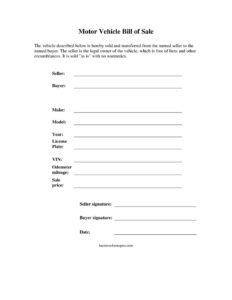
Motor Vehicle Bill of Sale
Download a free Motor Vehicle Bill of Sale template in PDF or DOCX to document a car sale, transfer ownership, and protect both buyer and seller.
PDF
DOCX
0
likes
Download Files
- DOCX
A Motor Vehicle Bill of Sale is a written record that documents the sale and transfer of a car, truck, motorcycle, or other vehicle from a seller to a buyer. People most often use it to create proof of a private vehicle sale — protecting both parties and providing the paperwork needed to register the vehicle. You can download this template free as a PDF or DOCX, with no signup required.
What Is a Motor Vehicle Bill of Sale?
A Motor Vehicle Bill of Sale is a simple legal document that records the details of a vehicle transaction between a private seller and a buyer. It identifies the vehicle by make, model, year, license plate, and VIN, states the agreed sale price, and confirms that ownership has changed hands. The seller typically asserts that they are the legal owner, that the vehicle is free of liens, and that it is being sold “as is” with no warranties. Once signed by both parties, it serves as a receipt and proof of purchase. It is commonly used alongside the title transfer when registering the vehicle with a motor vehicle department.
When Do You Need a Motor Vehicle Bill of Sale?
This document is useful any time a vehicle changes ownership outside of a dealership. Common situations include:
- Selling a used car or truck to a private buyer and wanting a written receipt of the transaction.
- Buying a vehicle from an individual and needing proof of purchase to register it at the DMV.
- Gifting or transferring a vehicle between family members, where a nominal or zero sale price is recorded.
- Selling a motorcycle, trailer, boat trailer, or RV in a private sale.
- Documenting the agreed-upon “as is” condition so the seller is protected against later disputes.
- Recording the odometer reading at the time of sale to comply with mileage disclosure requirements.
What a Motor Vehicle Bill of Sale Should Have
A complete bill of sale leaves no ambiguity about who sold what, to whom, for how much, and when. The essential elements are the full names of the seller and buyer, a precise description of the vehicle (make, model, year), unique identifiers (license plate number and Vehicle Identification Number), the odometer mileage at the time of sale, and the agreed sale price. It should also include a statement that the seller is the legal owner and that the vehicle is free of liens, the “as is” warranty disclaimer, the date of sale, and signatures from both parties. Together these details turn a casual handoff into a documented, defensible transaction.
How to Fill Out a Motor Vehicle Bill of Sale
- Seller: Enter the full legal name of the person or entity selling the vehicle.
- Buyer: Enter the full legal name of the person purchasing the vehicle.
- Make: Write the manufacturer, such as Toyota, Ford, or Honda.
- Model: Enter the specific model name, for example Camry, F-150, or Civic.
- Year: Record the model year of the vehicle.
- License Plate: Copy the current license plate number exactly as it appears.
- VIN: Enter the full 17-character Vehicle Identification Number, found on the dashboard, door jamb, or title — double-check each character.
- Odometer mileage: Write the exact mileage shown on the odometer at the time of sale.
- Sale price: Record the total agreed price in dollars; for a gift, note a nominal amount or “gift.”
- Signatures and Date: Have both the seller and buyer sign, and enter the date the sale takes place. Each party should keep a copy.
Title Transfer and Registration
A bill of sale is not the same as the vehicle’s title. The title is the official ownership document, while the bill of sale is the receipt that records the transaction. In most cases, the seller must sign over the title to the buyer, and the buyer takes both the title and the bill of sale to the motor vehicle department to register the vehicle and pay any applicable taxes and fees. Some states provide their own bill of sale form, and some require the document for registration; check your local DMV requirements before completing the sale. Keeping the bill of sale on file also helps establish the date the buyer became responsible for the vehicle, which matters for insurance, parking tickets, and tolls.
Understanding the “As Is” Clause and Odometer Disclosure
The “as is” language in this template means the vehicle is sold in its current condition with no warranties or guarantees about its mechanical state. This protects the seller from later claims that the car had hidden problems, while signaling to the buyer that they should inspect the vehicle carefully before signing. The odometer reading is equally important: federal and state rules require accurate mileage disclosure on most vehicle transfers, and recording it on the bill of sale creates a clear record. If the odometer is broken or has rolled over, note that fact rather than guessing at a figure.
Common Mistakes to Avoid
- Mistyping the VIN. A single wrong character can cause registration delays — verify it against the title and the vehicle itself.
- Leaving the odometer blank. Mileage disclosure is often legally required and protects against fraud claims.
- Forgetting both signatures. An unsigned bill of sale has little value; both buyer and seller should sign and date it.
- Not making two copies. Each party should keep an original for their records.
- Using nicknames instead of legal names. Match the names to government-issued ID and the title.
- Confusing the bill of sale with the title transfer. You usually need both to complete registration.
Frequently Asked Questions
Is a Motor Vehicle Bill of Sale legally binding? Yes, once both the seller and buyer sign and date it, the document records a binding transfer of ownership and serves as proof of the transaction. Its strength depends on accurate, complete information and the signatures of both parties. Keep your signed copy in a safe place.
Does a Motor Vehicle Bill of Sale need to be notarized? Most states do not require notarization for a vehicle bill of sale, but some do, and a few require additional witnesses. Because rules vary, check your local DMV or motor vehicle agency before finalizing the sale. Notarizing can add an extra layer of protection even when it is optional.
Is this bill of sale template free to download? Yes. You can download the Motor Vehicle Bill of Sale free in both PDF and DOCX formats, with no signup or payment required. Use the DOCX version if you want to edit the text, or the PDF if you prefer to print and fill it in by hand.
Do I still need the vehicle title? Yes. The bill of sale documents the sale, but the title is the official ownership record that the seller must sign over to the buyer. The buyer typically presents both documents to register the vehicle in their name.
What does “sold as is” mean on this form? It means the seller makes no warranties about the vehicle’s condition, and the buyer accepts it in its present state. This protects the seller from future claims about defects, so buyers should inspect the vehicle thoroughly before signing.
Can I use this form to gift a vehicle to a family member? Yes. You can record the transfer with a nominal sale price or note that the vehicle is a gift in the sale price field. Be aware that some jurisdictions have specific procedures and tax rules for gifted vehicles, so confirm the requirements locally.
This template is a general example provided for informational purposes only and is not legal, financial, or tax advice. Vehicle sale and registration requirements vary by state and locality — consult your local motor vehicle agency or a qualified professional before completing a transaction.
Official resource: for the rules that apply to your situation, see your state DMV.
Related Forms
- Motorcycle Bill of Sale
- Fuel Tracker
- Bill Of Sale
- Used Car Mechanic Checklist
- Vehicle Deal Jacket
- Vehicle Invoice
Browse more in Auto Sales.