
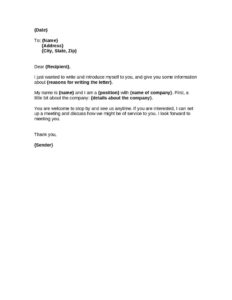
Offer to a Potential Client
Use this free Offer to a Potential Client letter template to introduce your business and win new customers. Download in PDF or DOCX, free download.
DOCX
2 downloads
0
likes
Download Files
- DOCX
An Offer to a Potential Client letter is a short, friendly business message that introduces you and your company to a prospect and invites them to learn how you can help. It is the most common way to make a warm first impression with a lead before a sales call or meeting. You can download this template free in PDF or DOCX, with no signup required.
What Is an Offer to a Potential Client Letter?
An Offer to a Potential Client letter is a written introduction sent by a salesperson, business owner, or account manager to someone who is not yet a customer. It documents who you are, the company you represent, and the products or services you would like to offer. Rather than being a hard pitch or a formal contract, it acts as a low-pressure opening that establishes credibility and opens the door to a conversation. The letter typically closes by inviting the recipient to visit, reply, or schedule a meeting. Businesses use it across nearly every industry — from consultants and contractors to retailers and service providers — whenever they want to turn a name on a list into an engaged prospect.
When Do You Need an Offer to a Potential Client Letter?
This letter fits any moment when you want to start a relationship with someone who could become a paying customer. Common situations include:
- Reaching out to a referral — a mutual contact gave you a name, and you want to introduce yourself before calling.
- Following up on a lead — someone visited your website, attended an event, or downloaded a resource, and you want to make personal contact.
- Introducing a new business — you have just opened and want to announce your services to local prospects.
- Expanding into a new market or territory — you are introducing your company to businesses or households in an unfamiliar area.
- Launching a new product or service — you want existing prospects to know about an offering that might interest them.
- Re-engaging a quiet contact — someone expressed interest in the past, and you want to reopen the conversation warmly.
What an Offer Letter Should Have
A strong introduction letter balances warmth with substance. It should clearly state who you are, the company and your role, and a concise reason for writing. It needs a brief, credible description of what the company does so the reader understands the value you bring. Equally important is a clear, low-friction invitation — to visit, reply, or set up a meeting — and a polite, professional sign-off. Keep the tone genuine and conversational rather than aggressive; the goal of this first touch is to earn a response, not to close a deal. A clean date and accurate recipient details round out a complete, professional letter.
How to Fill Out an Offer to a Potential Client Letter
- Enter the Date at the top so the letter is properly dated for your records and the recipient’s.
- Fill in the recipient block: the Name, Address, and City, State, Zip of the person or business you are contacting.
- Write your greeting using the Recipient field — address them by name where possible (“Dear Ms. Carter”) for a personal touch.
- Complete the reasons for writing the letter field with a clear, specific purpose, such as introducing a service that solves a problem they likely face.
- Add your name and your position, then the name of company you represent, so the reader knows exactly who is reaching out.
- In the details about the company field, give two or three concise sentences on what you do, your experience, and why prospects choose you.
- Keep the open invitation to stop by or schedule a meeting, then close with “Thank you” and your name in the Sender field.
Tips for Writing a Letter That Gets a Reply
The difference between a letter that gets ignored and one that earns a meeting is usually personalization and brevity. Mention something specific about the recipient or their industry in the reasons for writing, so it does not read like a mass mailing. Lead with the benefit to them rather than a list of your achievements — prospects respond to what you can do for them. Keep the whole letter to a single page; a busy reader is far more likely to finish a short note. Finally, make the next step effortless by offering a clear way to respond, whether that is a phone number, an email address, or an invitation to visit during business hours.
How This Differs From a Sales Proposal
It is easy to confuse an introduction letter with a formal sales proposal, but they serve different stages of the relationship. This Offer to a Potential Client letter is a warm first contact: it introduces you, builds rapport, and asks for a conversation. A sales proposal comes later — after you understand the prospect’s needs — and includes detailed scope, pricing, timelines, and terms. Sending a heavy proposal before any relationship exists can feel premature and pushy. Use this letter to open the door, then follow up with a tailored proposal once the prospect has expressed genuine interest.
Common Mistakes to Avoid
- Making it all about you — focus on the recipient’s needs, not just your company’s credentials.
- Being too long — a wall of text discourages reading; keep it tight and skimmable.
- Leaving placeholders unfilled — double-check that every bracketed field, especially the recipient’s name and your contact details, is completed.
- Using a generic greeting — “Dear Sir or Madam” feels impersonal; use the recipient’s actual name whenever you can.
- Forgetting a clear next step — always include an easy way and reason to respond.
- Spelling the recipient’s or company name wrong — errors in names undermine trust before you have even started.
Frequently Asked Questions
What is an Offer to a Potential Client letter? It is a brief, friendly business letter that introduces you and your company to a prospective customer and invites them to discuss how you can help. It is meant to open a relationship rather than close a sale, making it a warm first point of contact.
How do I fill out this template? Add the date and the recipient’s contact details, then complete the bracketed fields for your reasons for writing, your name, your position, your company name, and a short description of the company. Finish with the invitation to meet and your signature in the Sender field.
Is this letter legally binding? No, an introduction letter is not a contract and does not create any binding obligation. It is simply a friendly outreach; any formal commitment would come later in a signed agreement or proposal.
How long should the letter be? Aim for a single page or less — ideally a few short paragraphs. Prospects are busy, and a concise, focused note is far more likely to be read and to earn a response.
Should I send it by email or mail? Either works, depending on your audience and industry. A printed letter can stand out and feel more personal, while email is faster and easier for the recipient to reply to — choose whichever fits how your prospects prefer to communicate.
How much does this template cost? Nothing — it is completely free to download here in PDF or DOCX with no signup required. You can edit it as many times as you like to suit each prospect.
This template is a general example provided for informational purposes only and is not legal, financial, or professional advice. Business communication norms and requirements vary by industry and jurisdiction, so consult a qualified professional for guidance specific to your situation.
Related Forms
- Congratulations on Promotion
- Cease and Desist Copyright
- Auto Insurance Verification Letter
- Notice of Impending Action
- Late Payment Reminder
- Reference Request
Browse more in Business Letters.