
Prayer List
Organize church prayer requests with this free Prayer List template, capturing names, reasons, and dates for free download in PDF and DOCX.
PDF
DOC
5 downloads
0
likes
Download Files
- DOC
A Prayer List is a simple form a church or ministry uses to record prayer requests so they can be remembered, shared, and prayed over by the congregation. The most common reason people use one is to keep weekly intercessory prayer organized in a single, easy-to-read document. It’s free to download here in both PDF and DOCX formats, with no signup required.
What Is a Prayer List?
A Prayer List is a record-keeping document that gathers individual prayer requests submitted by members of a faith community. It is typically maintained by a pastor, prayer team leader, deacon, or church secretary, and it documents who needs prayer, the reason behind the request, who submitted it, and when. The form turns scattered notes, hallway conversations, and bulletin slips into one organized list that can be reviewed during services, small groups, or private devotion. Because it centralizes requests, a Prayer List helps ensure no one’s need is overlooked and gives the prayer team a clear, current picture of the concerns within the congregation.
When Do You Need a Prayer List?
Churches and ministries reach for a Prayer List anytime requests need to be tracked consistently. Common situations include:
- Compiling weekly requests collected from bulletin slips, the offering plate, or a prayer box at the back of the sanctuary.
- Organizing requests for a dedicated prayer team or intercessory group that meets regularly.
- Tracking ongoing concerns such as illness, surgery, grief, or military deployment that span several weeks.
- Preparing a printed list for small groups, Sunday school classes, or home Bible studies.
- Keeping a record during a hospital, nursing home, or shut-in visitation ministry.
- Building a master list for a 24-hour prayer chain, prayer vigil, or special season such as Lent or Advent.
Types of Prayer Lists
Some congregations keep a general weekly list that resets each Sunday, while others maintain a running long-term list for chronic needs. Smaller groups may use a confidential list limited to the prayer team, and others post a public list in the bulletin. This template works for all of these uses because the fields are simple and flexible.
What a Prayer List Should Have
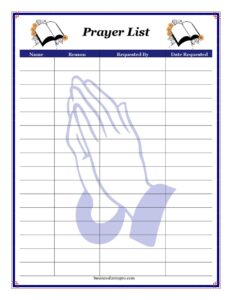
A complete Prayer List is short by design, but each entry should be clear enough that anyone reading it can pray meaningfully and follow up later. Every line should identify the person or situation in need, give enough context to understand the request, credit the person who submitted it, and note the date so the list can be kept current. This template captures exactly those essentials: Name, Reason, Requested By, and Date Requested. Keeping these four pieces together on one row makes the list scannable during a service and easy to update as situations change or resolve.
How to Fill Out a Prayer List
Filling out this form is straightforward—complete one row for each request:
- Name: Write the name of the person, family, or group the prayer is for. This may be an individual (for example, “Margaret Thompson”), a family, a missionary, or even a broader concern such as “Our community” or “Those affected by the storm.”
- Reason: Briefly describe what the prayer is for—an upcoming surgery, recovery from illness, a job search, grief over a loss, traveling mercies, or thanksgiving. Keep it concise but specific enough to pray with understanding, and be mindful of sensitive details.
- Requested By: Note who submitted the request. This helps the prayer team follow up, confirm details, and offer encouragement to the person who asked.
- Date Requested: Record the date the request was received. This lets you sort by recency, remove answered or expired requests, and identify long-standing needs that deserve continued prayer.
Repeat for each new request, and review the full list regularly to keep it accurate and meaningful.
Keeping the List Respectful and Confidential
Prayer requests often involve sensitive personal matters—health diagnoses, family struggles, or financial hardship. Before adding details, confirm the person is comfortable having the request shared, especially if the list will be read aloud or printed in a bulletin. Many churches keep a separate confidential list for the prayer team and use only first names or general descriptions in public settings. When in doubt, record less detail rather than more, and let the person decide how openly their need is shared. Treating requests with care builds trust and encourages people to keep coming forward.
Maintaining and Following Up
A Prayer List is most useful when it stays current. Set a routine—weekly or monthly—to review entries, mark answered prayers, and archive resolved requests. Using the Date Requested field, you can quickly spot items that have been on the list for a long time and check in with the person who submitted them. Following up is a ministry in itself: a phone call or note to someone after their surgery shows the prayer was more than a line on a page. Consider keeping past lists on file so the community can look back and celebrate answered prayers.
Common Mistakes to Avoid
- Sharing sensitive details without the person’s permission, which can breach trust and confidentiality.
- Leaving the Date Requested field blank, making it impossible to tell which requests are current.
- Writing reasons that are too vague (“please pray”) so no one knows how to pray specifically.
- Never removing old or answered requests, which lets the list grow long and unwieldy.
- Forgetting to note who requested the prayer, leaving no way to follow up.
- Keeping only one copy in a single person’s notebook instead of a shared, accessible format.
Frequently Asked Questions
What is a Prayer List used for? A Prayer List is used to collect and organize prayer requests within a church or ministry so they can be prayed over consistently. It records the name, the reason for prayer, who requested it, and the date, keeping requests in one tidy place. This helps ensure no one’s need is forgotten and supports follow-up and pastoral care.
How do I fill out the Prayer List? Complete one row per request: enter the Name of the person or situation, a short Reason for the prayer, the name of the person Requesting it, and the Date Requested. Keep entries brief but specific, and update the list regularly as situations change or resolve.
Is a Prayer List confidential? It can be, and it often should be. Because requests may involve personal health, family, or financial matters, many churches keep a private team list and share only general details publicly. Always confirm with the requester how openly they want their need shared.
Who maintains the Prayer List? Typically a pastor, prayer team leader, deacon, secretary, or volunteer coordinator manages the list. Whoever is responsible should review it regularly, update entries, and remove answered or expired requests to keep it current.
Can I customize this template for my church? Yes. The DOCX version is fully editable, so you can add your church name, a logo, extra columns such as “Answered” or “Date Resolved,” or a confidentiality note. The simple structure adapts easily to weekly lists, prayer chains, or small-group use.
How much does this Prayer List template cost? It is completely free to download from Business Forms Pro in both PDF and DOCX formats, with no signup or payment required. You can print it, fill it in by hand, or edit it digitally as often as you need.
This Prayer List template is provided as a general example for informational and organizational purposes only. It is not legal, medical, or professional advice, and practices around confidentiality and record-keeping vary by organization and jurisdiction. Consult your church leadership or a qualified professional for guidance specific to your situation.
Related Forms
- My First Holy Communion Card (2 per page)
- St Francis Funeral Card (2 per page)
- Matrimony Holy Card (2 per page)
- My Baptism Holy Card (2 per page)
- Baptism Holy Card (2 per page)
- Ordination Anniversary Card 2 (2 per page)
Browse more in Church.