
Prospective Lead
Download a free Prospective Lead Letter template to introduce yourself to a referred contact and request a meeting — free PDF and DOCX download.
DOCX
0
likes
Download Files
- DOCX
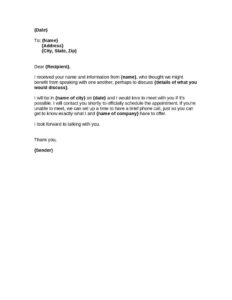
A Prospective Lead Letter is a short, warm introduction you send to a referred contact to open a conversation and request a meeting or call. People most often use it to follow up on a referral — turning a name passed along by a mutual connection into a real business relationship. You can download this template free in PDF and DOCX, with no signup required.
What Is a Prospective Lead Letter?
A Prospective Lead Letter is a business correspondence used by salespeople, consultants, account executives, and business owners to reach out to a potential client or partner whose name came through a referral. Rather than a cold pitch, it leverages a trusted introduction: you mention the person who connected you, explain why a conversation could be mutually beneficial, and propose a specific time to meet. The letter documents your initial outreach, sets a professional tone, and primes the recipient to expect your follow-up call. Because it leads with a familiar name and a clear reason for connecting, it tends to earn more replies than an unsolicited message would.
When Do You Need a Prospective Lead Letter?
This letter fits any situation where someone has handed you a warm introduction and you want to convert it into a meeting. Common scenarios include:
- A current client or colleague refers you to someone in their network who may need your services.
- You collected a contact’s name at a conference, trade show, or networking event and want to follow up professionally.
- You are planning a trip to another city and want to schedule in-person meetings with prospects there.
- A business partner suggests you and another company could collaborate or cross-refer.
- You are entering a new market or territory and a local connection has shared promising leads.
- You want a written, on-brand touchpoint before placing an introductory phone call.
What a Prospective Lead Letter Should Have
An effective version of this letter stays brief and focused. It should clearly identify the recipient, name the person who made the referral, and state in plain terms why the two of you should talk. It should propose a concrete next step — ideally a specific date or city where you’ll be available — and offer a flexible alternative such as a phone call. Finally, it should close with a courteous thank-you and your name, so the recipient knows exactly who to expect a follow-up from. Warmth, brevity, and a clear call to action are what make this letter work.
How to Fill Out a Prospective Lead Letter
- Enter the Date you are sending the letter at the top.
- In the To block, add the recipient’s Name, Address, and City, State, Zip so the letter is properly addressed.
- Open with Dear {Recipient}, using the contact’s name to keep the greeting personal.
- Fill in the name of the person who referred you, establishing the trusted connection right away.
- Complete the details of what you would discuss field with a specific, benefit-focused reason for the conversation.
- Add the name of city you’ll be visiting and the date you’ll be there to propose an in-person meeting.
- Insert your name of company where the letter describes what you have to offer.
- Sign off with your Sender name so the recipient knows who will be calling to schedule.
Tips for Writing a Letter That Gets a Reply
The strength of a Prospective Lead Letter comes from the referral, so lead with it. Naming the mutual contact in the first sentence signals that this is not a cold solicitation and earns the recipient’s attention. Keep the body tight — three or four short sentences are plenty. Replace the placeholder for what you’d like to discuss with something concrete and recipient-focused, such as a specific outcome or problem you can help with, rather than a vague “explore synergies.” When you mention being in their city on a given date, you give the reader an easy, low-pressure reason to say yes. Always follow through on the promise to call; the letter is meant to warm up that conversation, not replace it.
Following Up After You Send It
The letter explicitly tells the recipient you’ll be in touch “shortly” to schedule, so plan your timing. A good rule is to call within a few business days of when the letter should arrive — soon enough that the introduction is fresh, but with enough lead time before your proposed visit. When you call, reference the letter and the mutual contact again to jog their memory. If the in-person meeting doesn’t work, fall back on the brief phone call you offered, which lowers the commitment and still moves the relationship forward. Keep a simple record of who you wrote, when, and the response so you can manage your pipeline of referrals consistently.
Common Mistakes to Avoid
- Forgetting to fill in the referrer’s name, which removes the warm-introduction advantage entirely.
- Leaving the “details of what you would discuss” placeholder vague — be specific about the value you offer.
- Making the letter too long; recipients respond best to a short, scannable message.
- Proposing a meeting date or city without confirming your own availability first.
- Promising to call “shortly” and then not following up promptly, which erodes credibility.
- Sending the letter with placeholder brackets like {Recipient} or {name} left unedited.
Frequently Asked Questions
What is a Prospective Lead Letter used for? It is used to introduce yourself to a referred contact and request a meeting or phone call. By naming the person who connected you and explaining the benefit of talking, it turns a referral into an actual conversation. It works well in sales, consulting, and partnership outreach.
How do I fill out the Prospective Lead Letter? Add the date, the recipient’s name and address, your greeting, the name of the person who referred you, a specific reason to meet, the city and date you’ll be available, your company name, and your signature. Replace every bracketed placeholder with real details before sending. Keep the message short and personal.
Is this letter legally binding? No, a Prospective Lead Letter is an informal business introduction, not a contract. It does not commit either party to anything beyond a possible conversation. It simply opens the door to a meeting or call.
Should I send it by email or mail? Either works, depending on your relationship and industry. A printed letter can feel more personal and memorable, while email is faster and easier to reply to. Choose whichever channel the recipient is most likely to read.
How soon should I follow up after sending it? The letter promises you’ll be in touch shortly, so call within a few business days of when it should arrive. Following up promptly while the referral is fresh shows professionalism and keeps the momentum going. Reference the mutual contact again when you call.
How much does this template cost? Nothing — it is completely free to download here in both PDF and DOCX formats, with no signup required. You can edit the DOCX version to match your company branding and message. Use it as many times as you need for different leads.
This template is a general example provided for informational purposes only and does not constitute legal, financial, or professional advice. Business practices and any applicable regulations vary by industry and jurisdiction; consult a qualified professional for guidance specific to your situation.
Related Forms
- Payment Location Change
- Recognizing a Suggestion
- Request to Cancel Delayed Shipment
- Out Of Stock Notice
- Request for Partial Shipment
- Landlord Unauthorized Guest Warning
Browse more in Business Letters.