
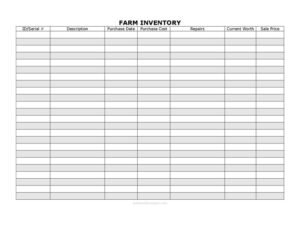
Farm Inventory Record
Track equipment, livestock, and supplies with a free Farm Inventory Record template—record purchase cost, value, and repairs. Free download in PDF and DOCX.
PDF
DOC
12 downloads
0
likes
Download Files
- DOC
A Farm Inventory Record is a simple worksheet for cataloging the assets your farm owns—machinery, livestock, tools, supplies, and equipment—along with their cost, current value, and condition. Most operators use it to keep an accurate, up-to-date list for tax filing, insurance, loan applications, or estate planning. It’s free to download here in both PDF and DOCX formats, with no signup required.
What Is a Farm Inventory Record?
A Farm Inventory Record is a document that lists every significant asset on a farm and the financial details that go with it. It is typically created and maintained by the farm owner, manager, or bookkeeper, and it documents what each item is, when it was bought, what it cost, what it’s worth now, and—if sold—what it brought in. The purpose is to give you a clear snapshot of the farm’s tangible assets at any point in time. A reliable inventory supports depreciation schedules, balance sheets, insurance valuations, and the year-end financial review that helps you understand the true health of your operation.
When Do You Need a Farm Inventory Record?
Almost every farm benefits from keeping a current inventory, but certain situations make it essential:
- Year-end accounting and taxes — to calculate depreciation, capital gains on sold equipment, and the value of on-hand supplies.
- Applying for a loan or line of credit — lenders often want a detailed list of assets that can serve as collateral.
- Buying or renewing insurance — accurate values and serial numbers speed up claims and ensure adequate coverage.
- Selling, transferring, or inheriting a farm — a clean inventory simplifies valuation and estate settlement.
- Replacing or insuring stolen or damaged property — recorded ID and serial numbers help police and adjusters identify items.
- Tracking repair costs — knowing how much you’ve sunk into a tractor or implement helps you decide when to repair versus replace.
What a Farm Inventory Record Should Have
A complete record turns a loose pile of receipts into a usable financial tool. Each line item should clearly identify the asset and capture its money trail from purchase to disposal. At minimum, a strong Farm Inventory Record includes a plain description of the item, a unique ID or serial number, the date and cost of purchase, the current estimated worth, any repair expenses incurred, and the sale price if the item has been sold. Grouping similar assets—rolling stock, livestock, hand tools, stored inputs—and keeping the list dated and signed by the person who prepared it makes the document easier to read and far more credible to a lender, auditor, or insurance adjuster.
How to Fill Out a Farm Inventory Record
- Description: Write a specific name for each asset—”John Deere 5075E tractor,” “40 head Angus cows,” “grain auger,” or “500 bags seed corn.” Be detailed enough that anyone could identify the item.
- ID/Serial #: Enter the manufacturer serial number, VIN, ear-tag range, or your own internal asset tag. This makes each entry traceable for insurance and theft recovery.
- Purchase Date: Record the date you acquired the item. This anchors depreciation schedules and warranty timelines.
- Purchase Cost: Note the original price you paid, including freight or setup if relevant. Keep the matching receipt on file.
- Current Worth: Estimate today’s fair market or replacement value. Update this figure periodically as equipment depreciates or livestock matures.
- Repairs: Log significant repair or maintenance costs tied to the item, so you can see total investment over time.
- Sale Price: When you sell or dispose of an asset, enter the amount received and the date, then archive the line for your records.
Tips for Keeping an Accurate Inventory
Update the record at least once a year, ideally at the same time you close your books, so values reflect the latest depreciation and any animals born, purchased, or sold. Take dated photographs of high-value equipment and store them with the inventory; visual proof strengthens insurance claims. Keep the file in two places—one printed copy and one digital backup off-site—because a single loss event can destroy both the assets and the paperwork describing them. For livestock and consumable supplies, decide on a consistent counting method (head count, weight, or unit) and stick with it so figures stay comparable year to year.
Inventory vs. Depreciation Schedule
A Farm Inventory Record and a depreciation schedule overlap but serve different purposes. The inventory is a broad, current snapshot of everything you own and what it’s worth right now, including items you don’t depreciate such as feed, seed, and breeding stock raised on the farm. A depreciation schedule is a tax-focused calculation that spreads the cost of qualifying capital assets over their useful life. Your inventory feeds the depreciation schedule with purchase dates and costs, but it also captures items the schedule ignores. Maintaining both gives your accountant a fuller picture and reduces the back-and-forth at tax time.
Common Mistakes to Avoid
- Leaving the serial number blank — without an ID, proving ownership after a theft or fire becomes much harder.
- Letting “Current Worth” go stale — values that haven’t been touched in years misstate your balance sheet and insurance needs.
- Lumping unlike items together — a single line for “tools” hides individual values and complicates claims.
- Ignoring repair costs — failing to log repairs masks the true cost of keeping aging equipment running.
- Forgetting to record sales — an item sold but still listed inflates your asset total and can create tax confusion.
- Keeping only one copy — store a backup off-site so the record survives the same disaster as the property.
Frequently Asked Questions
What is a Farm Inventory Record used for? It is used to list and value all the assets on a farm—equipment, livestock, tools, and supplies—in one place. Operators rely on it for tax preparation, loan applications, insurance coverage, and estate or sale transactions. A current record gives you an accurate picture of what your operation owns and what it’s worth.
How do I estimate the current worth of farm equipment? Use a reasonable fair market or replacement value based on the item’s age, condition, and hours of use. Equipment dealer listings, auction results, and trade-in guides are helpful references. Update these estimates each year, since most machinery depreciates while some assets, like breeding livestock, may gain value.
Should I include livestock and supplies in the inventory? Yes. A complete Farm Inventory Record covers raised and purchased livestock, stored inputs such as feed and seed, fuel, and small tools in addition to major machinery. Including everything gives you a true asset total and helps both lenders and insurers understand the full scope of your operation.
Does a Farm Inventory Record need to be notarized? No. It is an internal management and recordkeeping document, so notarization or witnesses are not required. That said, signing and dating each update adds credibility if the record is later shown to a lender, auditor, or insurance adjuster.
How often should I update the record? At a minimum, review and update it once a year, typically when you close your books. You should also revise it any time you buy, sell, or dispose of a significant asset, or after major repairs that change an item’s value.
Is this Farm Inventory Record template free? Yes. You can download it free in both PDF and DOCX formats with no signup required. The DOCX version is fully editable, so you can add columns, rename fields, or adapt the layout to fit your specific farm.
This Farm Inventory Record template is a general example provided for informational purposes only and is not legal, financial, tax, or insurance advice. Recordkeeping, valuation, and reporting requirements vary by jurisdiction and situation—consult a qualified accountant, tax professional, or other advisor before relying on this document for official purposes.
Related Forms
- Farm Store Price Sheet
- Dairy Record Keeping Form
- Farmers Market Sales Record
- Apiary Record Form
- Three Year History Form
- Detailed Egg Production Record
Browse more in Agriculture.