
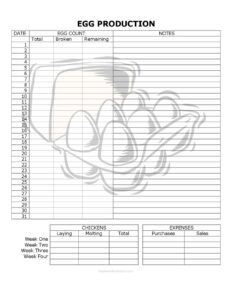
Detailed Egg Production Record
Track daily egg counts, flock health, and profit with the Detailed Egg Production Record — a free download in PDF and DOCX, no signup required.
PDF
DOC
28 downloads
1
likes
Download Files
- DOC
A Detailed Egg Production Record is a simple tracking sheet that lets poultry keepers log daily egg counts, monitor flock health, and keep tabs on the money flowing in and out of their operation. The most common reason people use it is to spot productivity trends — knowing exactly how many eggs their hens lay each day and week so they can manage feed, sales, and culling decisions. It is free to download in both PDF and DOCX formats, with no signup required.
What Is a Detailed Egg Production Record?
A Detailed Egg Production Record is a structured log used by backyard chicken owners, hobby farmers, and small commercial egg producers to document how many eggs their flock produces over time. It captures daily figures — total eggs gathered, how many were broken, and how many remained sellable — alongside flock status like the number of hens laying versus molting. The sheet also rolls those daily numbers into weekly totals and ties them to financial columns for purchases, sales, and profit or loss. In short, it turns scattered observations into a clear, dated paper trail you can review at the end of a week, month, or season.
When Do You Need a Detailed Egg Production Record?
This record is useful any time you want hard numbers instead of guesswork. Common situations include:
- Running a backyard flock and wanting to know whether your hens are earning their keep on feed costs.
- Selling eggs at a farmers market or roadside stand and needing to track sales, broken eggs, and remaining inventory.
- Monitoring seasonal dips when hens molt or daylight shortens and production naturally falls.
- Comparing breeds or flocks to see which group of hens lays most consistently.
- Preparing simple bookkeeping for a small farm business, where weekly totals feed into a broader expense ledger.
- Spotting health problems early — a sudden drop in egg count or a spike in broken shells can signal nutritional or coop issues that need attention.
What a Detailed Egg Production Record Should Have
A complete record balances three areas: daily production, flock condition, and finances. On the production side it should track the date, raw egg count, broken eggs, and the remaining sellable total. For flock condition it should note how many chickens are actively laying versus molting, so dips can be explained. Weekly subtotals (Week One through Week Four) give you a rolling monthly view. Finally, the financial section — expenses, purchases, sales, and profit/loss — connects egg output to dollars. A notes column ties it all together, letting you record weather, feed changes, or unusual events that explain the numbers.
How to Fill Out a Detailed Egg Production Record
- Date: Enter the collection date for each row so every entry is time-stamped and easy to compare day to day.
- Egg Count: Record the total number of eggs gathered that day before sorting.
- Total: Confirm or carry forward the running daily total if your sheet aggregates multiple collections.
- Broken: Note how many eggs were cracked, soft-shelled, or otherwise unsellable.
- Remaining: Subtract broken from the count to log the clean, usable eggs left for sale or use.
- Notes: Add context — a cold snap, a new feed, a predator scare, or a hen going broody.
- Chickens / Laying / Molting: Track the size of your flock, how many hens are currently laying, and how many are molting.
- Week One through Week Four: Total each week’s production to build a monthly snapshot.
- Expenses & Purchases: Log feed, bedding, equipment, and other costs.
- Sales & Profit/Loss: Enter egg revenue, then calculate profit or loss against expenses.
Reading the Numbers: Turning Records Into Decisions
The real value of this sheet appears once you have a few weeks of data. If your Week One total was strong but Week Three dropped sharply while molting numbers rose, the record explains itself — no panic needed. If broken-egg counts climb without a clear cause, that pattern may point to calcium deficiency, overcrowding, or rough handling. By matching daily counts against the laying-versus-molting columns, you can predict seasonal lulls and plan sales accordingly. The financial columns let you calculate a true cost per egg, helping you set fair prices and decide whether expanding the flock makes sense.
Keeping Accurate, Consistent Records
Consistency matters more than perfection. Collect and record at the same time each day so counts are comparable. Keep a digital backup of the DOCX version or scan your completed PDF sheets at the end of each month. If you sell eggs, retain these records alongside receipts — they make tax season and any food-safety or licensing inquiries far simpler. Storing several months of sheets together also reveals year-over-year patterns you would otherwise miss.
Common Mistakes to Avoid
- Skipping days — gaps break the trend line and make weekly totals misleading.
- Forgetting to subtract broken eggs from the remaining count, which inflates your sellable inventory.
- Ignoring the molting column, then worrying about a normal seasonal drop in production.
- Leaving the notes blank, so unusual numbers later have no explanation.
- Mixing up purchases and expenses, which distorts your profit/loss figure.
- Failing to total weeks promptly, letting daily entries pile up until the math becomes a chore.
Frequently Asked Questions
What is a Detailed Egg Production Record used for? It is used to track daily egg counts, flock health, and the finances of an egg operation in one place. Backyard keepers and small farms rely on it to spot productivity trends, manage costs, and decide on pricing or flock changes.
How do I fill out the broken and remaining columns? Enter the number of cracked or unusable eggs under Broken, then subtract that from your daily Egg Count to get the Remaining figure. The Remaining number reflects the clean eggs you can actually sell or use.
Why does the form track laying and molting chickens? Hens stop laying while they molt, so production naturally dips during that period. Recording how many birds are laying versus molting explains drops in your egg count without alarming you.
Is this egg production record free to download? Yes. You can download the Detailed Egg Production Record for free in both PDF and DOCX formats, with no signup or payment required.
Can I use this for a commercial egg business? It works well for backyard flocks and small commercial operations. For larger businesses, you may want to pair it with dedicated accounting software, but the weekly and profit/loss totals integrate easily into broader bookkeeping.
How often should I update the record? Ideally daily, at the same collection time each day, so your counts stay consistent and comparable. Tally the weekly columns and review the profit/loss at the end of each week or month.
This Detailed Egg Production Record template is a general example provided for informational purposes only. It is not legal, financial, tax, or veterinary advice, and recordkeeping or food-safety requirements vary by jurisdiction. Consult a qualified professional or your local agricultural authority for guidance specific to your situation.
Related Forms
- Spray Record
- Field Productivity Record
- Farmers Market Sales Record
- Field History Sheet
- Animal Profile Record
- Farm Equipment Record
Browse more in Agriculture.