
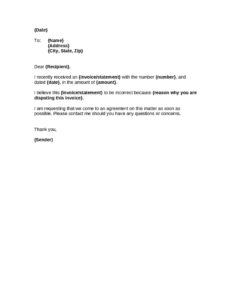
Disputed Invoice
Use this free disputed invoice letter template to formally challenge an incorrect billing amount and request resolution — free download in PDF and DOCX.
DOCX
0
likes
Download Files
- DOCX
A disputed invoice letter is a written notice you send to a vendor, supplier, or service provider to formally challenge an invoice or statement you believe is incorrect. People most often use it to flag an overcharge, a billing error, or a charge for goods or services they never received — and to request a prompt resolution. You can download this template free in PDF and DOCX formats, with no signup required.
What Is a Disputed Invoice Letter?
A disputed invoice letter is a short, professional business letter that documents your objection to a specific bill. It identifies the invoice or statement by number, date, and amount, then explains clearly why you believe the charge is wrong. The letter is typically issued by a customer or client to the company that sent the invoice, though businesses also use it with their own suppliers. Its purpose is twofold: to create a written record that you contested the charge within a reasonable timeframe, and to open a constructive conversation toward correcting the error. Because it is concise and factual, it keeps the dispute professional rather than confrontational while protecting your position.
When Do You Need a Disputed Invoice Letter?
This letter is useful any time the numbers on a bill do not match your records or expectations. Common situations include:
- Overbilling: The invoice amount is higher than the quote, contract, or agreed rate.
- Duplicate charges: You were billed twice for the same product, service, or subscription period.
- Goods or services not received: You are being charged for an item that never arrived or work that was never completed.
- Pricing or math errors: Line items, quantities, taxes, or totals were calculated incorrectly.
- Charges outside the agreement: Fees, surcharges, or add-ons appear that were never authorized.
- Credits not applied: A deposit, refund, discount, or prior payment is missing from the statement.
Types of Billing Disputes This Letter Covers
While the template is general, it adapts to several dispute types. A full dispute challenges the entire invoice — for example, when you were billed for a canceled order. A partial dispute accepts some line items while contesting others, such as a single mistaken charge on an otherwise accurate statement. A recurring billing dispute addresses subscription or service errors that repeat month to month. In each case, the same structure applies: identify the document, state your objection, and request agreement. The clearer you are about which type of dispute you are raising, the faster the recipient can investigate and respond.
What a Disputed Invoice Letter Should Have
A complete disputed invoice letter includes the recipient’s name and address, a clear identification of the document in question (invoice or statement number, date, and amount), a specific and factual reason for the dispute, a request to resolve the matter promptly, an invitation to discuss any questions, and your name as the sender. Keeping the tone polite and the facts precise makes the letter more effective and easier to act on.
How to Fill Out a Disputed Invoice Letter
- To / Name: Enter the name of the person or department handling billing — accounts receivable or a specific account manager works well.
- Address and City, State, Zip: Add the company’s mailing address so the letter reaches the right office.
- Dear {Recipient}: Open with a courteous greeting using the contact’s name.
- Invoice or statement type: Specify whether you are disputing an invoice or a statement.
- Number: Insert the exact reference number printed on the document so it can be located immediately.
- Date: Enter the date shown on the invoice or statement.
- Amount: State the billed amount you are contesting.
- Reason for disputing: Describe precisely why the charge is incorrect — cite the agreed price, the missing delivery, or the duplicate entry.
- Closing: Keep the request to reach an agreement and the offer to answer questions, then sign as the Sender with your name.
Tips for a Stronger Dispute
Send the letter as soon as you spot the problem; many vendor agreements and billing policies set a window for raising disputes. Attach or reference supporting documents — a copy of the contract, the original quote, a delivery receipt, or proof of a prior payment — so the recipient can verify your claim quickly. State exactly what you want, whether that is a corrected invoice, a credit, or a refund. Keep a dated copy of the letter for your records, and if you mail it, consider a method that provides delivery confirmation. A calm, specific tone almost always produces a faster, friendlier resolution than an angry one.
Disputed Invoice Letter vs. Withholding Payment
Sending a dispute letter is different from simply refusing to pay. The letter documents your good-faith objection and shows you are trying to resolve the matter, which protects your relationship and your record. Quietly withholding payment without explanation can trigger late fees, collections activity, or service interruptions. Whenever possible, dispute the specific contested amount in writing while continuing to communicate about undisputed portions of the bill. Check the terms of your contract or agreement, because some specify how and when disputes must be raised and what happens during the review period.
Common Mistakes to Avoid
- Vague reasons: Saying the bill is “wrong” without explaining how slows the investigation; be specific.
- Wrong reference details: An incorrect invoice number, date, or amount makes the charge hard to locate.
- Waiting too long: Missing your vendor’s dispute window can forfeit your right to a correction.
- Emotional or accusatory tone: Hostile language makes the recipient defensive and slows resolution.
- No paper trail: Failing to keep a dated copy leaves you without proof you contested the charge.
- Forgetting to state what you want: Always make a clear request — a corrected invoice, credit, or refund.
Frequently Asked Questions
What is a disputed invoice letter used for? It is used to formally notify a vendor or supplier that you believe an invoice or statement is incorrect and to request a correction. The letter creates a written record of your objection and opens a path to resolving the issue professionally.
How do I fill out the disputed invoice letter? Enter the recipient’s name and address, identify the invoice or statement by number, date, and amount, then clearly explain why you are disputing it. Finish with a request to reach an agreement and sign with your name as the sender.
Is a disputed invoice letter legally binding? The letter itself is not a contract, but it serves as important documentation that you contested a charge within a reasonable timeframe. Your underlying rights depend on your contract and applicable local laws, so keep a copy for your records.
Should I keep paying while a charge is in dispute? Where possible, pay the undisputed portion of the bill and contest only the amount in question, since unexplained nonpayment can lead to late fees or collections. Review your agreement, as some specify how disputes are handled during review.
Does this letter need to be notarized? No. A disputed invoice letter is a standard business communication and does not require notarization or witnesses. Simply sign and send it, ideally by a method that confirms delivery.
How much does this template cost? Nothing — you can download the disputed invoice letter template free in PDF and DOCX formats, with no signup required. Edit it with your own details and send it the same day.
This template is a general example provided for informational purposes only and is not legal, financial, or tax advice. Billing rules and dispute requirements vary by jurisdiction and by contract — consult a qualified professional for guidance on your specific situation.
Related Forms
- Request for Partial Shipment
- Cease and Desist Copyright
- Contract Modification
- Promotion Letter
- Recall To Work Letter
- Cease and Desist Libel
Browse more in Business Letters.