
Cease and Desist Libel
Download a free Cease and Desist Libel letter template to demand removal of false, defamatory statements — editable PDF and DOCX, free download, no signup.
PDF
DOCX
0
likes
Download Files
- DOCX
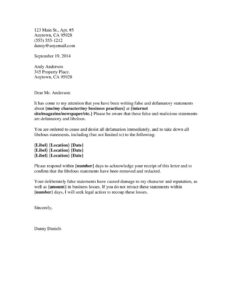
A Cease and Desist Libel letter is a formal written demand asking someone to stop publishing false, defamatory written statements about you or your business and to remove the material that is already posted. People most often use it as a firm first step to protect their reputation before escalating to legal action. This template is free to download in PDF and DOCX, with editable fields you can complete in minutes.
What Is a Cease and Desist Libel Letter?
A Cease and Desist Libel letter is a notice sent by an individual or business (or their representative) to a person who has published false written statements that harm their reputation. Libel specifically refers to written or published defamation — as opposed to slander, which is spoken. The letter documents exactly what was said, where, and when, formally orders the writer to stop and take the content down, and warns that legal action may follow if they refuse. It serves two purposes: it gives the other party clear notice and a chance to fix the problem, and it creates a written record showing you raised the issue and demanded a remedy.
When Do You Need a Cease and Desist Libel Letter?
This letter is appropriate whenever someone publishes false written claims that damage your name, character, or business. Common scenarios include:
- A former customer posts fabricated reviews accusing your business of fraud or illegal conduct.
- A competitor circulates false written claims about your products, services, or finances.
- An ex-employee or business partner publishes untrue statements on social media or a blog.
- An anonymous account spreads defamatory posts on a forum, review site, or community page.
- A newspaper, magazine, or website prints false allegations about you or your company.
- Someone repeatedly emails or messages false accusations to your clients, vendors, or community.
In each case, the key element is that the statements are false and presented as fact (not honest opinion), and that they have caused — or are likely to cause — harm to your reputation or income.
What a Cease and Desist Libel Letter Should Have
To be effective and credible, the letter should clearly identify all parties, describe the defamatory content precisely, and state your demands without ambiguity. A complete letter includes your full name and contact details, the recipient’s name and address, the date, and a direct statement that the writer has published false and libelous material. It should itemize each specific statement, where it appeared, and when. Crucially, it must include a clear order to stop and remove the content, a deadline for compliance and confirmation, a note about the harm caused (including any quantifiable losses), and a warning of potential legal consequences if the demands are ignored.
How to Fill Out a Cease and Desist Libel Letter
- Enter your address, phone number, and email at the top so the recipient knows how to respond.
- Add the date you are sending the letter — this anchors your timeline.
- Fill in the recipient’s name and full mailing address (e.g., “Andy Anderson, 345 Property Place”).
- Open with the salutation, then complete the phrase describing what was defamed — choose {me / my character / my business practices} as appropriate.
- Specify the {internet site / magazine / newspaper / etc.} where the statements appeared.
- Complete each defamation entry with the {Libel} (the exact false statement), the {Location} (URL, page, or publication), and the {Date} it was published. Repeat for every statement.
- Enter the {number} of days the recipient has to respond and confirm removal.
- State the {amount} of documented business losses caused by the statements.
- Reiterate the second {number} of days for retraction before legal action.
- Sign and print your name at the bottom (e.g., “Danny Daniels”).
Documenting the Defamatory Statements
The strength of your letter depends on specificity. Before you send it, take dated screenshots, save URLs, archive web pages, and keep copies of any printed material containing the false statements. The template’s repeating {Libel} / {Location} / {Date} blocks exist so you can list each statement individually rather than referring to them vaguely. Quote the offending words exactly where you can — paraphrasing weakens your position and invites disputes about what was actually said. If the same false claim appears in multiple places, list each location as its own line so the recipient cannot claim they did not know which posts to remove.
Sending the Letter and Keeping Records
How you deliver the letter matters as much as what it says. Many people send it by certified mail with return receipt requested, by email with a read receipt, or both, so they have proof the recipient received it. Keep a copy of the signed letter and all delivery confirmations together with your evidence file. This paper trail demonstrates that you gave clear notice and a reasonable opportunity to comply — which can be important if the matter later escalates. A cease and desist letter is a demand, not a court order, so it carries no automatic legal force; its power comes from signaling that you are serious and prepared to pursue further remedies.
Common Mistakes to Avoid
- Being vague. Failing to quote the exact statements or list specific URLs makes the demand easy to ignore or dispute.
- Targeting opinions. Honest opinions and fair criticism are generally not libel — only false statements of fact presented as true.
- Using threatening or abusive language. Keep the tone firm and professional; inflammatory wording can undermine your credibility.
- Inventing damages. Only claim business losses you can actually document; exaggerated figures hurt your position.
- Setting no deadline. Without a clear response window, there is no point at which the recipient is considered to have failed to comply.
- Not keeping proof. Sending the letter without delivery confirmation or saved evidence leaves you with little to show later.
Frequently Asked Questions
What is the difference between libel and slander? Libel refers to defamation that is written or published — such as in posts, articles, or reviews — while slander refers to spoken defamation. This letter is designed for libel, meaning false written statements. If the defamatory remarks were only spoken, the wording would need to be adjusted accordingly.
Is a Cease and Desist Libel letter legally binding? No. A cease and desist letter is a formal demand, not a court order, so it does not legally compel the recipient to act. Its value lies in providing clear notice, documenting your objection, and signaling that you may pursue legal action if the statements are not removed.
Does this letter need to be notarized or witnessed? Generally no. A cease and desist letter is a private demand and typically does not require notarization or witnesses to be sent. Your dated signature and proof of delivery are usually what matter most.
How do I prove the statements are libelous? Save dated screenshots, URLs, and copies of any printed material, and quote the exact false statements in the letter. Strong evidence shows precisely what was said, where, and when, which makes your demand far more credible.
How much does this template cost? Nothing. You can download the Cease and Desist Libel letter template free from Business Forms Pro in both PDF and DOCX formats, with no signup required, and edit the fields to fit your situation.
What if the person ignores my letter? If the recipient does not respond or remove the content within your stated deadline, you may consider consulting an attorney about next steps, which could include further legal action. The letter itself helps show that you gave reasonable notice before escalating.
This template is a general example provided for informational purposes only and is not legal advice. Defamation laws and requirements vary by jurisdiction, and the strength of any claim depends on the specific facts. Consult a qualified attorney before relying on or sending this letter.
Related Forms
- Request for Disputed Invoice Information
- Auto Insurance Verification Letter
- Sales Order Confirmation
- Cease and Desist Trademark
- Funds Solicitation
- Employee Termination For Absenteeism
Browse more in Business Letters.