
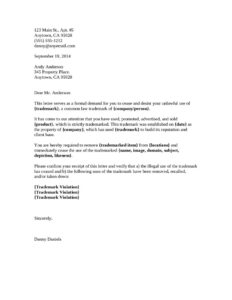
Cease and Desist Trademark
Download a free Cease and Desist Trademark letter template to demand someone stop unauthorized use of your mark, available as a free PDF and DOCX download.
DOCX
4 downloads
0
likes
Download Files
- DOCX
A Cease and Desist Trademark letter is a formal written demand instructing another party to immediately stop using a trademark you own or control. People most often use it as a first, non-litigation step when they discover a competitor, seller, or website using their brand name, logo, or product identity without permission. You can download this template free in both PDF and DOCX formats, with no signup required.
What Is a Cease and Desist Trademark Letter?
A Cease and Desist Trademark letter is a notice sent by a trademark owner (or their representative) to a person or business that is allegedly using that trademark without authorization. It documents the owner’s claim to the mark, identifies the specific infringing activity, and formally demands that the recipient stop the conduct and remove any infringing materials. The letter typically asks for written confirmation that the unlawful use has ended. While it is not a court order, it creates a clear paper trail showing that the owner asserted their rights and put the recipient on notice — which can be important if the dispute escalates later.
When Do You Need a Cease and Desist Trademark Letter?
This letter is useful any time your brand identity is being used without your consent. Common situations include:
- A competitor is selling products under your business name, logo, or slogan.
- An online seller is listing counterfeit or knockoff goods that carry your trademarked name or image.
- Someone has registered a domain name that incorporates your mark to attract your customers.
- A social media account, advertisement, or marketing campaign uses your trademarked name, likeness, or depiction.
- A former partner, franchisee, or employee continues using your brand after the relationship has ended.
- Another party copies your product packaging or visual branding in a way that confuses customers.
What a Cease and Desist Trademark Letter Should Have
To be effective, the letter should clearly state several key elements. First, it must identify you (or your company) as the rightful owner of the trademark and name the exact mark at issue. Second, it should describe the infringing activity — the products, listings, domains, or depictions involved — with enough specificity that the recipient knows precisely what to stop. Third, it should reference when and how your rights to the mark were established. Finally, it should make a clear demand: cease the use, remove the infringing materials, and confirm compliance in writing by a stated method. A professional, factual tone strengthens the letter and keeps the door open for resolution.
How to Fill Out a Cease and Desist Trademark Letter
- Enter your contact details at the top — your street address, city, state, ZIP, phone number, and email — followed by the date you are sending the letter.
- Add the recipient’s full name and mailing address so the demand is directed to the responsible party.
- Open with the salutation, then state that the letter is a formal demand to cease and desist unlawful use of your {trademark}, identifying it as a common law trademark of {company/person}.
- Describe the infringing activity by naming the {product} that has been used, promoted, advertised, or sold under your mark.
- Establish your rights by entering the {date} the trademark was first used and confirming it is the property of your {company}.
- Specify what must be removed: the {trademarked item} and the {locations} where it appears, and the type of use involved — name, image, domain, subject, depiction, or likeness.
- List each specific {Trademark Violation} you want removed, recalled, or taken down.
- Request written confirmation of receipt and compliance, then sign with your name.
Common Law vs. Registered Trademarks
This template references a common law trademark, meaning a mark you have established through actual use in commerce rather than through federal registration. Common law rights can exist simply because you have built reputation and goodwill around a name or logo in your market area. A registered trademark — one filed and approved with the appropriate trademark office — generally provides broader and easier-to-enforce protection. You can send a cease and desist letter based on either type of right, but if your mark is registered, it is worth citing the registration number, because doing so strengthens your position and signals that you are serious about enforcement.
Sending the Letter and What Comes Next
Send the letter using a method that creates proof of delivery, such as certified mail with a return receipt, so you can demonstrate the recipient received it. Keep a copy of the signed letter and any tracking records for your files. Give the recipient a reasonable deadline to respond and to confirm that the infringing use has stopped. If they comply, retain their written confirmation as evidence. If they ignore the letter or dispute your claim, your documented notice becomes valuable should you decide to pursue formal legal action or seek the advice of a trademark attorney. Many disputes resolve at the letter stage, which is why a clear, professional demand is often the most cost-effective first step.
Common Mistakes to Avoid
- Being vague about which mark or activity is infringing — name the exact trademark, product, and locations.
- Overstating your rights or claiming registration you do not actually hold.
- Using threatening or abusive language instead of a firm, professional tone.
- Forgetting to set a clear deadline and a specific method for the recipient to confirm compliance.
- Sending the letter without proof of delivery, leaving no record that notice was given.
- Failing to keep a copy of the signed letter and any response for your records.
Frequently Asked Questions
What is a Cease and Desist Trademark letter used for? It is used to formally notify another party that they are using your trademark without permission and to demand that they stop. The letter identifies the mark, describes the infringing activity, and requests written confirmation that the unlawful use has ended. It is commonly the first step before any legal action.
Is a cease and desist letter legally binding? The letter itself is not a court order, so it does not legally force the recipient to act. However, it puts them on formal notice of your claim and can carry significant weight if the matter later goes to court. Documented notice often motivates the recipient to comply voluntarily.
Do I need a registered trademark to send one? No. You can assert common law trademark rights based on your actual use of the mark in commerce, as this template does. That said, a registered trademark generally provides stronger and broader protection and is easier to enforce, so cite a registration number if you have one.
Does the letter need to be notarized or witnessed? No, a cease and desist trademark letter does not require notarization or witnesses to be valid. What matters is that it is clear, accurate, and delivered in a way that proves receipt, such as certified mail. Keep your delivery records and a signed copy.
How much does this template cost? This template is completely free to download from Business Forms Pro in both PDF and DOCX formats, with no signup required. You can edit it to fit your specific situation and reuse it as needed.
What should I do if the recipient ignores the letter? If the infringing use continues after your stated deadline, retain all your documentation and consider consulting a trademark attorney about next steps. Your documented notice supports any future enforcement action you may decide to pursue.
This template is a general example provided for informational purposes only and is not legal advice. Trademark laws and enforcement requirements vary by jurisdiction, and individual circumstances differ — consult a qualified trademark attorney before sending a cease and desist letter or taking other action.
Related Forms
- Wrongful Delivery Refusal
- Request For Goods On Approval
- Unpaid Invoice
- Apology For Employee Behavior
- Notice of Sale Ending
- Notice of Breach of Option
Browse more in Business Letters.