
Wrongful Delivery Refusal
Download a free Wrongful Delivery Refusal letter template in PDF and DOCX to notify a customer their refusal breached your shipping agreement — free download.
DOCX
1 downloads
0
likes
Download Files
- DOCX
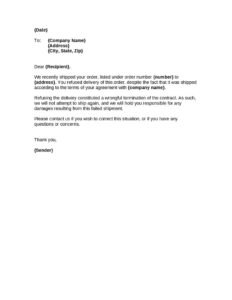
A Wrongful Delivery Refusal letter is a formal business notice sent to a customer who has refused a properly shipped order, informing them that the refusal breaches the terms of their agreement and that they may be held responsible for resulting damages. Businesses most often use it after a buyer turns away a delivery that was sent correctly and on time, and it helps create a clear paper trail. This template is free to download in PDF and DOCX, with no signup required.
What Is a Wrongful Delivery Refusal Letter?
A Wrongful Delivery Refusal letter is a written communication issued by a seller, supplier, or shipper to a customer who declined to accept a delivery that was shipped in accordance with the parties’ contract. It documents that the order was sent correctly under the agreed terms, states that the refusal amounts to a wrongful termination of the contract, and puts the recipient on notice that they may be liable for damages such as return freight, restocking, or lost product value. The letter is typically sent by a business’s accounts, sales, or fulfillment team, and it serves both as a notification and as evidence should the matter escalate to collections or a dispute.
When Do You Need a Wrongful Delivery Refusal Letter?
This letter is appropriate any time a buyer rejects a shipment that was sent exactly as the agreement required. Common situations include:
- A customer refuses a delivery at the dock or door even though the goods match the purchase order and arrived on schedule.
- A buyer changes their mind after placing a binding order and turns the shipment away without a valid reason.
- A reseller or distributor declines a confirmed wholesale shipment, leaving you with return freight and restocking costs.
- A customer refuses delivery in an attempt to cancel a contract that does not permit cancellation at that stage.
- A recipient rejects a partial or final installment of an order they previously approved.
- You need a formal record before pursuing the unpaid balance, damages, or a third-party collection process.
What a Wrongful Delivery Refusal Letter Should Have
To be effective and credible, the letter should clearly identify all parties and reference the specific transaction. Include the recipient’s company name and full address, a clear reference to the order number and shipping address, and a factual statement that the goods were shipped according to the terms of the agreement. It should explain that the refusal constituted a wrongful termination of the contract, state that you will not attempt redelivery, and notify the customer they may be held responsible for damages. A professional, measured tone matters — the letter should be firm but leave the door open for the recipient to correct the situation or ask questions. Finally, sign it with the sender’s name and contact details so the recipient knows exactly how to respond.
How to Fill Out a Wrongful Delivery Refusal Letter
- Enter the recipient’s Company Name at the top, followed by their full mailing Address and the City, State, Zip line so the notice reaches the correct party.
- Address the letter to the appropriate Recipient — ideally a named individual such as a purchasing manager or account contact rather than a generic greeting.
- Reference the order number exactly as it appears in your records so there is no ambiguity about which shipment is in question.
- Insert the address the order was shipped to, confirming the goods were sent to the correct destination.
- Name the company whose agreement governed the transaction so the contractual basis is clear.
- Review the body language about wrongful termination and your decision not to reship — adjust only if your situation differs.
- Close with the Sender name, and add a phone number or email so the recipient can contact you to resolve matters.
- Proofread, save a dated copy for your files, and send by a trackable method such as certified mail or email with a read receipt.
How This Differs From a Standard Demand Letter
A Wrongful Delivery Refusal letter is narrower than a general demand letter. Its focus is the act of refusing a correctly shipped order and the contractual consequences of that refusal, rather than an outstanding invoice alone. Where a demand letter typically asks for payment by a deadline, this notice establishes that the buyer breached the agreement by declining delivery and reserves your right to recover any resulting costs. Many businesses send this letter first to create a record, then follow up with a formal demand for damages or a settlement offer if the customer does not respond. Keeping the two steps distinct strengthens your documentation if the dispute later moves to collections or court.
Tips for Sending and Documenting the Letter
Send the letter promptly after the refusal so the timeline stays clear and your costs are easier to substantiate. Use a delivery method that provides proof of receipt, and keep copies of the original purchase order, shipping confirmation, carrier records, and the refusal notice from the freight company. Attach or reference these documents if helpful, and quantify your damages — return freight, restocking fees, and any depreciation — so the recipient understands the financial exposure. A factual, professional tone protects you better than an aggressive one, and offering a path to resolution often prompts faster cooperation than threats alone.
Common Mistakes to Avoid
- Sending the letter before confirming the shipment actually complied with the agreement — if the order was late or incorrect, the refusal may not be wrongful.
- Omitting the order number or shipping address, which weakens the record and invites disputes about which transaction is involved.
- Using an angry or threatening tone that can undermine your professionalism and complicate any later negotiation.
- Failing to keep proof of delivery and refusal, leaving you without evidence of the breach.
- Forgetting to include sender contact details, so the recipient cannot easily respond or settle.
- Claiming specific damage amounts you cannot document, which can backfire if the matter is contested.
Frequently Asked Questions
What is a Wrongful Delivery Refusal letter used for? It is used to formally notify a customer that refusing a properly shipped order breached your agreement. The letter documents the refusal, states you will not attempt redelivery, and puts the recipient on notice that they may be responsible for resulting damages. It also creates a record you can rely on if the dispute escalates.
How do I fill out the template? Enter the recipient’s company name and address, address it to a named contact, and reference the order number and the shipping address. Confirm the goods were sent per the agreement, then sign as the sender and add your contact information. Save a dated copy and send it through a trackable method.
Is this letter legally binding? The letter itself is a notice rather than a contract, so it does not by itself impose new obligations. However, it can serve as important evidence of a breach and of your intent to seek damages. Whether the buyer is actually liable depends on the underlying agreement and applicable law.
Does a Wrongful Delivery Refusal letter need to be notarized? No, this type of business notice does not generally require notarization or witnesses. A clear, signed, and dated letter sent through a method that provides proof of receipt is usually sufficient. Keep your own copy along with supporting shipping records.
When should I send it? Send it as soon as possible after learning the delivery was refused, while the timeline and details are fresh. Prompt notice strengthens your record and makes it easier to substantiate the costs you incurred. Delaying can make damages harder to prove and may weaken your position.
How much does this template cost? It is completely free to download from Business Forms Pro in both PDF and DOCX formats, with no signup required. You can customize the editable version to fit your specific order and agreement. Reuse it whenever you face a similar refusal situation.
This template is provided as a general example for informational purposes only and does not constitute legal, financial, or business advice. Contract and commercial requirements vary by jurisdiction and by the terms of your specific agreement. Consult a qualified attorney before relying on this letter in any dispute.
Related Forms
- Pandemic Attendee Event Letter
- Warranty Claim on a Product
- New Employee Introduction
- Reference Request
- Notice of Product Defect
- Customer Survey Request
Browse more in Business Letters.