
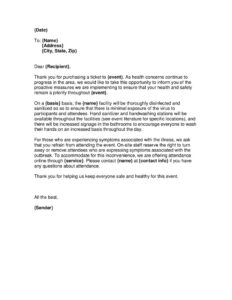
Pandemic Attendee Event Letter
Download a free Pandemic Attendee Event Letter template to inform guests of health and safety measures for your event, available in PDF and DOCX.
PDF
DOCX
2 downloads
0
likes
Download Files
- DOCX
A Pandemic Attendee Event Letter is a written communication sent to people who plan to attend an event, outlining the health and safety measures, requirements, and expectations related to a pandemic or contagious-disease situation. The most common reason organizers use it is to inform registered guests of new protocols — such as masking, vaccination, testing, or capacity limits — before they arrive. You can download it free in both PDF and DOCX, with no signup required.
What Is a Pandemic Attendee Event Letter?
A Pandemic Attendee Event Letter is a formal notice issued by an event organizer, host, venue, or association to people registered or invited to attend a gathering. It documents the safety steps the organizer is taking, the rules attendees must follow, and any changes to the event format caused by public-health conditions. Conferences, weddings, trade shows, training sessions, fundraisers, and community meetings all use this kind of letter. The goal is twofold: to keep attendees informed and reassured, and to set clear, written expectations so everyone arrives prepared. A well-written letter also helps organizers demonstrate that they communicated their policies transparently and in advance.
When Do You Need a Pandemic Attendee Event Letter?
This letter is useful any time health conditions affect how an event runs or what guests must do to participate. Common situations include:
- Notifying conference or seminar registrants of new entry requirements such as proof of vaccination or a negative test.
- Telling wedding or party guests about reduced capacity, outdoor seating, or distancing arrangements.
- Informing trade show exhibitors and visitors of mask mandates, sanitation stations, and one-way traffic flow.
- Updating ticket holders that an event is being postponed, moved to a hybrid format, or shifted online.
- Advising attendees of what to do if they feel unwell, including refund or transfer options.
- Communicating local government or venue rules that have changed since registration opened.
What a Pandemic Attendee Event Letter Should Have
A complete letter balances reassurance with clear instructions. Essential elements include the event name, date, and location; the name and contact details of the organizer; a brief explanation of the health situation prompting the letter; and the specific measures attendees must follow. It should also describe what the organizer is doing on its end — enhanced cleaning, ventilation, reduced capacity — so guests understand the shared responsibility. Include any conditions for entry, what happens if someone is symptomatic, and refund or rescheduling policies where relevant. Finally, the letter should provide a point of contact for questions and a warm, professional closing that thanks attendees for their cooperation and understanding.
How to Fill Out a Pandemic Attendee Event Letter
- Add your organization’s name, logo, and the date the letter is sent at the top.
- Insert the recipient’s name, or use a general greeting such as “Dear Valued Attendee” for a mass mailing.
- Open with a clear statement of purpose — that you are writing to share important health and safety information about the upcoming event.
- State the event name, date, time, and venue so there is no confusion about which gathering the letter covers.
- Explain the current public-health situation briefly and the reason for any new measures.
- List the specific requirements for attendees, such as masking, vaccination, testing, registration, or distancing.
- Describe the safety steps your team is taking, like sanitation, capacity limits, and ventilation.
- Outline what guests should do if they feel ill, and any refund, transfer, or postponement options.
- Provide a name, email, and phone number for questions.
- Close with thanks, sign off, and include the sender’s title and signature.
Tips for Writing a Reassuring, Effective Letter
Tone matters as much as content in a pandemic-related message. Lead with empathy: acknowledge that guests may have concerns and that their wellbeing is your priority. Keep the language plain and avoid medical jargon that might confuse readers. Use short paragraphs or bullet points for the rules so attendees can scan them quickly. Be specific — instead of saying “follow safety guidelines,” state exactly what is required, such as “please wear a mask in all indoor areas.” Where policies are subject to change, say so and point readers to a webpage or contact for the latest updates. A confident, organized letter signals that the event is being managed responsibly, which builds trust and reduces last-minute cancellations.
Sending the Letter and Following Up
Time your letter so attendees receive it with enough notice to prepare — for example, to arrange a test or adjust travel plans. Email is the fastest channel for a large audience, but you may also post the same information on the event page and registration confirmation. Consider sending a brief reminder closer to the date in case requirements have changed. Keep a copy of every version you send, along with the date, so you have a record of how and when policies were communicated. If rules shift after the letter goes out, issue a clear update rather than assuming guests will check on their own.
Common Mistakes to Avoid
- Being vague about requirements, leaving attendees unsure what they need to bring or do.
- Sending the letter too late for guests to comply or adjust plans.
- Omitting a contact for questions, which leads to a flood of individual inquiries.
- Using an alarming or accusatory tone instead of a calm, supportive one.
- Forgetting to mention refund, transfer, or postponement options for those who cannot attend.
- Failing to update the letter when local rules or venue policies change.
Frequently Asked Questions
What is a Pandemic Attendee Event Letter used for? It is used to inform event attendees about health and safety measures, entry requirements, and any changes prompted by a pandemic or contagious-disease situation. Organizers send it before an event so guests know what to expect and how to prepare. It also serves as a written record that policies were clearly communicated.
How do I write one? Start with your organization’s details and the date, address the attendee, and state the event’s name, date, and location. Then explain the safety measures, attendee requirements, and what to do if someone feels unwell, and close with a contact for questions and a thank-you. Our free template gives you a ready structure you can fill in.
Is this letter legally binding? The letter itself is primarily an informational communication rather than a contract, though the policies it describes may form part of your event’s terms of attendance. Whether any requirement is enforceable depends on your venue rules, ticket terms, and local regulations. For binding conditions, reference your full terms and consult a professional.
Does it need to be signed or notarized? No, a Pandemic Attendee Event Letter does not require notarization. A signature from the organizer or an authorized representative adds a professional, accountable touch, especially on a printed copy. For mass emails, an organizational sign-off and contact details are usually sufficient.
Can I customize the template for my event? Yes. The DOCX version is fully editable, so you can adjust the wording, add your logo, list your specific requirements, and tailor the tone to your audience. Update the event details and safety measures to reflect your actual policies before sending.
How much does the template cost? Nothing — it is completely free to download here in both PDF and DOCX formats, with no signup or account required. You can reuse it for multiple events and edit it as health guidance evolves.
This template is a general example provided for informational purposes only and does not constitute legal, medical, or public-health advice. Health requirements and event regulations vary by jurisdiction and change over time. Consult the relevant authorities and a qualified professional to ensure your communications and event policies comply with current rules.
Related Forms
- Reservation Confirmation Letter
- Furlough Letter
- Withheld Delivery Notice
- Request for Shipping Information
- Landlord Smoking Warning
- Sales Order Confirmation
Browse more in Business Letters.