
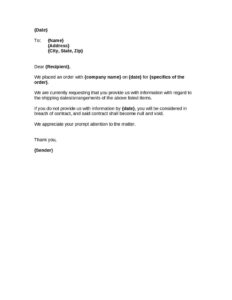
Request for Shipping Information
Download a free Request for Shipping Information letter template to ask a supplier for order shipping dates and arrangements — free PDF and DOCX download.
DOCX
2 downloads
1
likes
Download Files
- DOCX
A Request for Shipping Information letter is a formal business letter a buyer sends to a supplier or vendor to ask for the shipping dates, arrangements, and status of an order that has already been placed. People most often use it when a delivery is overdue or unconfirmed and they need a written record of the inquiry. This template is free to download in both PDF and DOCX formats, with no signup required.
What Is a Request for Shipping Information?
A Request for Shipping Information is a short, professional letter from a customer to a company that has received an order but has not yet confirmed when or how the goods will ship. It documents the original order details — the company you ordered from, the order date, and the specific items — and politely demands shipping information by a stated deadline. Businesses and individuals issue it to create a paper trail, prompt a slow vendor to respond, and signal that the buyer is monitoring the contract closely. Because the letter references the underlying purchase agreement, it can also serve as evidence of a good-faith effort to resolve a delivery delay before any further action is taken.
When Do You Need a Request for Shipping Information?
This letter fits a range of situations where an order has been placed but the delivery picture is unclear. Common scenarios include:
- An overdue shipment: The expected delivery window has passed and you have heard nothing from the supplier.
- No tracking or confirmation: You received an order acknowledgment but never got shipping dates, a carrier name, or a tracking number.
- Inventory or production planning: Your operation depends on the incoming goods and you need firm dates to schedule work, staffing, or onward sales.
- A large or high-value order: The stakes are high enough that you want written confirmation rather than a verbal promise.
- A recurring or contract supplier: You want to formally document a pattern of slow or missing shipping updates.
- Before escalating: You intend to cancel or dispute the order and need a clear written request on file first.
What a Request for Shipping Information Should Have
A complete, effective letter is brief but precise. It should clearly identify the recipient company and a named contact, reference the original order by date and contents, and state exactly what you are asking for — shipping dates and arrangements. The most important element is a firm response deadline, paired with a clear statement of the consequence if that deadline passes. The letter should also include a courteous closing and your name as the sender. Keeping the tone professional rather than accusatory makes it easier for the supplier to act quickly and preserves the business relationship where possible.
How to Fill Out a Request for Shipping Information
Work through the template field by field to make sure nothing is left blank:
- To / Company Name: Enter the full legal or trading name of the supplier you placed the order with.
- Address and City, State, Zip: Add the company’s mailing address so the letter reaches the right office.
- Dear {Recipient}: Address a specific person where possible — an account manager, sales rep, or fulfillment contact — rather than a generic title.
- Company name (order reference): Confirm the name of the company you ordered from in the body sentence.
- Order date: Insert the exact date the order was placed so the supplier can locate it quickly.
- Specifics of the order: List the items, quantities, and any order or invoice number to remove ambiguity.
- Response deadline ({date}): State a reasonable but firm date by which you expect shipping information.
- Sender: Sign with your name, and add your title, company, and contact details so they can reply.
Understanding the Breach-of-Contract Clause
This template includes a line stating that if the supplier does not provide information by your deadline, they will be considered in breach of contract and the contract becomes null and void. Use this language thoughtfully. Whether a missed shipping-information deadline actually constitutes a legal breach depends entirely on the terms of your original purchase agreement and the law of your jurisdiction. The clause is most appropriate when your contract already sets delivery or notice obligations. If you are unsure, you can soften the wording to request the information without declaring an automatic cancellation, then escalate separately if needed. The point of the clause is to communicate seriousness and prompt a fast response, not to replace careful review of your actual contract terms.
Sending the Letter and Following Up
Send the letter through a method that gives you proof of delivery — email with a read receipt, or a tracked postal service for formal matters. Keep a dated copy for your records, along with the original order confirmation. If the supplier responds with partial information, reply in writing to confirm the agreed shipping dates. If the deadline passes with no response, your documented request supports whatever next step you choose, whether that is canceling the order, requesting a refund, or sourcing the goods elsewhere. A clear timeline of communications is far more persuasive than a series of phone calls no one can verify later.
Common Mistakes to Avoid
- Vague order details: Leaving out the order date or item specifics forces the supplier to guess and slows the reply.
- An unreasonable deadline: Demanding information within hours can come across as hostile; give a fair, clearly stated date.
- Using the breach clause carelessly: Declaring a contract void without checking your actual agreement can create more problems than it solves.
- No named recipient: A letter addressed to no one in particular is easy to ignore.
- Forgetting your contact details: If the supplier can’t easily reach you, they can’t send the information you asked for.
- Keeping no copy: Without a saved, dated record, the letter loses much of its value as evidence.
Frequently Asked Questions
What is a Request for Shipping Information letter used for? It is used to formally ask a supplier for the shipping dates and arrangements of an order you have already placed. Buyers send it when a delivery is late or unconfirmed, and it creates a written record of the request. It also signals that you expect a prompt, accountable response.
How do I fill out the template? Enter the supplier’s company name and address, address a named contact, then reference your original order by date and itemized contents. Set a clear deadline for the shipping information and sign with your name and contact details. Review the breach-of-contract line against your actual agreement before sending.
Is this letter legally binding? The letter itself is a request, not a contract. Any legal effect comes from the underlying purchase agreement and applicable law, not from the letter alone. The breach-of-contract clause restates a possible consequence but does not by itself change your contract terms.
Does the letter need to be notarized or witnessed? No. A business request letter does not require notarization or witnesses to be valid or effective. Sending it through a tracked or documented method is more useful than notarization for proving it was delivered.
How much does this template cost? It is completely free to download from Business Forms Pro in both PDF and DOCX formats. There is no signup, subscription, or payment required. You can edit the DOCX version to match your order details.
What should I do if the supplier still does not respond? Keep your dated copy of the letter and any delivery proof as evidence of your good-faith request. Review your purchase agreement to understand your cancellation or refund rights, and consider escalating to a manager or seeking professional advice. A documented request strengthens whatever step you choose next.
This template is provided as a general example for informational purposes only and is not legal, financial, or contractual advice. Contract and consumer requirements vary by jurisdiction, and the rights described here depend on your specific agreement. Consult a qualified professional before relying on this letter in any dispute.
Related Forms
- 60 Days Past Due Letter
- Landlord Unauthorized Guest Warning
- Authorization to Return Items
- Reservation Confirmation Letter
- Stop Delivery
- Congratulations on Promotion
Browse more in Business Letters.