
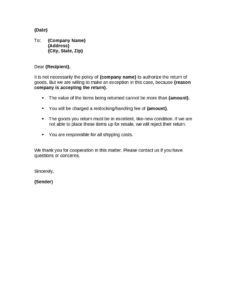
Authorization to Return Items
Download a free Authorization to Return Items letter template to formally approve a customer or vendor return — free PDF and DOCX download, no signup.
DOCX
3 downloads
1
likes
Download Files
- DOCX
An Authorization to Return Items letter is a short business letter a seller sends to confirm that a customer or vendor is permitted to send goods back, even when returns are not standard policy. People most often use it to document a one-time exception to a no-return rule while keeping the relationship positive. It is free to download here in both PDF and DOCX formats with no signup required.
What Is an Authorization to Return Items Letter?
An Authorization to Return Items letter is a written notice issued by a company to a buyer, client, or supplier granting permission to return previously delivered or purchased goods. It documents that the seller has reviewed the request and agreed to accept the items back, often as a goodwill gesture or special exception rather than a routine entitlement. The letter typically names the recipient, the company making the decision, and the specific reason the return is being approved. Because it creates a clear paper trail, it helps both parties avoid disputes about whether a return was ever authorized, what was approved, and on what terms. It is commonly used in retail, wholesale, and B2B supply relationships.
When Do You Need an Authorization to Return Items Letter?
This letter is useful any time a return falls outside your normal process and you want a clear, professional record of the approval. Common situations include:
- A loyal customer requests a return after your stated return window has closed and you choose to make an exception.
- A wholesale or B2B buyer received goods they no longer need and asks to send them back for credit.
- An item was sold “final sale” or “as-is,” but a service issue or relationship consideration leads you to accept it anyway.
- A vendor shipped product you ordered, and you are arranging an approved return of unsold or excess inventory.
- A customer reports a quality concern and you want to authorize the return before a refund or replacement is processed.
- You need documented authorization so your warehouse or shipping team knows to expect and accept the incoming package.
What an Authorization to Return Items Letter Should Have
To be clear and effective, the letter should identify the recipient and their address, name the company granting the return, and state plainly that the return is being authorized. Crucially, it should explain that this is an exception to normal policy and give the specific reason the company has agreed to it. A courteous tone, an invitation to ask questions, and a clear signature from an authorized sender round out the document. Including any conditions — such as where to ship the items, a deadline, or whether a refund or credit applies — makes the authorization even more useful, though the base template keeps it intentionally simple.
How to Fill Out an Authorization to Return Items Letter
- In the To block, enter the recipient’s Company Name, followed by their Address and City, State, Zip so the letter is correctly directed.
- In the salutation, replace {Recipient} with the contact person’s name — for example, “Dear Ms. Alvarez.” Use a name rather than a generic greeting whenever possible.
- In the body, insert your own {company name} where the letter explains that returns are not standard policy. This frames the approval as an exception.
- Complete the {reason company is accepting the return} field with a specific, honest explanation — for example, “the product arrived later than promised” or “as a courtesy to a valued long-term customer.”
- Review the closing courtesy line and the invitation to contact you with questions; adjust the wording if you want to add return instructions or a deadline.
- Sign off by replacing {Sender} with your name, and add your title and contact details so the recipient knows who authorized the return.
Adding Conditions and Return Instructions
The base template is deliberately brief, but most businesses benefit from spelling out the terms of the approved return. Consider adding a sentence noting where items should be shipped, who pays return shipping, and the condition items must be in to qualify (for example, unopened or in original packaging). State whether the customer will receive a refund, store credit, or a replacement, and by when. If you assign a return authorization number, include it so your receiving team can match the incoming package to this approval. These details turn a friendly letter into an actionable instruction that prevents confusion on both ends.
How It Differs From a Standard Return Policy
A return policy is a general, published set of rules that applies to everyone. An Authorization to Return Items letter, by contrast, is a targeted, one-to-one document approving a specific return for a specific recipient. The template even acknowledges this distinction by stating that authorizing the return “is not necessarily the policy” of the company. Using this letter lets you preserve a firm overall policy while still extending goodwill in individual cases — and it gives you written proof that the exception was a deliberate, documented choice rather than a precedent that applies to all customers.
Common Mistakes to Avoid
- Leaving the reason field vague — a clear explanation protects you and reassures the recipient.
- Forgetting to specify a return address, deadline, or condition requirements, which can lead to disputes later.
- Implying the exception is now standard policy; make clear it is a one-time courtesy if that is your intent.
- Omitting the sender’s name, title, and contact information, leaving the recipient unsure who approved it.
- Sending the letter without keeping a copy for your own records and your shipping or accounting team.
- Using an overly cold tone — the letter is also a relationship-building gesture, so keep it courteous.
Frequently Asked Questions
What is an Authorization to Return Items letter used for? It is used to formally grant a customer or vendor permission to return goods, often as an exception to your normal return policy. The letter documents your decision, names the recipient, and states why you are accepting the return. This creates a clear record that helps both sides avoid misunderstandings.
How do I fill out the Authorization to Return Items template? Enter the recipient’s company name and address, add a personalized greeting, and insert your own company name where the letter references policy. Then explain the specific reason you are approving the return and sign the letter with your name and title. You can also add return instructions, a deadline, or refund terms before sending.
Is this letter legally binding? The letter is primarily a business communication that documents your authorization rather than a formal contract. It can still serve as useful evidence of what you agreed to if a dispute arises later. For high-value returns or complex commercial arrangements, you may want a more detailed agreement reviewed by a professional.
Does the letter need to be notarized or witnessed? No, an Authorization to Return Items letter does not generally require notarization or witnesses. A signature from an authorized representative of the company is typically sufficient. Keeping a dated copy for your records is good practice.
Should I include return shipping and refund terms? Yes, adding the return address, any deadline, item-condition requirements, and whether the customer gets a refund or credit makes the letter much more useful. These details give your receiving and accounting teams clear guidance. The base template keeps things brief, so customize it to fit your situation.
Is this template free to download? Yes, the Authorization to Return Items letter is completely free to download in both PDF and DOCX formats with no signup required. You can edit the DOCX version to match your branding, add conditions, and reuse it for future authorized returns.
This template is a general example provided for informational purposes only and is not legal, financial, or tax advice. Return and refund requirements vary by jurisdiction and by the terms of your own agreements, so consult a qualified professional before relying on this document for an important transaction.
Related Forms
- Request for Disputed Invoice Information
- Invitation to Bid
- Cease and Desist Copyright
- Auto Insurance Verification Letter
- Internal Promotion Announcement
- Employee Termination For Job Abandonment
Browse more in Business Letters.