
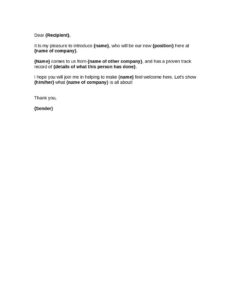
New Employee Introduction
Welcome new hires with a New Employee Introduction letter that announces their role and background — free template download in PDF and DOCX.
DOCX
3 downloads
0
likes
Download Files
- DOCX
A New Employee Introduction letter is a short, friendly business announcement that tells your team, clients, or partners that someone new has joined the company. People most often use it to formally welcome a new hire, share their role and background, and set a warm tone before the new person settles in. You can download this template free in PDF and DOCX with no signup required.
What Is a New Employee Introduction Letter?
A New Employee Introduction letter is a brief message — usually sent by a manager, supervisor, or HR representative — that announces the arrival of a new team member to an audience that will work with or alongside them. It documents the new person’s name, their job title, where they came from, and a quick highlight of their experience. The goal is not legal or contractual; it is communication and culture. A well-written introduction reduces awkwardness, gives colleagues context for who they are emailing or meeting, and signals that leadership values both the new hire and the people receiving the message. It can be sent internally to a department, company-wide, or externally to clients and vendors.
When Do You Need a New Employee Introduction Letter?
This letter is useful any time a new face needs context before the first handshake. Common situations include:
- A new hire’s first day — announce them to the team so colleagues know who to expect at meetings and in shared inboxes.
- Client-facing roles — introduce a new account manager or sales rep to the customers they will now serve.
- Vendor and partner relationships — let external contacts know who their new point of contact is going forward.
- Department transfers — when someone moves into a new team, an introduction helps the receiving group understand their background.
- Remote or distributed teams — where colleagues may never meet in person, a written introduction is often the only welcome a new hire gets.
- Replacing a departing employee — reassure clients there is continuity by naming the person stepping into the role.
What a New Employee Introduction Letter Should Have
Although it is a casual document, an effective introduction still covers a clear set of elements so readers walk away knowing who the new person is and why they matter:
- A greeting addressed to the recipient or group.
- The new employee’s full name.
- Their job title or position within the company.
- Where they previously worked or what they did before.
- A highlight of their relevant experience or accomplishments.
- A warm call to welcome them and a sign-off from the sender.
Keeping it short is part of the point — most introductions are a single, readable paragraph that recipients can absorb in under a minute.
How to Fill Out a New Employee Introduction Letter
This template is built from simple merge fields. Work through them in order:
- {Recipient} — enter who you are writing to. This could be a name (“Dear Sarah”), a team (“Dear Marketing Team”), or a group (“Dear Valued Clients”).
- {name} — type the new employee’s full name. Use the name they prefer to be called professionally.
- {position} — state their exact job title, such as “Senior Account Manager” or “Operations Coordinator.”
- {name of company} — fill in your organization’s name where it appears so the welcome reads as coming from the company.
- {name of other company} — name the new hire’s previous employer to give context, or describe their background if they are a recent graduate.
- {details of what this person has done} — add one or two concrete highlights, like “managing key client accounts” or “launching successful product campaigns.”
- {him/her} — replace with the pronoun the new employee uses.
- {Sender} — sign off with your own name and, if helpful, your title.
Read the finished letter aloud once to catch any merge fields you missed.
Tips for Writing a Warm, Effective Introduction
Tone matters more than length. Match the formality to your audience — a client introduction may stay polished and professional, while a team announcement can be playful. Ask the new hire what they would like shared before you send anything externally; some people prefer to keep certain details private. Highlight a relevant accomplishment rather than listing their entire résumé, and avoid overselling, which can create unrealistic expectations. If the introduction goes to a large group, consider inviting a simple action — replying with a welcome, stopping by their desk, or joining a kickoff call — so the message turns into real connection rather than a one-way broadcast.
Internal Versus External Introductions
The same template adapts to two very different audiences. An internal introduction to coworkers can include a touch of personality, mention the team the new person joins, and encourage casual welcomes. An external introduction to clients or vendors should focus on credibility and continuity: emphasize the new hire’s relevant experience and reassure recipients that service will remain smooth. When the new employee is replacing someone, acknowledge the transition gracefully and provide clear contact details so no one is left guessing who to reach.
Common Mistakes to Avoid
- Leaving placeholder fields unfilled — a stray “{name}” or “{him/her}” looks careless and undercuts the welcome.
- Getting the job title wrong — confirm the exact position before sending, especially in client-facing announcements.
- Oversharing personal details — stick to professional information unless the new hire approves more.
- Making it too long — recipients skim; a tight paragraph lands better than three.
- Sending without the new hire’s review — they may want to correct or add detail before it reaches a wide audience.
- Forgetting to provide contact info — if people are meant to reach the new person, include how.
Frequently Asked Questions
What is a New Employee Introduction letter used for? It is used to formally announce a new hire to coworkers, clients, or partners. The letter shares the person’s name, role, and background so the audience knows who they are and why they matter. It helps the new employee feel welcome and gives everyone useful context before they start working together.
Who should send the introduction letter? Typically a direct manager, supervisor, or HR representative sends it, since the message carries more weight coming from someone in a leadership or coordinating role. For client introductions, the relationship owner or department head often signs it. The template’s {Sender} field lets you add whichever name and title fits.
How long should the letter be? Short and focused — usually a single paragraph that a reader can absorb in under a minute. Cover the essentials: name, position, previous experience, and a warm welcome. Resist the urge to list every accomplishment; one or two highlights are more memorable than a full résumé.
Is a New Employee Introduction letter legally binding? No. It is a communication and culture document, not a contract or employment agreement. It does not create obligations, and nothing in it replaces an offer letter, job description, or any formal HR paperwork.
Should I get the new hire’s approval before sending it? Yes, it is good practice. Confirm their preferred name, pronoun, and job title, and ask what background details they are comfortable sharing — especially for external audiences. A quick review prevents errors and respects their privacy.
Is this template free to download? Yes. You can download the New Employee Introduction letter free in PDF and DOCX formats with no signup required. Edit the merge fields to match your situation and send it by email or print it as needed.
This template is a general example provided for informational purposes only and is not legal, HR, or professional advice. Communication practices and any related employment requirements vary by organization and jurisdiction, so consult a qualified professional or your HR department for guidance specific to your situation.
Related Forms
- Late Reply to a Customer
- Employee Termination For Theft
- Offer for a Current Client
- Notice of Impending Action
- Job Letter Confirm Verbal Offer
- Confirming a Speaker
Browse more in Business Letters.