
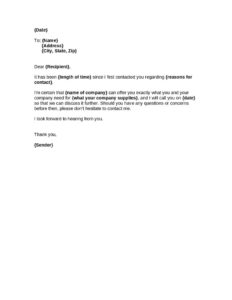
Late Reply to a Customer
Download a free Late Reply to a Customer letter template to professionally reconnect after a delay—editable PDF and DOCX, free download, no signup.
DOCX
2 downloads
0
likes
Download Files
- DOCX
A Late Reply to a Customer letter is a short, professional follow-up note used to reconnect with a prospect or client after time has passed since your first contact. The most common reason people use it is to gracefully restart a stalled sales conversation without sounding pushy. You can download this template free in both PDF and DOCX formats, with no signup required.
What Is a Late Reply to a Customer Letter?
A Late Reply to a Customer letter is a written follow-up sent by a salesperson, account manager, or business owner to a contact they reached out to earlier but never heard back from. It acknowledges that some time has passed, restates the value your company can offer, and proposes a clear next step—usually a phone call on a specific date. Rather than apologizing excessively or letting the lead go cold, the letter keeps the relationship warm and positions you as attentive and reliable. It works equally well as a printed letter, an email body, or a follow-up message after a missed meeting.
When Do You Need a Late Reply to a Customer Letter?
This letter is useful any time a promising conversation has gone quiet and you want to revive it. Common situations include:
- A prospect requested information weeks ago but never responded to your initial outreach or quote.
- You met someone at a trade show or networking event and want to follow up after letting too much time pass.
- A returning customer asked about a new product or service, then went silent before placing an order.
- An internal delay on your end—staffing, inventory, or scheduling—meant you couldn’t reply promptly, and now you’re reconnecting.
- You’re working through a backlog of leads and want a consistent, polished way to re-engage each one.
- A previous proposal stalled and you want to reopen the door with a specific call to action and date.
What a Late Reply to a Customer Letter Should Have
An effective late-reply letter is brief and forward-looking. It should include the date, the recipient’s full name and mailing address, and a warm but professional greeting. The body should reference how long it has been since your first contact and the original reason you reached out, reaffirm what your company can provide for the customer’s specific needs, and commit to a concrete next step—typically a phone call on a named date. Close with an invitation for the recipient to reach out with questions, a courteous sign-off, and your name as the sender. Keeping the tone confident rather than overly apologetic helps maintain credibility.
How to Fill Out a Late Reply to a Customer Letter
- Enter the Date you are sending the letter at the top.
- Under To, fill in the recipient’s Name, Address, and City, State, Zip so the letter is correctly addressed.
- Complete the salutation by adding the Recipient name after “Dear,” using a courteous form such as “Dear Ms. Carter.”
- In the opening line, state the length of time since your first contact (for example, “three weeks” or “a month”).
- Add the reasons for contact—the topic, product, or proposal you originally discussed.
- Insert the name of company (your business) and describe what your company supplies so the value is clear and specific.
- Enter the date on which you’ll call to follow up, choosing a realistic day soon after the letter arrives.
- Sign off and add your name in the Sender field, including your title and direct contact details if appropriate.
Tips for Writing a Reconnection Letter That Gets a Reply
The goal of this letter is to move the conversation forward, so make the next step easy and specific. Naming an exact call-back date signals intent and gives the recipient a reason to expect your message rather than ignore it. Keep the apology light—one acknowledgment of the delay is enough; dwelling on it shifts attention away from the value you offer. Personalize the “reasons for contact” and “what your company supplies” fields with the customer’s actual situation so the letter never reads like a mass mailing. If you’re sending this by email, lift the body text directly and use a clear subject line such as “Following up on our conversation about [topic].”
Letter vs. a Cold Outreach Message
A late-reply letter differs from a cold introduction because you already have a relationship and a stated reason for contact. That history lets you skip lengthy introductions and get straight to reaffirming value and proposing a call. Because the recipient has already expressed some interest, your tone can be more familiar and confident. Use a true cold-outreach script when you have no prior contact; use this template when you simply need to revive a connection that already exists.
Common Mistakes to Avoid
- Over-apologizing for the delay, which can undermine your confidence and the customer’s perception of your reliability.
- Leaving the “reasons for contact” or “what your company supplies” fields vague, so the letter feels generic and impersonal.
- Failing to set a specific follow-up date, which removes any momentum and makes it easy for the recipient to keep ignoring you.
- Promising to call on a date you can’t keep—missing it again damages trust further.
- Forgetting to include your direct contact details, so an interested customer can’t easily reach you before the scheduled call.
- Sending a wall of text; the strength of this letter is its brevity and clear call to action.
Frequently Asked Questions
What is a Late Reply to a Customer letter used for? It is used to reconnect with a prospect or client after a period of silence following your initial contact. The letter acknowledges the gap in time, restates how your company can help, and proposes a specific next step such as a phone call. It keeps a stalled lead from going cold.
How do I fill out the template? Add the date, the recipient’s name and address, and a greeting, then complete the bracketed fields describing how long it has been, why you originally reached out, what your company supplies, and the date you’ll call. Finish by signing with your name and contact details. The whole process takes only a few minutes.
Should I apologize for the delay in the letter? A single brief acknowledgment of the delay is appropriate and professional, but avoid repeated or excessive apologies. The focus should stay on the value you offer and the next step you’re proposing. Confidence tends to re-engage customers more effectively than dwelling on the lapse.
Is this letter legally binding? No. A late-reply letter is a business correspondence and follow-up tool, not a contract or binding agreement. It expresses intent to continue a conversation and proposes a call, but it creates no legal obligation on either party.
Can I use this as an email instead of a printed letter? Yes. The body text adapts easily to email—simply paste it in, drop the mailing address block if you wish, and add a clear subject line. Many users send it as an email for faster delivery and an easier reply.
How much does this template cost? It is completely free to download here in both PDF and DOCX formats, with no signup or payment required. You can edit the DOCX version in your word processor and reuse it for as many customers as you like.
This template is provided as a general example for informational purposes only and does not constitute legal, financial, or professional advice. Business communication norms and any related obligations vary by industry and jurisdiction; consult a qualified professional if you need guidance specific to your situation.
Related Forms
- Very Late Reply to Customer
- Notification of Canceled Contract
- Notice of a Bulk Sale
- Payment Inquiry
- New Sale for a Preferred Customer
- Acknowledging a Contribution
Browse more in Business Letters.