
Payment Inquiry
Use this free Payment Inquiry letter template to follow up on an overdue account balance and prompt a response — free download in PDF and DOCX.
DOCX
0
likes
Download Files
- DOCX
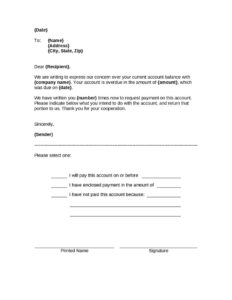
A Payment Inquiry letter is a formal business letter sent to a customer or client to follow up on an overdue account balance and ask how they intend to resolve it. It’s most commonly used after one or more earlier reminders have gone unanswered, giving the recipient a clear, documented prompt to respond. You can download this Payment Inquiry template free in both PDF and DOCX formats — no signup required.
What Is a Payment Inquiry Letter?
A Payment Inquiry letter is a written communication issued by a business — usually its accounts receivable, billing, or finance team — to a customer whose account has fallen past due. It documents the outstanding amount, the original due date, and the number of prior contact attempts, then politely but firmly asks the recipient to indicate their intentions for settling the balance. Unlike an aggressive collections notice, the inquiry tone keeps the relationship cordial while still creating a paper trail. The letter typically ends with a selectable response section so the customer can mark how and when they plan to pay, making it easy to capture a reply and keep the conversation moving toward resolution.
When Do You Need a Payment Inquiry Letter?
This letter fits situations where an invoice has gone unpaid and earlier, more casual reminders haven’t worked. Common scenarios include:
- An invoice has passed its due date and a phone call or email reminder produced no response.
- A customer has a recurring balance that keeps rolling over month to month without payment.
- You’ve already sent one or more reminders and want a formal, dated record of your follow-up efforts.
- A client disputes or ignores a charge and you need them to confirm their position in writing.
- Your business is preparing to escalate a delinquent account and wants documented proof of good-faith contact first.
- You manage receivables for multiple clients and need a consistent, professional template you can reuse for each overdue account.
What a Payment Inquiry Letter Should Have
A complete and effective Payment Inquiry letter contains a handful of essential elements. It should clearly identify the recipient by name and mailing address, name your company as the creditor, and state the exact overdue amount and the date it was originally due. It should reference how many times you’ve previously contacted the customer, which underscores the seriousness of the matter. Crucially, it should include a response mechanism — a section the recipient completes and returns to indicate whether they will pay in full, pay by a certain date, dispute the charge, or request a payment arrangement. A polite closing and your name as sender round out the letter.
How to Fill Out a Payment Inquiry Letter
- Enter the recipient’s full Name at the top so the letter is correctly addressed.
- Add the recipient’s Address and their City, State, Zip on the following lines to complete the mailing block.
- In the salutation, fill in the Recipient name after “Dear” — use the contact person or account holder’s name.
- Insert your company name where the letter refers to the account being held with your business.
- State the exact overdue amount so there’s no ambiguity about what is owed.
- Enter the original due date the payment was expected.
- Specify the number of times you’ve previously written to request payment, reinforcing the history of contact.
- Sign off with your name in the Sender field.
- Complete the “Please select one” response section at the bottom, leaving the options for the recipient to mark, date, and return the indicated portion to you.
Tips for Keeping the Tone Professional
Even though the account is overdue, the goal of an inquiry letter is to invite a response, not to threaten. Keep the language factual: state the amount, the due date, and the number of prior contacts without editorializing. A measured, respectful tone is more likely to preserve a long-term customer relationship and prompt cooperation. Double-check that the figures and dates exactly match your invoices and account records, because a single incorrect number gives the recipient an easy reason to dismiss or dispute the letter. If the customer is a repeat buyer, consider acknowledging the prior business relationship in your follow-up conversation to keep goodwill intact.
How It Differs From a Demand or Collections Letter
A Payment Inquiry letter sits earlier in the receivables process than a formal demand letter or a collections notice. An inquiry asks the customer to clarify their intentions and offers a built-in way to respond, whereas a demand letter typically states a firm deadline and warns of consequences such as referral to a collections agency or legal action. Many businesses use the inquiry as a documented intermediate step: it shows you made a reasonable, good-faith effort to resolve the balance directly before escalating. Keeping these letters in sequence — reminder, inquiry, then demand — creates a clear timeline that’s useful if the account is later turned over to a third party.
Common Mistakes to Avoid
- Listing an incorrect overdue amount or due date that doesn’t match your invoice, which undermines your credibility.
- Forgetting to fill in the number of prior contacts, which weakens the letter’s sense of urgency.
- Omitting the response section or failing to make it easy for the recipient to reply and return it.
- Using an overly hostile or accusatory tone that damages the customer relationship before you’ve escalated.
- Sending the letter to a generic address rather than the correct contact person, delaying any response.
- Failing to keep a dated copy of the letter for your own records and accounts receivable file.
Frequently Asked Questions
What is a Payment Inquiry letter used for? It is used to formally follow up on an overdue account balance and ask the customer how they intend to resolve it. The letter documents the amount owed, the original due date, and how many times you’ve previously reached out. It serves as a professional, written record of your collection efforts.
How do I fill out the Payment Inquiry template? Enter the recipient’s name and address, your company name, the overdue amount, the original due date, and the number of prior contacts. Then sign as the sender and leave the “Please select one” response section for the recipient to complete. The whole letter usually takes only a few minutes once you have your account details on hand.
Is a Payment Inquiry letter legally binding? The letter itself is a communication, not a contract, so it does not create a new legal obligation. The obligation to pay arises from your underlying invoice or agreement with the customer. The inquiry letter simply documents your effort to collect on that existing debt.
Does this letter need to be notarized or witnessed? No, a Payment Inquiry letter does not require notarization or witnesses. It is an ordinary business correspondence signed by the sender. Keeping a dated copy for your files is enough for your own records.
How much does this Payment Inquiry template cost? It is completely free to download from Business Forms Pro in both PDF and DOCX formats. There is no signup, subscription, or fee required. You can edit the DOCX version to match your company’s letterhead and details.
What should I do if the customer still doesn’t respond? If the inquiry letter goes unanswered, you may consider a more formal demand letter with a firm payment deadline, a phone call, or referral to a collections agency. Keep copies of every communication so you have a complete timeline. Requirements and options for debt collection vary by jurisdiction, so review your local rules before escalating.
This Payment Inquiry template is a general example provided for informational purposes only and is not legal, financial, or tax advice. Debt collection rules and requirements vary by jurisdiction, so consult a qualified professional before relying on this document for any specific situation.
Related Forms
- Landlord Temporary Repairs
- Unpaid Invoice
- Speaker Invitation
- Cease and Desist Libel
- 90 Days Past Due Letter
- Landlord Eviction For Renovation
Browse more in Business Letters.