
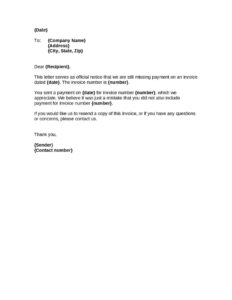
Unpaid Invoice
Download a free Unpaid Invoice letter template to politely remind clients of an overdue invoice and recover payment fast — free PDF and DOCX download.
DOCX
1 downloads
1
likes
Download Files
- DOCX
An Unpaid Invoice letter is a written reminder that a customer still owes payment on a specific invoice. The most common reason businesses send one is to professionally and politely nudge a client who has missed a payment — often because of a simple oversight — without damaging the relationship. You can download this Unpaid Invoice letter for free in both PDF and DOCX formats, with no signup required.
What Is an Unpaid Invoice Letter?
An Unpaid Invoice letter is a formal notice from a business or vendor to a customer informing them that a particular invoice remains unpaid. It identifies the invoice by date and number, acknowledges any partial or related payments already received, and invites the recipient to settle the balance or raise questions. Unlike an aggressive collection notice, this version is written in a courteous, assume-good-faith tone — treating the missing payment as a likely mistake rather than a deliberate refusal. It serves as both a gentle prompt and a documented paper trail, which can be useful if the matter later escalates. Accounts receivable staff, small business owners, freelancers, and bookkeepers typically use this letter as a first or early reminder.
When Do You Need an Unpaid Invoice Letter?
This letter is most useful in the early stages of a missed or partial payment, before stronger collection steps become necessary. Common situations include:
- A client paid one invoice but appears to have overlooked another that was due at the same time.
- An invoice has passed its due date and you want a polite first reminder on record.
- A customer sent a payment that did not match the full amount owed across multiple invoices.
- You suspect an invoice was lost, never received, or filed and forgotten by the recipient’s accounts team.
- You want to document your outreach in writing in case future follow-up or dispute resolution is needed.
- You are reconciling end-of-month or end-of-quarter accounts and need to clear outstanding balances.
What an Unpaid Invoice Letter Should Have
A complete and effective Unpaid Invoice letter contains a few essential elements that make it clear and actionable. It should clearly address the recipient company and contact person, state plainly that a payment is missing, and reference the exact invoice by date and number so there is no confusion about which charge is at issue. Acknowledging any payment already received shows good faith and reassures the customer you are tracking their account accurately. The letter should offer to resend a copy of the invoice, invite questions, and provide a direct contact name and phone number. Finally, it should be signed by a real person and keep a respectful, professional tone throughout to preserve the business relationship.
How to Fill Out an Unpaid Invoice Letter
- In the address block, enter the recipient’s Company Name, Address, and City, State, Zip so the letter reaches the right office.
- Add the Recipient name after “Dear” — ideally the accounts payable contact or the person who manages the relationship.
- Fill in the date of the unpaid invoice, then enter its invoice number so the customer can locate it quickly.
- Note the date the customer made a recent payment, and the invoice number that payment covered, to acknowledge what they have already settled.
- Enter the invoice number that still requires payment, framing the omission as a likely oversight rather than an accusation.
- Keep the offer to resend a copy and answer questions intact, as it encourages prompt resolution.
- Sign with the Sender name and include a Contact number so the recipient can reach you directly.
Tips for Recovering Payment Politely
Tone matters when chasing money. Because this template assumes the missed payment was an honest mistake, it gives the customer a graceful way to fix the problem without feeling cornered. Attach or offer a fresh copy of the unpaid invoice so the recipient has no reason to delay. Be precise with invoice numbers and dates — vague references invite back-and-forth and slow things down. Send the letter promptly once a payment becomes overdue; reminders sent early are far more effective than those that arrive weeks later. Keep a copy of every letter you send, along with the date, so you have a clear record of your collection efforts if the situation requires firmer follow-up.
How This Differs From a Demand Letter
An Unpaid Invoice reminder and a formal demand letter serve different stages of the collections process. This letter is a friendly, early-stage nudge that presumes good faith and focuses on convenience and clarity. A demand letter, by contrast, is a more serious notice that may reference specific deadlines, late fees, interest, or potential legal action. Most businesses send one or more polite reminders like this one before resorting to a demand letter, which helps protect the customer relationship and often resolves the matter without escalation. If repeated reminders go unanswered, you may then consider a stronger written notice or professional collection assistance.
Common Mistakes to Avoid
- Wrong invoice number: citing the incorrect number causes confusion and gives the customer an easy excuse to delay.
- Forgetting to acknowledge prior payments: failing to credit what they have paid can make the letter feel inaccurate and erode trust.
- Using an aggressive tone too early: a hostile first reminder can damage an otherwise good relationship over what may be a simple oversight.
- Omitting contact details: without a name and phone number, the recipient cannot easily ask questions or confirm the amount.
- Sending it to the wrong person: addressing a general inbox instead of the accounts payable contact slows resolution.
- Not keeping a copy: failing to document your outreach leaves you without a record if you need to escalate later.
Frequently Asked Questions
What is an Unpaid Invoice letter? It is a written reminder from a business to a customer about an invoice that has not yet been paid. It identifies the invoice by date and number, acknowledges any payments already received, and invites the recipient to settle the balance or ask questions. It is typically the first or early step in collecting an overdue payment.
How do I fill out the Unpaid Invoice letter? Enter the recipient’s company name and address, the contact person’s name, the date and number of the unpaid invoice, and any payment already received. Then note the invoice number that still needs payment and sign with your name and contact number. The template’s prompts guide you through each field in order.
Is this letter legally binding? The letter itself is a reminder and notice, not a contract — the underlying obligation comes from your original invoice and agreement with the customer. However, sending it creates a documented record of your collection efforts, which can be helpful if the dispute escalates. Keep a copy of each letter you send.
Does an Unpaid Invoice letter need to be notarized? No, this type of reminder letter does not require notarization or witnesses. A clear, signed letter with accurate invoice details and your contact information is sufficient for an early-stage payment reminder. Notarization is generally reserved for more formal legal documents.
How much does this template cost? Nothing — it is completely free to download from Business Forms Pro in both PDF and DOCX formats, with no signup or payment required. You can edit the DOCX version to match your business details and branding before sending.
What should I do if the letter is ignored? If the customer does not respond after a polite reminder, you may send a second, firmer notice, follow up by phone, or consider a formal demand letter. For persistent non-payment, some businesses turn to a collection agency or seek legal advice. Always keep records of your communication attempts.
This Unpaid Invoice letter template is a general example provided for informational purposes only and is not legal, financial, or tax advice. Collection practices and requirements vary by jurisdiction, so consult a qualified professional before relying on this document for your specific situation.
Related Forms
- Billing Error Apology Letter
- Employee Termination For Theft
- Invitation to Bid
- Notice Of Approval Of New Credit Account
- Landlord Unauthorized Subletting Warning
- Offer to a Potential Client
Browse more in Business Letters.