
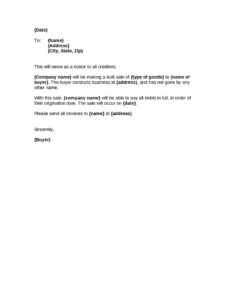
Notice of a Bulk Sale
Notify creditors before transferring business inventory with our free Notice of a Bulk Sale template, available as a free download in PDF and DOCX.
DOCX
3 downloads
0
likes
Download Files
- DOCX
A Notice of a Bulk Sale is a formal letter a business sends to its creditors to inform them that it is about to sell a large portion or all of its inventory, equipment, or merchandise outside the ordinary course of business. People most often use it to satisfy bulk sales notification requirements and to assure creditors that outstanding debts will be paid from the proceeds. You can download this template free in both PDF and DOCX formats, with no signup required.
What Is a Notice of a Bulk Sale?
A Notice of a Bulk Sale is a written communication from a seller to its creditors announcing the transfer of a significant quantity of business goods to a buyer. It is typically issued by the business owner or seller and addressed to each known creditor before the transaction closes. The notice documents who is selling, what is being sold, who is buying, where the buyer operates, and when the sale will take place. Its core purpose is transparency: creditors learn that the seller’s assets are changing hands so they can confirm their invoices will be settled. Historically, this kind of notice protected creditors from owners who might quietly liquidate inventory and disappear without paying outstanding bills.
When Do You Need a Notice of a Bulk Sale?
This notice becomes relevant whenever a business disposes of a large share of its goods in a single transaction. Common situations include:
- Selling an entire business, where the buyer is acquiring the full inventory and stock along with the operation.
- Closing a store and liquidating remaining merchandise to a single wholesale buyer rather than selling piece by piece to the public.
- Transferring inventory between owners during a partnership buyout or change in management.
- Discontinuing a product line and selling off the related stock in bulk to another retailer or distributor.
- Restructuring or downsizing, when a company sheds a warehouse of goods to raise cash and pay down obligations.
- Selling equipment and fixtures along with the goods as part of a broader asset sale.
In each case, the notice gives creditors advance warning and a clear point of contact, helping the sale proceed without disputes about unpaid invoices.
What a Notice of a Bulk Sale Should Have
A complete notice clearly identifies all parties and the essential details of the transaction. It should name the recipient creditor and their address, the selling company, the type of goods being transferred, and the name and business address of the buyer. It should confirm whether the buyer has used any other names, state that the seller intends to pay all debts in full and in order of origination, give the scheduled date of the sale, and provide instructions on where creditors should send their invoices. A sincere closing and signature from the responsible party round out the document so creditors know who to contact.
How to Fill Out a Notice of a Bulk Sale
- Address the recipient. At the top, enter the creditor’s Name, Address, and City, State, Zip so the notice reaches the correct party.
- Identify the seller. Insert your Company name where the letter states the business will be making a bulk sale.
- Describe the goods. Fill in the type of goods being sold — for example, retail inventory, restaurant equipment, or wholesale stock — so creditors understand the scope.
- Name the buyer. Enter the name of buyer who is purchasing the goods.
- Provide the buyer’s location. Add the buyer’s business address and confirm the statement that the buyer has not operated under any other name.
- Reassure on debt repayment. The body confirms your company will pay all debts in full in order of their origination date; verify your company name appears here correctly.
- Set the sale date. Enter the date the sale will occur.
- Give invoice instructions. Specify the name and address where creditors should send all invoices.
- Sign off. Close with “Sincerely” and the Buyer or seller signature line as your template provides.
Who Receives the Notice and How to Send It
The notice should go to every known creditor of the selling business — suppliers, lenders, landlords, and any party holding an unpaid invoice. Many businesses send the notice by certified mail or another trackable method so they have proof of delivery and a record of the date each creditor was informed. Keep a copy of every notice and any mailing receipts with your transaction file. Because the letter names a single contact for invoices, make sure that person is prepared to receive and process incoming bills promptly after the sale closes.
How This Differs From the Sale Agreement
It is helpful to separate the Notice of a Bulk Sale from the actual purchase agreement. The notice is a courtesy and compliance communication aimed at creditors; it announces the sale but does not transfer ownership or set the price. The purchase agreement, by contrast, is the binding contract between buyer and seller that governs the terms, payment, and conditions of the transfer. Both documents may exist for the same transaction, and the notice often references details — buyer name, goods, and closing date — that mirror the agreement.
Common Mistakes to Avoid
- Omitting creditors. Failing to notify a known creditor undermines the purpose of the notice and can lead to disputes.
- Vague descriptions of goods. Writing “miscellaneous items” instead of clearly stating the type of goods leaves creditors guessing.
- Wrong or missing dates. An inaccurate sale date confuses creditors about when assets will change hands.
- No invoice contact. Leaving out the name and address for invoices defeats the practical value of the notice.
- Sending too late. Notifying creditors after the sale closes removes their chance to respond beforehand.
- No proof of delivery. Sending the notice without a trackable method leaves you unable to show creditors were informed.
Frequently Asked Questions
What is a Notice of a Bulk Sale used for? It is used to inform creditors that a business is about to sell a large portion of its goods in a single transaction. The notice reassures creditors that outstanding debts will be paid and tells them where to send their invoices. It promotes transparency around a major asset transfer.
Who sends the notice — the buyer or the seller? The selling business is generally responsible for notifying its own creditors, since those creditors hold claims against the seller. Some templates, including this one, frame the signature as coming from the buyer, so confirm which party signs and adjust the closing to match your situation and local practice.
Do I need to notify every creditor? You should send the notice to all known creditors of the selling business so none is left unaware of the transaction. Keeping a list of suppliers, lenders, and other parties with outstanding invoices helps ensure no one is missed. Thorough notification reduces the risk of later disputes.
Is a Notice of a Bulk Sale legally binding? The notice itself is an informational communication rather than a contract, so it does not transfer ownership or create a payment obligation on its own. The binding terms of the sale live in the separate purchase agreement. The notice supports the transaction by documenting that creditors were informed.
Does the notice need to be notarized? Notarization is generally not required for a creditor notice like this one, which is a letter rather than a sworn document. Requirements can vary by location and transaction type, so check your local rules. Sending by certified mail is often more useful than notarizing because it proves delivery.
How much does this template cost? This Notice of a Bulk Sale template is completely free to download from Business Forms Pro in both PDF and DOCX formats. There is no signup, subscription, or hidden fee. You can customize the editable version to fit your specific sale.
This template is a general example provided for informational purposes only and is not legal, financial, or tax advice. Bulk sale notice requirements vary by jurisdiction and may have specific timing and content rules. Consult a qualified attorney or professional before relying on this document for an actual transaction.
Related Forms
- Request for Disputed Invoice Information
- Recommendation for a Raise
- Funds Solicitation
- 30 Days Past Due Letter
- Request For Goods On Approval
- Employee Termination For Absenteeism
Browse more in Business Letters.