
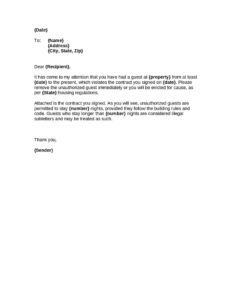
Landlord Unauthorized Guest Warning
Use this free Landlord Unauthorized Guest Warning letter template to formally notify tenants of lease violations — free download in PDF and DOCX.
DOCX
3 downloads
1
likes
Download Files
- DOCX
A Landlord Unauthorized Guest Warning is a formal letter a landlord or property manager sends to a tenant who has allowed someone to live in or repeatedly stay at the rental unit in violation of the lease. The most common reason people use it is to document a guest-occupancy problem and request that the tenant correct it before the situation escalates to further action. It is free to download here in both PDF and DOCX formats, with no signup required.
What Is a Landlord Unauthorized Guest Warning?
A Landlord Unauthorized Guest Warning is a written notice issued by a landlord, property owner, or property management company to a current tenant. It documents that a person who is not named on the lease has been staying at the property beyond what the rental agreement allows — for example, by moving in, sleeping over night after night, or effectively becoming a resident. The letter identifies the violation, references the relevant lease terms, and asks the tenant to remedy the situation. It serves two purposes at once: it gives the tenant clear, fair notice of the problem, and it creates a paper trail the landlord can rely on if the issue continues and stronger measures become necessary.
When Do You Need a Landlord Unauthorized Guest Warning?
Most leases set limits on how long guests may stay and require occupants to be approved and named on the agreement. A warning letter is appropriate when those limits are crossed. Common situations include:
- A guest has been staying at the unit well beyond the lease’s guest-stay limit (often 7, 14, or 30 days).
- A partner, friend, or relative has effectively moved in without being added to the lease or screened.
- Neighbors report an additional person living in the unit, increasing wear, noise, or parking demand.
- Utility usage, mail, or vehicles suggest more occupants than the lease permits.
- The tenant is subletting or letting someone occupy the unit while not properly disclosed.
- You want a documented first step before considering a formal lease-violation notice or non-renewal.
What a Warning Letter Should Have
To be clear and effective, an unauthorized guest warning should include the property address and unit, the tenant’s name, and the date of the notice. It should describe the specific problem — who appears to be staying and for how long — and cite the lease section governing guests and occupancy. The letter should state exactly what the tenant must do (remove the unauthorized occupant, add them to the lease through proper screening, or otherwise comply) and by when. It should also remind the tenant of possible consequences of continued non-compliance, provide landlord contact information, and close with a signature. Keeping a copy for your records is essential.
How to Fill Out a Landlord Unauthorized Guest Warning
This template is a flexible business letter you can complete in a few minutes. Work through it section by section:
- Enter the date at the top of the letter so the notice is time-stamped.
- Add the tenant’s full name and the rental property address, including unit or apartment number.
- Insert your name and the landlord or management company contact details as the sender.
- In the opening line, state that this letter is a warning regarding an unauthorized guest or occupant.
- Describe the specific situation — the name of the unauthorized person if known, and how long they have been staying.
- Reference the lease clause on guests and occupancy that has been violated.
- State the required corrective action and a clear deadline for compliance.
- Outline the consequences of failing to comply, such as a formal violation notice.
- Provide a way to respond or apply to add the occupant, then sign and date the letter.
How to Deliver the Letter
How you deliver the warning matters as much as what it says. Many landlords send the notice by both regular mail and certified mail with return receipt, or hand-deliver it with a witness present, so there is proof the tenant received it. Some leases or local rules specify acceptable delivery methods for notices, so review your agreement first. Always keep a dated copy of the letter and any proof of delivery in the tenant’s file. If you communicate by email or text in addition, save those messages as well — a consistent record helps if the matter later requires a formal notice or hearing.
Warning Letter vs. Formal Lease Violation Notice
An unauthorized guest warning is generally an informal, good-faith first step. It signals the problem and gives the tenant a chance to fix it, often preserving a workable relationship. A formal lease violation notice — sometimes called a notice to cure or comply — is a more serious, legally structured document with strict timing rules that can lead to non-renewal or eviction if ignored. Many landlords use the warning first, then escalate only if the behavior continues. The exact rules, required wording, and notice periods for formal notices vary by state and locality, so confirm the requirements that apply to your property before moving to that stage.
Common Mistakes to Avoid
- Being vague about the problem — name the occupant and timeframe instead of writing only “someone has been staying.”
- Failing to cite the lease clause that the guest situation violates, which weakens your case.
- Not giving a clear deadline or a path to comply, such as applying to add the person to the lease.
- Using threatening or discriminatory language; keep the tone factual and professional.
- Skipping documentation — always keep a copy and proof of how the letter was delivered.
- Treating the warning as a substitute for the formal legal notice your jurisdiction may require before eviction.
Frequently Asked Questions
What is a Landlord Unauthorized Guest Warning? It is a formal letter notifying a tenant that someone not on the lease appears to be living at or excessively staying in the rental, in violation of the agreement. It describes the issue, references the lease, and asks the tenant to correct it. It is typically used as a documented first step before any formal action.
How do I fill out the warning letter? Add the date, the tenant’s name, the property address, and your contact details, then describe the specific guest situation and the lease clause it violates. State the corrective action you require and a deadline, explain the consequences of non-compliance, and sign the letter. Keep a copy for your records.
Does the letter need to be notarized or witnessed? No, a warning letter generally does not need to be notarized. Some landlords have a witness present during hand delivery or use certified mail to prove the tenant received it. Notarization is not required to make the warning valid.
Is this letter legally binding? The letter itself is a notice rather than a contract, so it documents a problem and requests action rather than creating new obligations. Its strength comes from the existing lease it references. Whether it satisfies any formal notice requirement depends on your local laws, so check your jurisdiction’s rules before relying on it for eviction.
How long should I give the tenant to respond? Many landlords give a reasonable window such as a few days to two weeks, but the right timeframe depends on your lease and local rules. Set a specific, clearly stated deadline so expectations are unambiguous. If the lease specifies a cure period for violations, align your deadline with it.
How much does this template cost? Nothing — this Landlord Unauthorized Guest Warning template is free to download from Business Forms Pro in PDF and DOCX formats with no signup required. You can edit the DOCX version to fit your property, lease terms, and local requirements. Use it as many times as you need.
This template is provided as a general example for informational purposes only and is not legal advice. Landlord-tenant rules, notice requirements, and guest-occupancy laws vary by state and locality. Consult a qualified attorney or local housing authority to confirm the requirements that apply to your situation.
Related Forms
- New Sale Announcement
- Project Delay Letter
- Payment Location Change
- Follow Up Letter
- Employee Termination For Gross Misconduct
- Welcome to a New Employee
Browse more in Business Letters.