
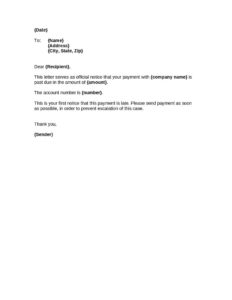
Late Payment Reminder
Download a free Late Payment Reminder letter template to notify customers of a past-due balance and request prompt payment. Free PDF and DOCX download.
DOCX
4 downloads
1
likes
Download Files
- DOCX
A Late Payment Reminder is a short business letter that formally notifies a customer or client that an invoice or account balance is past due and asks them to pay promptly. It’s the most common first step businesses take when a payment slips past its due date — polite, professional, and clear. You can download this Late Payment Reminder template free in both PDF and DOCX, with no signup required.
What Is a Late Payment Reminder?
A Late Payment Reminder is a written notice sent by a creditor — typically a business, freelancer, landlord, or service provider — to a customer whose payment has not arrived by the agreed date. It documents the overdue amount, identifies the relevant account, and requests payment to resolve the matter before it escalates. Unlike an aggressive collections demand, a first reminder maintains a courteous tone because most late payments are simple oversights rather than refusals to pay. The letter also creates a paper trail: it shows you communicated the debt, named the amount, and gave the recipient a chance to respond. That record can matter later if the account remains unpaid and stronger action becomes necessary.
When Do You Need a Late Payment Reminder?
This letter is useful any time an expected payment has passed its due date and a gentle nudge is appropriate. Common situations include:
- An invoice you sent to a client has gone unpaid past the agreed net terms (for example, net 30).
- A customer’s account balance is overdue and you want to remind them before charging late fees.
- A tenant or member has missed a scheduled monthly payment.
- A recurring subscription or retainer payment did not go through and needs manual settlement.
- You want a documented, professional first notice before escalating to phone calls or a final demand letter.
- A long-standing customer simply forgot, and you want to preserve the relationship while still collecting.
Types of Payment Reminders
Most businesses use a tiered sequence of reminders rather than a single letter. The template here is written as a first notice — the friendliest stage. A typical progression looks like this:
- First reminder: a courteous heads-up assuming an honest oversight (this template).
- Second reminder: a firmer follow-up referencing the earlier letter and possible late fees.
- Final demand: a formal notice setting a deadline and warning of collections or legal action.
Sending the friendly version first protects goodwill and usually gets results, since the majority of overdue invoices are paid after a single polite prompt.
What a Late Payment Reminder Should Have
A complete reminder leaves no doubt about who owes what. It should clearly state the name of the business owed the money, the recipient’s full name and mailing address, the exact overdue amount, the account or invoice number, and the date of the letter. It should describe the payment as past due, indicate that this is the first notice, request prompt payment, and close with a courteous sign-off and the sender’s name. Including a specific dollar figure and account number prevents confusion and makes it easy for the recipient to locate and settle the right balance quickly.
How to Fill Out a Late Payment Reminder
- Enter the {Date} the letter is written so the notice is properly dated for your records.
- Fill in the recipient block: the customer’s {Name}, their {Address}, and their {City, State, Zip} so the letter reaches the right person.
- Add the greeting using the {Recipient} field — use the contact’s name for a personal, professional tone.
- Insert your {company name} in the body so it’s clear which business the payment is owed to.
- Enter the exact past-due {amount}, including cents, so there is no ambiguity about the balance.
- Provide the account {number} (or invoice number) so the recipient can match the notice to the correct account.
- Leave the line stating this is the first notice as written, since it sets a friendly, escalation-free tone.
- Sign off with your name in the {Sender} field — and consider adding your phone or email so the recipient can ask questions or arrange payment.
Tips for Getting Paid Faster
A reminder works best when it’s easy to act on. Restate how the customer can pay — by check, card, bank transfer, or online portal — and include the payment address or link. Reference the original invoice number and date so they can find it instantly. Keep the tone warm in the first letter; many clients are embarrassed by an oversight and respond fastest when they aren’t put on the defensive. If you charge late fees under your terms, mention them only after the first reminder unless your contract requires earlier notice. Finally, send the letter promptly once the balance becomes overdue — the longer you wait, the harder collection tends to be.
Keeping Good Records
Save a copy of every reminder you send, along with the date it went out and the method (email, mail, or both). If you mail a physical letter, consider keeping proof of mailing for higher-value balances. A consistent reminder routine — for example, a friendly note a few days after the due date, then a firmer one two weeks later — signals professionalism and shows you take your accounts receivable seriously. Should the matter ever escalate, this documented trail demonstrates that you gave the customer fair, repeated notice.
Common Mistakes to Avoid
- Leaving the {amount} vague or rounding it — always state the precise balance due.
- Forgetting the account or invoice {number}, which forces the recipient to dig for it and delays payment.
- Using a harsh, threatening tone in a first notice, which can damage a recoverable relationship.
- Failing to date the letter, weakening its value as a record.
- Omitting clear payment instructions so the customer doesn’t know how or where to pay.
- Sending the reminder to the wrong contact or an outdated address.
Frequently Asked Questions
What is a Late Payment Reminder letter? It is a short, professional notice sent to a customer or client to let them know a payment is past due and to request that they pay promptly. It identifies the overdue amount, the account number, and the business owed, while keeping a courteous tone appropriate for a first contact.
How do I fill out the Late Payment Reminder template? Add the date, the recipient’s name and address, your company name, the exact overdue amount, and the account or invoice number. Keep the first-notice language friendly and sign with your name, ideally adding a phone number or email so the customer can respond or arrange payment.
Is a Late Payment Reminder legally binding? A reminder itself is not a contract or a court order — it is a notice of an amount you believe is owed. Its legal weight comes from the underlying agreement or invoice that created the debt. The letter does, however, serve as useful evidence that you communicated the past-due balance.
Do I need to send this letter by certified mail? For a routine first reminder, ordinary email or regular mail is usually fine. For higher-value balances or accounts you may eventually pursue further, keeping proof of delivery can be worthwhile so you can show the customer received notice.
How much does this template cost? Nothing — this Late Payment Reminder is completely free to download in PDF and DOCX formats, with no signup or account required. You can edit the DOCX version to match your branding, payment terms, and contact details.
What should I do if the reminder is ignored? If the balance stays unpaid, follow up with a firmer second reminder, then a final demand letter setting a deadline. Depending on the amount, you might offer a payment plan, add any contractually allowed late fees, or consider a collections agency or small claims process as a last resort.
This template is provided as a general example for informational purposes only and is not legal, financial, or tax advice. Debt-collection and notice requirements vary by jurisdiction and by the terms of your agreement, so consult a qualified attorney or professional for guidance on your specific situation.
Related Forms
- Landlord Temporary Repairs
- Unpaid Invoice
- Demand Payment on Promissory Note
- New Sale Announcement
- Employee Termination For Gross Misconduct
- Sales Follow Up
Browse more in Business Letters.