
Cease and Desist Harassment
Download a free cease and desist harassment letter template in PDF and DOCX to formally demand someone stop unwanted contact, stalking, or harassment.
PDF
DOCX
6 downloads
0
likes
Download Files
- DOCX
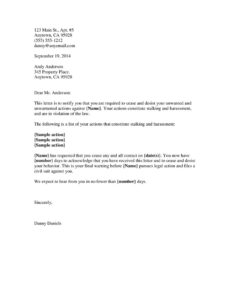
A cease and desist harassment letter is a formal written notice demanding that a specific person immediately stop unwanted, threatening, or harassing behavior toward you. People most often use it as a documented final warning before pursuing legal action, and you can download this template free in PDF and DOCX with no signup required.
What Is a Cease and Desist Harassment Letter?
A cease and desist harassment letter is a written demand sent by a victim (or someone acting on their behalf) instructing another individual to stop conduct that constitutes stalking, harassment, or unwanted contact. It identifies the offending party, lists the specific behaviors at issue, references the law those actions may violate, and sets a clear deadline for the recipient to acknowledge the letter and change their conduct. The letter is not a court order, but it creates a dated paper trail showing that the recipient was put on notice. That documentation can become valuable evidence if the situation escalates and you later seek a restraining order or file a civil suit.
When Do You Need a Cease and Desist Harassment Letter?
This letter is appropriate when informal requests to stop have failed and you want a formal, documented demand. Common situations include:
- A former partner, acquaintance, or stranger repeatedly contacts you by phone, text, email, or social media after being asked to stop.
- Someone is showing up at your home, workplace, or neighborhood in a way that feels threatening or follows a pattern of stalking.
- A person spreads false or defamatory statements, makes intimidating remarks, or sends unwanted messages designed to alarm or distress you.
- A neighbor, coworker, or online contact engages in ongoing harassment that has not yet reached the level requiring police involvement.
- You want to establish a clear record of the conduct and your objection to it before approaching the court for a protective order.
- You need to demonstrate that the offending party was warned and given a chance to stop before legal consequences are pursued.
What a Cease and Desist Harassment Letter Should Have
To be effective and credible, the letter should clearly identify both parties by name and address, describe the harassing actions in factual and specific terms, and reference that such conduct may violate stalking and harassment laws. It should state plainly that the recipient must stop all contact, provide a firm deadline for acknowledgment and compliance, and warn that continued behavior will result in legal action. A dated signature and your contact information complete the document. Specificity matters: vague accusations are easy to dismiss, while dated, detailed examples make the demand harder to ignore and stronger as evidence.
How to Fill Out a Cease and Desist Harassment Letter
- At the top, enter your full mailing address, phone number, and email so the recipient can respond and the letter is clearly attributable to you.
- Add the current date, which establishes when notice was given and starts the response timeline.
- Fill in the recipient’s full name and complete mailing address in the inside address block, and open with a formal salutation such as “Dear Mr. Anderson.”
- In the opening line, insert the victim’s {Name} in the statement that the recipient must cease and desist unwanted actions against that person.
- Under the list of offending conduct, replace each {Sample action} with a specific, factual description of the harassing behavior, including dates and details where possible.
- Enter the relevant {date(s)} on which the victim already requested that contact stop, showing prior notice.
- Specify the {number} of days the recipient has to acknowledge receipt and cease the behavior.
- Confirm the response window by entering the {number} of days within which you expect to hear from them.
- Sign and print your name at the bottom, keep a dated copy, and send it by a trackable method such as certified mail.
Sending the Letter and Keeping Records
How you deliver the letter is almost as important as what it says. Sending it by certified mail with return receipt requested—or another method that confirms delivery—creates proof that the recipient actually received the notice. Keep the signed copy, the mailing receipt, and any delivery confirmation together in a dedicated file. If the harassment continues after the deadline, save every additional message, voicemail, or incident note with dates and times. This organized record strengthens any future request for a restraining order or civil claim, because it shows a clear pattern of conduct and that you gave fair, documented warning.
How It Differs From a Restraining Order
A cease and desist harassment letter and a restraining order are not the same thing. The letter is a private demand you send directly to the other person; it carries no automatic court enforcement on its own. A restraining or protective order is issued by a court and is legally enforceable, meaning police can act if it is violated. Many people use the letter as a first formal step, and if it is ignored, they then petition the court. The letter can serve as evidence that you attempted to resolve the matter and that the other party was on notice.
Common Mistakes to Avoid
- Describing the conduct vaguely instead of listing specific incidents with dates, times, and details that make the harassment clear.
- Using threatening, profane, or emotional language that could undermine your credibility or be turned against you.
- Sending the letter by regular mail with no delivery proof, leaving you unable to show the recipient received it.
- Setting no deadline or an unreasonable one, which weakens the demand and makes follow-up harder to justify.
- Failing to keep a signed, dated copy along with your mailing and delivery records.
- Treating the letter as a substitute for calling police in situations involving immediate danger or credible threats of violence.
Frequently Asked Questions
What is a cease and desist harassment letter? It is a formal written notice demanding that a specific person stop harassing, stalking, or making unwanted contact with you. It identifies the conduct, references the law it may violate, and sets a deadline to comply. It serves as documented warning before legal action.
Is a cease and desist harassment letter legally binding? The letter itself is not a court order and cannot force someone to act on its own. However, it puts the recipient formally on notice and can become important evidence if you later seek a restraining order or file a civil suit. Its strength comes from documenting the behavior and your objection to it.
Does the letter need to be notarized or witnessed? No, notarization or witnesses are generally not required for this type of demand letter. What matters most is that the letter is clear, factual, dated, and delivered through a method that proves the recipient received it, such as certified mail. Keep copies of everything.
How much time should I give the recipient to respond? The template lets you set the number of days, and a common practice is a short but reasonable window such as a few days to a couple of weeks. Choose a deadline that gives the person a fair chance to acknowledge the letter while still conveying urgency. Be consistent with the number you use throughout the letter.
What should I do if the harassment continues after I send it? Document every new incident with dates and details, preserve all messages, and consider contacting the police if you feel threatened. You may also consult an attorney about seeking a restraining order or filing a civil claim. The letter and your records can support those next steps.
How much does this cease and desist harassment letter cost? This template is completely free to download here in both PDF and DOCX formats, with no signup required. You can fill it out, customize the fields, and print or email it at no cost. There is no charge to use or edit the document.
This template is provided as a general example for informational purposes only and is not legal advice. Harassment, stalking, and cease and desist requirements vary by jurisdiction, and individual situations differ. For guidance specific to your circumstances—or if you feel you are in danger—consult a qualified attorney or contact local authorities.
Related Forms
- Employee Termination For Theft
- Follow Up Letter
- Business Credit Line Information
- Recognizing a Suggestion
- Offer for a Current Client
- Request to Cancel Delayed Shipment
Browse more in Business Letters.