
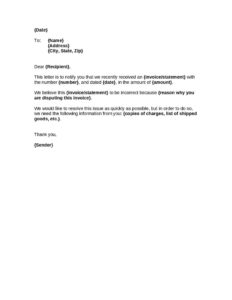
Request for Disputed Invoice Information
Use this free Request for Disputed Invoice Information letter template to formally challenge billing errors and request documentation — free download in PDF/DOCX.
DOCX
0
likes
Download Files
- DOCX
A Request for Disputed Invoice Information letter is a formal business letter you send to a vendor or supplier to challenge a charge you believe is incorrect and to ask for the supporting documents you need to resolve it. People most often use it when an invoice amount, line item, or statement doesn’t match a purchase order, contract, or what was actually delivered. You can download this template free in PDF and DOCX, with no signup required.
What Is a Request for Disputed Invoice Information?
A Request for Disputed Invoice Information is a written notice from a buyer to a seller, supplier, or service provider that identifies a specific invoice or statement, states why the recipient’s charge appears to be wrong, and requests the documentation needed to verify or correct it. It is typically issued by an accounts payable team, a business owner, or an office manager who has received a bill that doesn’t reconcile with their records. The letter documents the dispute in writing, creates a paper trail, and signals a good-faith intent to resolve the matter quickly. Unlike a simple phone call, it puts the request on record with dates, invoice numbers, and amounts that both parties can refer back to.
When Do You Need a Request for Disputed Invoice Information?
This letter is useful any time a bill arrives that you cannot reconcile against your own records. Common situations include:
- An invoice charges a higher amount than the quoted price or signed purchase order.
- You were billed for goods that never arrived, arrived damaged, or were returned.
- A statement shows duplicate charges or a payment you already made is missing.
- The invoice lists services, hours, or quantities that don’t match what was delivered.
- Tax, shipping, or surcharge line items appear that were not part of the agreement.
- You simply need itemized backup — packing slips, time logs, or copies of charges — before approving payment.
In each case, the goal is the same: pause the clock on a questionable charge, request specifics, and resolve the discrepancy before the due date passes or late fees accrue.
What a Request for Disputed Invoice Information Should Have
A complete dispute letter is short, factual, and easy to act on. It should clearly identify the recipient and the document in question, state the disputed amount, explain the reason for the dispute in objective terms, and list exactly what information you need to move forward. Including the invoice or statement number and date lets the recipient pull the record instantly. A polite, solution-focused tone makes the supplier more likely to cooperate, while a specific request for documentation gives them a concrete next step. The letter should also be signed and dated so it stands as a record of when the dispute was raised.
How to Fill Out a Request for Disputed Invoice Information
- Enter the recipient’s Name, Address, and City, State, Zip at the top so the letter reaches the right billing or accounts contact.
- Add a salutation using the Recipient name — address a specific person where possible, such as an accounts receivable manager.
- State whether you are disputing an invoice or statement, then fill in its number so it can be located in the vendor’s system.
- Enter the date printed on the invoice or statement and the amount being billed or disputed.
- In the reason field, clearly explain why you are disputing this invoice — for example, “the quantity billed exceeds the quantity received” or “this duplicates invoice #1042 paid on March 3.”
- List the information you need, such as copies of charges, a list of shipped goods, signed delivery receipts, or a corrected statement.
- Close with a thank-you and add the Sender name, title, and company so the recipient knows who to reply to.
Tips for Resolving the Dispute Quickly
Send the letter promptly — many vendor contracts and statements set a window for raising billing disputes, so acting before the due date protects you from late charges and preserves your right to question the amount. Keep the tone neutral and businesslike; you are asking for clarification, not assigning blame. Attach or reference your own supporting evidence, such as the purchase order, quote, or proof of an earlier payment, so the recipient can compare records on their end. Send the letter by a method that confirms delivery — email with a read receipt or certified mail — and keep a dated copy for your files. If the disputed portion is only part of a larger invoice, consider paying the undisputed amount while you sort out the rest, and say so in the letter.
How This Differs from a Payment Reminder or Demand Letter
It’s easy to confuse this letter with other billing correspondence, but the purpose is different. A payment reminder or demand letter is sent by the party who is owed money to prompt payment. A Request for Disputed Invoice Information is sent by the party who has been billed and believes the charge is wrong. It is a fact-finding and dispute-documentation tool, not a collection notice. Because it requests specific documents rather than demanding payment, it keeps the relationship cooperative while still creating a clear written record of your objection.
Common Mistakes to Avoid
- Leaving out the invoice or statement number, which forces the recipient to guess which charge you mean.
- Being vague about the reason — “this looks wrong” is far weaker than a specific, verifiable explanation.
- Failing to state exactly what documents or information you need to resolve the issue.
- Waiting too long and missing the dispute window stated in your contract or on the invoice.
- Using an accusatory or emotional tone that makes cooperation less likely.
- Forgetting to keep a dated copy or proof that the letter was sent and received.
Frequently Asked Questions
What is a Request for Disputed Invoice Information letter? It is a formal business letter sent to a vendor or supplier to challenge a charge you believe is incorrect and to ask for the documentation needed to resolve it. It identifies the specific invoice or statement, states why it appears wrong, and requests supporting records like copies of charges or shipping lists.
How do I fill out this dispute letter? Enter the recipient’s contact details, the invoice or statement number, date, and amount, then explain clearly why you are disputing the charge and list the exact information you need. Sign and date it before sending so it serves as a record of when the dispute was raised.
Is this letter legally binding? The letter itself is not a contract, but it creates important written documentation of your dispute. In many billing relationships, raising a dispute in writing within a set timeframe helps preserve your rights, so a dated, specific letter can be valuable if the matter escalates.
Should I withhold payment while disputing an invoice? That depends on your contract terms and the nature of the dispute. Many businesses pay the undisputed portion of an invoice and hold only the questioned amount, noting this in the letter; review your agreement or consult a professional before withholding any payment.
How quickly should I send it? As soon as you notice the discrepancy. Acting before the invoice due date or any dispute deadline stated in your contract protects you from late fees and keeps your objection valid.
Is this template really free? Yes. You can download the Request for Disputed Invoice Information template free in both PDF and DOCX formats, with no signup or payment required, and edit it for your specific situation.
This template is a general example provided for informational purposes only and is not legal, financial, or tax advice. Billing dispute rights and deadlines vary by contract and by jurisdiction — consult a qualified professional for guidance on your specific situation.
Related Forms
- Funds Solicitation
- Notice of Sale Ending
- Job Letter Confirm Verbal Offer
- Acknowledging a Contribution
- Late Payment Reminder
- Employee Termination For Theft
Browse more in Business Letters.