
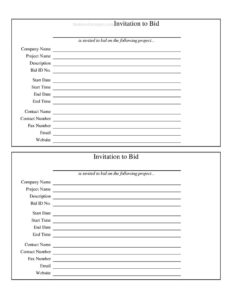
Invitation to Bid
Use this free Invitation to Bid template to formally request contractor and vendor bids on your project, with a free PDF and DOCX download.
PDF
DOCX
0
likes
Download Files
- DOCX
An Invitation to Bid is a formal document a company sends to contractors, suppliers, or service providers asking them to submit competitive bids on a defined project. People most often use it to open a fair, transparent bidding process and collect comparable price proposals before awarding work. You can download this Invitation to Bid template free in both PDF and DOCX formats — no signup required.
What Is an Invitation to Bid?
An Invitation to Bid (sometimes abbreviated ITB) is a written notice issued by a buyer or project owner inviting qualified parties to submit sealed or formal bids on a specific project or contract. It is typically used in construction, procurement, facilities work, and supplier selection. The document spells out what is being procured, who to contact, and the window during which bids are accepted. Unlike an informal price request, an Invitation to Bid creates a structured, documented process that helps the issuer compare offers on equal footing. It also signals to bidders that the opportunity is genuine and that responses will be evaluated against clear criteria, reducing confusion and disputes later in the award process.
When Do You Need an Invitation to Bid?
An Invitation to Bid is useful any time you want multiple parties to compete for a job or contract. Common situations include:
- A company seeking contractors to build, renovate, or repair a facility and wanting several priced proposals.
- A procurement department sourcing equipment, materials, or supplies from competing vendors.
- An organization hiring a service provider — cleaning, landscaping, IT, security — for an annual or recurring contract.
- A property manager soliciting bids for maintenance, roofing, paving, or HVAC work.
- A nonprofit or institution that must document a competitive process to satisfy internal policy or funding requirements.
- Any business that wants a written, dated record of who was invited and the deadline for responses.
What an Invitation to Bid Should Have
A complete Invitation to Bid gives bidders everything they need to respond accurately and on time. At minimum it should identify the issuing company, name and describe the project clearly, assign a unique bid reference number, and state when bidding opens and closes. It should also provide a single point of contact with full contact details so questions can be directed to the right person. Clear scope and timing reduce the risk of incomplete or non-comparable bids. This template captures each of these essentials in a clean, professional layout you can edit to match your project.
How to Fill Out an Invitation to Bid
- Company Name: Enter the name of the organization issuing the invitation — the party that will receive and evaluate the bids.
- Project Name: Give the project a short, recognizable title that bidders can reference in their responses.
- Description: Summarize the scope of work, materials, quantities, or services required. Be specific enough that bidders can price accurately; attach detailed specifications if needed.
- Bid ID No.: Assign a unique tracking number so every submission can be matched to this invitation.
- Start Date and Start Time: State when the bidding period opens and bids will first be accepted.
- End Date and End Time: State the deadline after which no bids will be considered. Be precise about the time zone.
- Contact Name: Name the person who can answer questions and receive submissions.
- Contact Number, Fax Number, Email, Website: Provide all channels through which bidders can reach you or learn more, so no one misses out for lack of information.
Tips for Running a Fair Bid Process
The strength of an Invitation to Bid lies in consistency. Send the same document, with identical scope and deadlines, to every invited party so each bid is built on the same assumptions. Define exactly how bids should be submitted — by email, fax, or sealed envelope — and where they should go. If you expect questions, consider setting a question cutoff a few days before the deadline and sharing answers with all bidders to keep the process even-handed. Keep a log of who received the invitation and when responses arrived, using the Bid ID No. as your reference. Finally, decide in advance how you will evaluate bids — lowest price, best value, qualifications — and apply that standard the same way to everyone.
Invitation to Bid vs. Request for Proposal
An Invitation to Bid and a Request for Proposal (RFP) are related but not identical. An Invitation to Bid is generally used when the scope is well defined and price is the main deciding factor, so bidders respond mainly with a number. A Request for Proposal is used when the buyer wants vendors to propose how they would solve a problem, weighing approach, experience, and creativity alongside cost. Choose the Invitation to Bid when you already know exactly what you want and simply need competitive pricing on a clear deliverable.
Common Mistakes to Avoid
- Writing a vague or incomplete description that leads to bids you cannot compare fairly.
- Forgetting to assign or reuse a Bid ID No., making it hard to track submissions.
- Leaving out the end time or time zone, which creates disputes over late bids.
- Listing only one contact channel, so bidders with questions cannot reach you.
- Sending different scopes or deadlines to different bidders, undermining a level playing field.
- Failing to state how and where bids should be submitted.
Frequently Asked Questions
What is an Invitation to Bid used for? It is used to formally invite contractors, vendors, or service providers to submit competitive bids on a defined project. The document gives every bidder the same scope, deadline, and contact information so you can compare offers fairly. It is common in construction, procurement, and recurring-service contracts.
How do I fill out an Invitation to Bid? Enter your company name, the project name and description, and a unique Bid ID No. Then add the bidding start and end dates and times, along with a contact name and full contact details such as phone, fax, email, and website. Keep the scope specific so bidders can price accurately.
Is an Invitation to Bid a legally binding contract? On its own, an Invitation to Bid is usually an invitation to make offers rather than a binding contract. A binding agreement typically forms only when you accept a bid and both parties sign a contract. Because rules vary by jurisdiction and procurement policy, review your own terms carefully before issuing it.
What is the difference between an Invitation to Bid and an RFP? An Invitation to Bid is best when the scope is fixed and price is the main factor, so bidders respond with pricing. A Request for Proposal asks vendors to propose their approach and is weighed on more than cost. Use whichever matches how much you have already defined the work.
How much does this Invitation to Bid template cost? Nothing — it is completely free to download from Business Forms Pro in both PDF and DOCX formats. There is no signup or account required. You can edit the DOCX version to match your project, scope, and deadlines.
Can I customize the bidding deadline and contact details? Yes. The template includes dedicated fields for start and end dates and times, a Bid ID No., and multiple contact channels including phone, fax, email, and website. Adjust each field to fit your project and how you want bids submitted.
This Invitation to Bid template is a general example provided for informational purposes only and is not legal, financial, or procurement advice. Bidding requirements and contract rules vary by jurisdiction and organization — consult a qualified professional before issuing or relying on this document.
Related Forms
- Notification of Canceled Contract
- Order Exceptions
- Sales Follow Up
- Cease and Desist Copyright
- Notice of Impending Action
- Employee Termination For Job Abandonment
Browse more in Business Letters.