
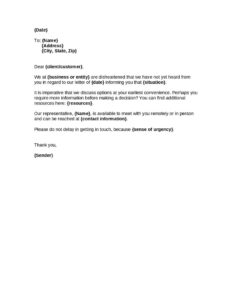
Follow Up Letter
Download a free Follow Up Letter template in PDF and DOCX to professionally re-engage clients, employers, or contacts after meetings or applications.
DOCX
1 downloads
0
likes
Download Files
- DOCX
A follow up letter is a short, professional message you send after an earlier interaction—such as a meeting, job interview, sales pitch, or unanswered email—to keep the conversation moving and prompt a response. People most often use one to politely remind a contact of a previous discussion and ask for the next step. You can download this follow up letter template free in both PDF and DOCX formats, with no signup required.
What Is a Follow Up Letter?
A follow up letter is a written communication, sent by mail or email, that references a prior conversation, application, or transaction and encourages the recipient to take action. It can be issued by job seekers, salespeople, vendors, recruiters, customer service teams, or anyone awaiting a reply. The letter documents that you reached out, restates the key points of your earlier contact, and clarifies what you would like to happen next. Unlike a brand-new introduction, a follow up letter assumes a relationship already exists, so its tone is courteous, concise, and focused. It serves both as a gentle reminder and as a record showing you remained engaged and responsive throughout the process.
When Do You Need a Follow Up Letter?
A follow up letter is useful any time momentum has stalled and a polite nudge could move things forward. Common situations include:
- After a job interview—to thank the interviewer, reaffirm your interest, and ask about the hiring timeline.
- Following a sales meeting or proposal—to address open questions and encourage the prospect to move toward a decision.
- When an invoice or payment is overdue—to remind a client of an outstanding balance in a professional tone.
- After submitting an application—for a loan, grant, membership, or admission—to confirm receipt and check on status.
- Following a networking event—to reconnect with a contact and propose a future call or meeting.
- After a customer complaint or service request—to confirm the issue was resolved and invite feedback.
Types of Follow Up Letters
While the structure is similar across uses, the purpose shapes the message. A post-interview follow up emphasizes gratitude and enthusiasm. A sales follow up highlights value and addresses objections. A payment reminder follow up states amounts and due dates clearly while remaining respectful. A status inquiry follow up simply asks for an update without pressure. Identifying which type you need keeps your letter focused and prevents you from sending a vague message that fails to prompt action.
What a Follow Up Letter Should Have
An effective follow up letter is brief and easy to scan. The essential elements are:
- The date and a professional salutation addressing the recipient by name.
- A clear reference to the previous contact—when it happened and what it concerned.
- A concise restatement of your main point or request.
- Any new information, answers to questions, or attachments mentioned.
- A specific call to action with a suggested next step or deadline.
- A courteous closing, your signature, and current contact details.
How to Fill Out a Follow Up Letter
- Add the date and your contact block. Place the current date at the top, followed by your name, title, company, phone number, and email so the recipient can reply easily.
- Enter the recipient’s details. Include their full name, title, and organization to keep the letter formal and correctly directed.
- Write a personalized greeting. Use “Dear Mr./Ms. [Last Name]” rather than a generic salutation whenever possible.
- Open with a reference line. In the first sentence, name the prior interaction—”Following our meeting on June 3″ or “Regarding my application submitted last week.”
- State your purpose. In one or two sentences, remind the reader of the key topic and why you are writing again.
- Provide value or answers. Supply any requested information, restate a benefit, or attach supporting documents.
- Include a clear call to action. Ask for a specific response, such as scheduling a call, confirming a decision, or settling a balance, and suggest a timeframe.
- Close professionally. Thank the reader, sign off with “Sincerely” or “Best regards,” and add your signature and printed name.
Tips for Writing an Effective Follow Up
Timing matters: send a post-interview note within 24 hours, a sales follow up within a few days, and a payment reminder a week after the due date. Keep the letter to a single page—busy recipients respond to clarity, not length. Lead with the reference and request rather than burying them in the second paragraph. Always proofread for the recipient’s name and the correct details from your earlier exchange, since an error here undermines your credibility. Finally, end with one clear action so the reader knows exactly what to do next.
Follow Up Letter vs. Cold Outreach
A follow up letter differs from a cold introduction because it builds on an existing relationship. Cold outreach must establish who you are and why your message is relevant, while a follow up can move straight to the point by referencing your prior contact. This shared context makes a follow up letter generally more effective and easier to write—but only if you accurately recall the previous interaction and avoid repeating everything from scratch.
Common Mistakes to Avoid
- Being too vague—failing to reference the specific prior contact leaves the reader guessing.
- Omitting a call to action—a polite note with no clear request rarely produces a response.
- Sounding impatient or demanding—an aggressive tone can damage the relationship.
- Sending it too soon or too late—poor timing reduces the chance of a reply.
- Forgetting contact details—if the recipient can’t easily reach you, they may not bother.
- Skipping the proofread—misspelling a name or referencing the wrong meeting looks careless.
Frequently Asked Questions
What is a follow up letter used for? It is used to re-engage a contact after an earlier interaction such as a meeting, interview, application, or sales conversation. The goal is to remind the recipient of your previous discussion and prompt a clear next step. It keeps communication active without starting from scratch.
How do I start a follow up letter? Begin with the date, a professional greeting, and a reference line that names the prior contact, such as “Following our call on Tuesday.” This immediately gives the reader context and signals that you are continuing an existing conversation rather than introducing yourself for the first time.
How long should a follow up letter be? Keep it short—ideally three or four brief paragraphs that fit on a single page. Recipients are busy, so a concise letter with one clear request is far more likely to get read and answered than a lengthy message.
Does a follow up letter need to be notarized? No. A follow up letter is an informal business communication and does not require notarization, witnesses, or any special legal formatting. You simply sign it and send it by email or mail.
When should I send a follow up letter? Timing depends on the situation: within a day after an interview, a few days after a sales meeting, and about a week after a missed payment or unanswered request. Sending it promptly while the earlier interaction is still fresh improves your chances of a reply.
Is this follow up letter template free to download? Yes. You can download this follow up letter template completely free in PDF and DOCX formats with no signup required. Open the DOCX in your word processor to edit the text, or use the PDF if you prefer to print and complete it by hand.
This follow up letter template is provided as a general example for informational purposes only and does not constitute legal, financial, or professional advice. Communication norms and any related requirements vary by industry and jurisdiction—consult a qualified professional if your situation involves contractual or legal obligations.
Related Forms
- Reference Request
- Notice Of Approval Of New Credit Account
- Past-Due Account
- 90 Days Past Due Letter
- Recommendation for a Raise
- Internal Promotion Announcement
Browse more in Business Letters.