
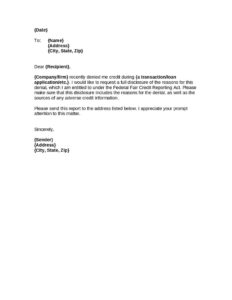
Information on Refused Credit
Request the reasons behind a credit denial with this free Information on Refused Credit letter template, available as a free download in PDF and DOCX.
DOCX
2 downloads
0
likes
Download Files
- DOCX
An Information on Refused Credit letter is a written request asking a lender or creditor to disclose the specific reasons your credit application was denied and the sources of any adverse information used in that decision. People most often use it after being turned down for a loan, credit card, or financing and wanting to understand and correct what went wrong. This template is free to download in PDF and DOCX, with no signup required.
What Is an Information on Refused Credit Letter?
An Information on Refused Credit letter is a formal notice sent by a consumer to a company that denied them credit, requesting a full explanation of the denial. It documents that you are exercising your right to learn why your application was rejected, including the specific reasons and the sources of any negative credit data the creditor relied upon. In the United States, consumers have certain rights under the Federal Fair Credit Reporting Act (FCRA) to receive disclosures tied to adverse credit decisions. The letter creates a clear paper trail of your request and gives the creditor a definite address to send their response. It is simple, factual, and respectful in tone — designed to get answers, not to argue.
When Do You Need an Information on Refused Credit Letter?
This letter is useful any time a credit decision goes against you and you want to understand the basis for it. Common situations include:
- You applied for a mortgage or auto loan and received a denial without a clear explanation.
- A credit card application was rejected and you want to know which factors weighed against you.
- A retailer or finance company refused store financing during a purchase.
- You suspect the denial was based on inaccurate or outdated information in your credit report.
- You were approved for less favorable terms than expected and want the reasons documented.
- You are rebuilding your credit and need to identify the exact issues holding you back.
In each of these cases, a written request is more reliable than a phone call because it establishes a dated record and forces a written response to a specified address.
What an Information on Refused Credit Letter Should Have
A complete letter makes it easy for the creditor to identify you, locate your application, and respond properly. It should clearly include the recipient’s name and address, your salutation, and the name of the company that denied you credit. State the nature of the transaction — a loan application, a financing request, or a credit account — so the creditor can match it to the correct file. Reference your request for disclosure of the reasons for the denial and the sources of any adverse credit information. Finally, provide your full name and return mailing address so the response can be sent directly to you. Keeping the request specific and polite increases the likelihood of a prompt, useful reply.
How to Fill Out an Information on Refused Credit Letter
- In the To block, enter the recipient’s Name, then the Address and City, State, Zip of the creditor or lender that denied your application.
- Complete the Dear {Recipient} salutation with the contact person or department handling credit decisions; use a title or “Credit Department” if you don’t have a name.
- Fill in {Company/firm} with the exact name of the business that denied you credit so they can locate your record.
- Specify the {a transaction/loan application/etc.} field with the precise context — for example, “my auto loan application” or “a financing request at checkout.”
- Leave the body language intact, which requests full disclosure of the reasons for denial and the sources of adverse credit information under the Federal Fair Credit Reporting Act.
- Sign off with Sincerely, then enter your name in the {Sender} field.
- Add your Address and City, State, Zip at the bottom so the disclosure is mailed to the correct return address.
Sending the Letter and Following Up
Once your letter is complete, send it promptly — many disclosure rights are tied to a limited window after you receive an adverse action notice. Consider mailing it using a method that provides proof of delivery, such as certified mail with a return receipt, so you can confirm the creditor received your request and when. Keep a copy of the signed letter and any mailing receipts for your records. When the creditor responds, review the reasons they list carefully. If the denial relied on information from a credit reporting agency, you generally have the right to obtain a copy of that report and to dispute any errors directly with the reporting agency. Treating this letter as the first step in a larger review process helps you turn a denial into actionable next steps.
How It Differs From a Credit Dispute
It is helpful to understand that this letter is a request for information, not a dispute. The Information on Refused Credit letter asks the creditor to explain why you were denied and where the adverse data came from. A credit dispute, by contrast, is sent to a credit reporting agency or furnisher to challenge specific inaccurate entries. Often you use this letter first to identify the source of the problem, then file a dispute if you find errors. Keeping these two actions separate keeps your records clear and ensures each request reaches the right party.
Common Mistakes to Avoid
- Forgetting to name the specific company or transaction, which makes it harder for the creditor to locate your file.
- Leaving out your return address, so the disclosure has nowhere to be sent.
- Waiting too long after the denial — disclosure rights can be time-sensitive.
- Using an aggressive or accusatory tone instead of a clear, factual request.
- Failing to keep a copy of the letter and proof of mailing for your records.
- Confusing this information request with a formal dispute of inaccurate report entries.
Frequently Asked Questions
What is an Information on Refused Credit letter? It is a written request asking a creditor to explain why your credit application was denied and to identify the sources of any negative information they used. It documents your request and gives the creditor a clear address to send their response. The goal is to help you understand and address the reasons behind the denial.
How do I fill out the letter? Enter the creditor’s name and address in the To block, complete the salutation, name the company and the specific transaction or loan application, and add your own name and return address at the bottom. The body language requesting disclosure can stay as written. Then sign and send it.
Does this letter need to be notarized or witnessed? No. An Information on Refused Credit letter is a simple consumer request and does not require notarization or witnesses. You only need to sign it and provide accurate contact details so the creditor can respond.
Is the creditor required to respond? Consumers generally have rights under the Federal Fair Credit Reporting Act to receive disclosures connected to an adverse credit decision, though the exact obligations and timeframes can vary by situation. Sending a clear written request helps ensure your inquiry is documented and handled. If you don’t receive a reply, follow up and keep records of your attempts.
How should I send the letter? Mailing it with proof of delivery, such as certified mail with a return receipt, is a good practice because it confirms the creditor received your request and the date. Keep a copy of the letter and the mailing receipt with your records. This protects you if you need to follow up later.
How much does this template cost? Nothing. You can download the Information on Refused Credit letter for free in PDF and DOCX formats, with no signup required. Simply fill in your details and send it.
This template is provided as a general example for informational purposes only and is not legal, financial, or tax advice. Consumer credit rights and disclosure requirements vary by jurisdiction and circumstance. For guidance specific to your situation, consult a qualified attorney or credit professional.
Related Forms
- Membership Cancellation Letter
- Price Adjustment Request Letter
- Request for Credit Report
- Loan Comparison Chart
- Letter Demanding Action
- Mortgage Assumption Letter
Browse more in Customer Letters.