
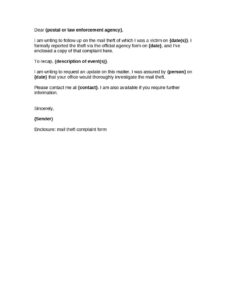
Mail Theft Letter
Use this free Mail Theft Letter template to formally report stolen mail to your post office, carrier, or authorities — free PDF and DOCX download.
DOCX
0
likes
Download Files
- DOCX
A Mail Theft Letter is a written notice you send to your local post office, postal authority, or a relevant party to formally report that mail addressed to you has been stolen, tampered with, or never delivered. The most common reason people use it is to create a documented record of a theft incident so an investigation can begin and replacement or reissued items can be requested. You can download this letter for free in both PDF and DOCX formats, with no signup required.
What Is a Mail Theft Letter?
A Mail Theft Letter is a formal customer letter that a resident, business owner, or recipient writes to notify the appropriate party — usually the postal service, a delivery carrier, or a sender — that mail has gone missing or appears to have been stolen. It documents what was expected, when it should have arrived, and what evidence of tampering exists. The letter serves as an official paper trail, supporting requests to launch an investigation, reissue checks or documents, or flag fraudulent activity. Because mail theft is treated seriously, a clear, dated written report often carries more weight than a phone call and gives the recipient a concrete reference for follow-up.
When Do You Need a Mail Theft Letter?
This letter is useful any time you suspect mail intended for you has been intercepted. Common situations include:
- A check, money order, or financial statement you were expecting never arrived and may have been intercepted.
- You found your mailbox forced open, damaged, or with the lock broken.
- Envelopes show clear signs of tampering — torn flaps, resealed edges, or missing contents.
- Sensitive documents such as tax forms, government correspondence, credit cards, or identification cards went missing.
- A neighbor, building manager, or carrier reported suspicious activity around mailboxes in your area.
- You suspect identity theft and need a documented report to support disputes with banks or credit bureaus.
What a Mail Theft Letter Should Have
To be effective and easy to act on, your letter should clearly identify everyone involved and describe the incident in factual detail. Include the date you are writing, your full name and mailing address, and the name and address of the post office or party you are notifying. Describe the specific mail that was lost, the date range it should have arrived, any tracking numbers, and the evidence of theft or tampering you observed. State plainly what action you are requesting — an investigation, a reissued item, or written confirmation — and provide your contact details so the recipient can follow up. A polite but firm closing reinforces that you expect a prompt response.
How to Fill Out a Mail Theft Letter
- Enter the current date at the top so the report is properly timestamped.
- Add your full name and return address, exactly as it appears on the mail you expected to receive.
- Write the recipient’s name and address — typically your local post office, postmaster, or carrier service.
- Open with a clear subject line such as “Re: Report of Mail Theft” and a brief opening sentence stating the purpose.
- Describe the missing or tampered mail: what it was, who sent it, and any tracking or reference numbers.
- Provide the expected delivery date or date range and the date you noticed the problem.
- Detail the evidence — a broken mailbox lock, torn envelopes, or a delivery confirmation that does not match.
- State your requested action, such as opening an investigation or reissuing the item.
- Close with your phone number and email, then sign and print your name.
Who to Send the Letter To
Where you direct your Mail Theft Letter depends on the situation. For mail handled by the national postal service, the local post office or postmaster is usually the first point of contact, and many postal systems also have a dedicated inspection or investigation division for theft. If a private courier delivered the package, send the letter to that carrier’s customer service or claims department. When the missing item was a check or card, you may also send a copy to the sender — your bank, employer, or government agency — so they can place a stop on the original and issue a replacement. Keeping a copy of every version you send helps you track responses.
Protecting Yourself After Reporting
Reporting the theft is only the first step. If financial documents or identification were stolen, contact your bank to monitor or freeze affected accounts and consider placing a fraud alert with credit bureaus. Watch for signs of identity theft, such as unfamiliar accounts or charges, and retain copies of your letter and any responses as part of your records. If theft is ongoing in your area, a lockable mailbox or a post office box can reduce future risk. Filing a report with local law enforcement may also be appropriate, and your written letter provides a clear summary you can hand over.
Common Mistakes to Avoid
- Being vague — failing to describe exactly which item was lost and when it should have arrived weakens your report.
- Forgetting to include tracking numbers, reference numbers, or sender details that help the recipient locate the mail.
- Omitting your contact information, which delays any follow-up or investigation.
- Not keeping a copy of the letter for your own records and for disputes with banks or agencies.
- Waiting too long to report, which can let a thief use stolen documents before you act.
- Sending an emotional or accusatory letter rather than a factual, professional account of the incident.
Frequently Asked Questions
What is a Mail Theft Letter used for? It is used to formally notify your post office, carrier, or another party that mail addressed to you has been stolen, tampered with, or lost. The letter creates a dated written record that supports an investigation and any request to reissue checks, cards, or documents. It is more reliable than a verbal report because it provides a clear reference the recipient can act on.
How do I fill out a Mail Theft Letter? Start with the date and your name and address, then add the recipient’s details and a clear subject line. Describe the missing or tampered mail, the expected delivery dates, and any evidence of theft, then state what action you want and provide your contact information. Sign and date the letter, and keep a copy for your records.
Does a Mail Theft Letter need to be notarized? No, a Mail Theft Letter typically does not need to be notarized. It is a notification and request rather than a sworn legal document. That said, if you are submitting it as part of a formal fraud or identity-theft claim, the receiving agency may have its own requirements, so check their instructions.
Who should I send the letter to? Send it to the entity responsible for the mail — usually your local post office or postmaster for standard mail, or the courier’s claims department for private deliveries. If a check or sensitive document was stolen, send a copy to the sender as well so they can stop and reissue it. You may also share it with local law enforcement.
Is a Mail Theft Letter legally binding? The letter itself is not a contract, so it does not legally bind anyone to a particular outcome. However, it can serve as important documentary evidence in an investigation or dispute, showing that you reported the issue and when. Keeping proof of mailing strengthens its value as a record.
How much does this Mail Theft Letter template cost? This template is completely free to download from Business Forms Pro in both PDF and DOCX formats, with no signup required. You can edit the DOCX version to fit your specific situation and the missing items you need to report. Use it as many times as you need.
This Mail Theft Letter template is provided as a general example for informational purposes only and is not legal advice. Reporting procedures and rights related to mail theft and fraud vary by jurisdiction and by carrier. For guidance specific to your situation, consult the appropriate postal authority, law enforcement, or a qualified professional.
Related Forms
- Membership Cancellation Letter
- Close Unauthorized Account Letter
- Loan Comparison Chart
- Demand of Delivery
- Information on Refused Credit
- Bank Statement Request
Browse more in Customer Letters.