
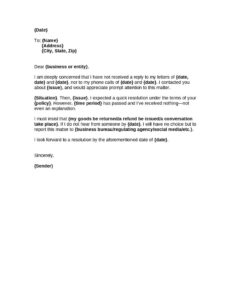
Letter Demanding Action
Use this free Letter Demanding Action template to formally request resolution of a dispute or unmet obligation, with free PDF and DOCX download.
DOCX
1 downloads
0
likes
Download Files
- DOCX
A Letter Demanding Action is a formal written notice that asks another party to take a specific step—pay a balance, complete a repair, honor a warranty, or stop a harmful practice—by a stated deadline. People most often use it when polite phone calls and emails have gone unanswered and they need a clear, documented record before escalating. You can download this template free as a PDF or DOCX, with no signup required.
What Is a Letter Demanding Action?
A Letter Demanding Action is a customer or business correspondence document used to formally demand that a person or company fulfill an obligation or correct a problem. It is typically issued by a customer, client, vendor, or business owner and addressed to the party who has failed to deliver, pay, or perform as agreed. The letter documents what was promised, what went wrong, and exactly what the recipient must do to resolve the matter. Unlike a casual complaint, it sets out a firm request and a response deadline, creating a paper trail that can support later steps—such as mediation, a chargeback, or a formal claim. Its tone is professional and direct rather than emotional, making the expectation impossible to misread.
When Do You Need a Letter Demanding Action?
This letter is useful any time a reasonable request has been ignored and you want a documented, businesslike escalation. Common scenarios include:
- Unpaid invoices: A client or customer owes money past the due date and informal reminders have not worked.
- Defective products or incomplete services: You paid for goods or work that were never delivered, arrived broken, or fell short of what was agreed.
- Warranty or guarantee disputes: A seller refuses to honor a written warranty or promised repair.
- Breach of a contract or agreement: The other party stopped performing duties spelled out in a signed contract.
- Refund refusals: A merchant declines a refund you believe you are owed under their stated policy.
- Property or deposit issues: A landlord, contractor, or vendor is withholding a deposit or failing to return property.
What a Letter Demanding Action Should Have
A complete and effective demand letter contains a handful of essential elements. It should clearly identify both parties by name and address, reference the underlying transaction or agreement (with dates, invoice numbers, or order numbers), and describe the problem in factual terms. It must state precisely what action you want taken, set a reasonable deadline for compliance, and explain what you intend to do if the deadline passes. Supporting details—amounts owed, receipts, prior communication—strengthen the letter. Finally, it should close with your signature, printed name, and contact information so the recipient knows exactly who to reach and how to respond.
How to Fill Out a Letter Demanding Action
This template uses a standard business-letter layout. Work through it section by section:
- Date: Enter the date you are sending the letter at the top.
- Recipient details: Add the full name, title, company, and mailing address of the person or business you are demanding action from.
- Salutation: Address the recipient by name where possible (“Dear Mr. Reyes”) rather than a generic greeting.
- Opening statement: State plainly that this is a formal demand and identify the transaction—reference the contract, invoice, order, or account number and the relevant date.
- Background: Summarize what was agreed and what has gone wrong, sticking to verifiable facts.
- The demand: Specify the exact action required—the dollar amount, repair, replacement, or behavior to stop.
- Deadline: Give a firm, reasonable date by which the recipient must comply.
- Consequences: Briefly note your next step if they do not act.
- Closing and signature: Sign, print your name, and add your phone, email, and return address.
Tips for Writing an Effective Demand
Keep the letter concise and unemotional—facts persuade and threats undermine. Use a deadline that is firm but fair (often 7 to 30 days, depending on the matter) so the recipient cannot claim they had no time to respond. Attach copies, never originals, of supporting documents such as invoices, photos, contracts, and earlier emails. Send the letter by a method that proves delivery, like certified mail with a return receipt or a tracked courier, and keep a copy of everything you send for your records. If multiple people share responsibility, send a copy to each so no one can claim they were unaware.
How It Differs From a Complaint or a Lawsuit
A demand letter sits between a casual complaint and formal legal action. A complaint simply expresses dissatisfaction; a demand letter requests a defined remedy by a deadline and signals you are prepared to escalate. It is not a court filing and does not by itself start a lawsuit—but it is frequently the step that resolves the matter without one, because it shows you are organized and serious. Many disputes settle once the recipient sees a clear, dated demand on paper. Keeping the original signed copy is wise in case you later need to show that you attempted to resolve the issue in good faith before pursuing other options.
Common Mistakes to Avoid
- Being vague about the action: “Make this right” invites delay; name the exact amount, repair, or step required.
- Omitting a deadline: Without a date, the recipient has no reason to act promptly.
- Using threatening or abusive language: Hostility can backfire and weaken your position if the dispute escalates.
- Forgetting to reference documentation: Failing to cite the invoice, contract, or order number makes your claim harder to verify.
- Sending it untracked: If you cannot prove the letter was delivered, the recipient can deny receiving it.
- Not keeping a copy: Always retain a signed duplicate and proof of mailing for your records.
Frequently Asked Questions
What is a Letter Demanding Action used for? It is used to formally request that a person or business take a specific step—such as paying a debt, fixing a defect, or honoring a contract—by a set deadline. It creates a documented record of your request and signals that you are prepared to escalate if the matter is not resolved.
How do I fill out the template? Add the date and recipient’s details, reference the transaction or agreement, describe the problem factually, state the exact action you want taken, set a firm deadline, note the consequences of inaction, and sign with your contact information. Keep your language professional and specific throughout.
Is a Letter Demanding Action legally binding? The letter itself is not a contract or court order, so it does not legally force the recipient to act. However, it can be important evidence that you tried to resolve the dispute in good faith, and it often prompts action because it demonstrates you are serious and organized.
Does it need to be notarized or witnessed? Notarization and witnesses are generally not required for a demand letter. What matters most is that it is clearly written, signed, and delivered by a method you can prove, such as certified mail with a return receipt.
How much time should I give the recipient? A reasonable deadline depends on the request, but many demand letters allow 7 to 30 days. Choose a window that is firm enough to encourage prompt action yet fair enough that the recipient cannot reasonably claim they had no time to respond.
How much does this template cost? Nothing—this Letter Demanding Action template is completely free to download in both PDF and DOCX formats, with no signup or payment required. You can edit it to fit your situation and reuse it as often as you need.
This template is a general example provided for informational purposes only and is not legal, financial, or tax advice. Requirements and the appropriate next steps for resolving a dispute vary by jurisdiction and circumstance. For guidance on your specific situation, consult a qualified attorney or professional advisor.
Related Forms
- Request for Credit Report
- Credit Card Dispute Letter
- Delivery Demand
- Payment on Specific Accounts
- Demand of Delivery
- Installment Payment Request Letter
Browse more in Customer Letters.