
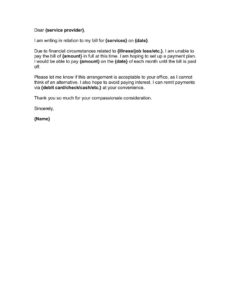
Installment Payment Request Letter
Use our free Installment Payment Request Letter template to formally ask a creditor to split a balance into manageable payments — free download in PDF & DOCX.
PDF
4 downloads
0
likes
Download Files
An Installment Payment Request Letter is a formal written request asking a creditor, lender, or service provider to let you pay an outstanding balance in smaller, scheduled amounts instead of one lump sum. People most often use it when an unexpected expense makes a bill hard to cover all at once and they want to propose a realistic repayment plan in writing. You can download this template free in both PDF and DOCX formats, with no signup required.
What Is an Installment Payment Request Letter?
An Installment Payment Request Letter is a polite, business-style letter in which a customer or debtor asks the recipient to accept a series of partial payments toward a balance over a defined period. It is usually written by an individual or business that owes money and sent to a creditor such as a bank, credit card company, medical provider, landlord, contractor, or vendor. The letter documents the amount owed, explains why full payment isn’t currently possible, and proposes a specific installment schedule. Putting the request in writing creates a clear record of the offer, shows good faith, and gives both sides a concrete plan to agree on rather than relying on vague verbal promises.
When Do You Need an Installment Payment Request Letter?
This letter is useful any time you can pay what you owe but need more time to do it. Common situations include:
- You received a large medical bill after treatment and want to spread the cost over several months.
- A credit card or loan balance has become difficult to clear in one payment due to a temporary loss of income.
- Your business owes a supplier or vendor for goods or services and needs to negotiate a phased payment.
- You fell behind on rent or a lease and want to propose a catch-up plan to your landlord.
- A contractor or service provider has issued a final invoice you’d prefer to pay in stages.
- You owe back taxes, tuition, or fees and want to formally request an installment arrangement.
What an Installment Payment Request Letter Should Have
A complete and persuasive letter contains a few essential elements. It should clearly identify both you and the creditor, reference the specific account or invoice number, and state the total amount owed. The heart of the letter is your proposed plan: the amount of each installment, how often you’ll pay, and the date payments will begin and end. A brief, honest explanation of your circumstances helps the recipient understand your request. Finally, the letter should include a courteous closing, your contact information, and a request for written confirmation so both parties have agreed terms on record.
How to Fill Out an Installment Payment Request Letter
- Add the date and your details. Start with the current date, then your full name (or business name), mailing address, phone number, and email.
- Enter the recipient’s information. Address the letter to the correct department or contact at the creditor’s company, including their name and address.
- Reference the account. Note the account number, invoice number, or customer ID and the total balance due so there’s no confusion about which debt the letter concerns.
- Explain the situation. In a sentence or two, state briefly and honestly why you’re unable to pay the full amount right now.
- Propose your plan. Specify the exact installment amount, the payment frequency (weekly, biweekly, or monthly), the start date, and the expected payoff date.
- State your commitment. Reassure the recipient that you intend to pay in full and will keep to the schedule.
- Request confirmation. Ask them to confirm the arrangement in writing and provide your preferred contact method.
- Sign off. Close politely, then sign and print your name.
Tips for Getting Your Request Approved
Creditors are more likely to agree when your proposal is realistic and easy to accept. Offer the largest installment you can comfortably afford — a faster payoff is more attractive to the recipient and shows you’re serious. Be specific about dates and amounts rather than asking for vague flexibility, since a concrete plan is something they can simply approve. If you can make an initial good-faith payment alongside the letter, mention it; partial payment up front signals commitment. Keep the tone respectful and professional, avoid over-explaining your personal circumstances, and send the letter early — before the account becomes seriously delinquent — so you’re negotiating from a stronger position.
After You Send the Letter
Once you’ve mailed or emailed your request, keep a copy for your records along with proof of delivery. Don’t assume the plan is active until you receive written confirmation; a creditor may counter with different terms, such as a larger monthly amount or an interest adjustment. If they accept, follow the schedule exactly and pay on or before each due date — a single missed installment can void the agreement and revive the full balance. If you don’t hear back within a week or two, follow up by phone and reference your letter. Should your situation change, send an updated request rather than silently defaulting.
Common Mistakes to Avoid
- Being vague about the plan. Failing to state exact amounts and dates makes it hard for the creditor to say yes.
- Omitting the account number. Without a reference, your letter may not be matched to the right account.
- Promising more than you can pay. Overcommitting leads to missed payments and a broken agreement.
- Sending it too late. Waiting until the account is in collections weakens your bargaining power.
- Skipping written confirmation. A verbal okay is hard to prove; always get the terms in writing.
- Using a hostile or apologetic-to-a-fault tone. A calm, professional letter is far more effective than emotional appeals.
Frequently Asked Questions
What is an Installment Payment Request Letter? It is a formal letter asking a creditor or service provider to let you pay an outstanding balance in smaller scheduled payments instead of all at once. It documents the amount owed, your reason for needing time, and the specific repayment plan you’re proposing.
How do I write an Installment Payment Request Letter? Include the date, your contact details, the recipient’s information, the account number, and the total balance, then propose a clear schedule with installment amounts and dates. Keep the explanation brief and professional, and ask for written confirmation of the arrangement.
Is this letter legally binding? The letter itself is a proposal, not a contract — it becomes binding only when the creditor agrees to the terms, ideally in writing. Once both parties accept the plan, that confirmed agreement is what holds legal weight.
Does the creditor have to accept my proposed plan? No. A creditor is generally free to accept, reject, or counter your offer with different terms. A realistic, specific plan and an upfront good-faith payment improve your chances of approval.
How much does this template cost? The Installment Payment Request Letter template is completely free to download here in both PDF and DOCX formats, with no signup or payment required. You can edit it freely to fit your situation.
Should I send the letter by mail or email? Either can work, but choose a method that gives you proof the request was received, such as certified mail or an email with a read receipt. Always keep a copy of the letter and any reply for your records.
This template is a general example provided for informational purposes only and is not legal, financial, or tax advice. Repayment options, creditor rights, and consumer protections vary by jurisdiction, so consult a qualified professional or your creditor before relying on this document.
Related Forms
- Cell Phone Service Issue Letter
- Information on Refused Credit
- Letter Demanding Action
- Bank Fee Waiver Letter
- Credit Freeze Security Letter
- Price Adjustment Request Letter
Browse more in Customer Letters.