
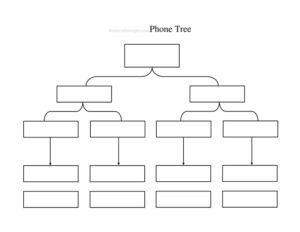
Phone Tree
Build a clear emergency call chain with our free Phone Tree template, organizing contacts so urgent messages reach everyone fast — free download in PDF and DOCX.
PDF
DOCX
2 downloads
0
likes
Download Files
- DOCX
A Phone Tree is a structured contact chart that shows who calls whom when an organization needs to spread an urgent message quickly. The most common reason people use one is to activate a rapid notification chain — for school closures, emergency callouts, shift coverage, or member alerts — without one person having to dial dozens of numbers. This Phone Tree template is free to download in both PDF and DOCX, with no signup required.
What Is a Phone Tree?
A Phone Tree is a simple branching diagram or list that organizes a group’s members into a relay of phone calls. One person (or a small group of coordinators) starts the chain by calling a handful of contacts, and each of those contacts then calls the next set of people assigned to them. Schools, churches, sports teams, volunteer organizations, neighborhood associations, and businesses all use phone trees so that a single announcement reaches an entire group within minutes. Because it documents names, numbers, and the calling order in one place, a phone tree removes guesswork during stressful or time-sensitive situations and ensures no one is accidentally skipped.
When Do You Need a Phone Tree?
A phone tree is most valuable any time you must reach many people fast and reliably. Common scenarios include:
- Emergency notifications — alerting staff, students, or residents about severe weather, evacuations, building closures, or safety incidents.
- Last-minute schedule changes — canceling a game, rehearsal, meeting, or class and spreading the word before people travel.
- Shift coverage and callouts — quickly finding a replacement when an employee is sick or a critical role goes unfilled.
- Volunteer and community mobilization — activating a response team, fundraiser, or relief effort on short notice.
- Organizational announcements — passing news through a club, congregation, or association without relying solely on email.
- Backup when systems fail — providing a low-tech relay when power, internet, or mass-text systems are down.
What a Phone Tree Should Have
A complete phone tree is easy to read under pressure and leaves no contact unaccounted for. The strongest versions include a clearly identified starting point (the coordinator or first caller), the full name of every person in the chain, at least one current phone number per person, and a defined order showing exactly who each person is responsible for calling next. It should also indicate what to do if a call goes unanswered — for example, leaving a message and moving to the next person — and how the chain confirms completion so the coordinator knows everyone was reached. A title, an effective date, and a short message script or instructions round out a usable document.
How to Fill Out a Phone Tree
Use the template’s Phone Tree structure to lay out your chain from top to bottom. Follow these steps:
- Title the tree. At the top, label it with your group’s name and the purpose, such as “Riverside PTA Emergency Phone Tree.”
- Name the starting caller. Enter the coordinator or first person who activates the chain, with their phone number.
- List the first tier. Add the two to four people the coordinator calls directly.
- Branch the next tiers. Under each first-tier contact, list the names and numbers of the people they are responsible for calling.
- Add backup numbers. Include a secondary phone or alternate contact for anyone hard to reach.
- Write the no-answer rule. Note what each caller does if someone does not pick up.
- Add the date. Record when the tree takes effect so outdated versions can be replaced.
Designing an Effective Calling Chain
The shape of your tree matters as much as the names in it. Keep each caller’s list short — three to five people is ideal — so the message moves fast and no single person becomes a bottleneck. Balance the branches so the chain finishes in roughly the same number of “hops” no matter which path a message travels. Place reliable, easy-to-reach people near the top, since a missed call early in the chain can stall an entire branch. For larger groups, consider building the tree so the last person in each branch calls the coordinator back to confirm completion. This closed loop tells the activator that every assigned contact was successfully reached.
Keeping Your Phone Tree Current
A phone tree is only as good as its most recent update. People change numbers, leave the organization, and switch roles, so review the list on a regular schedule — quarterly is common — and immediately after any membership change. Distribute the updated version to everyone in the chain and clearly mark old copies as superseded using the effective date. It also helps to run an occasional test activation: send a low-stakes message through the tree and time how long it takes to reach the last person. A test quickly exposes dead numbers, unclear instructions, and weak links you can fix before a real emergency.
Common Mistakes to Avoid
- Leaving gaps in the chain — every person should have someone responsible for calling them and someone they call next.
- Overloading one caller — assigning too many calls to a single person slows the whole tree and creates a single point of failure.
- Skipping a no-answer plan — without a fallback step, an unanswered call can halt an entire branch.
- Letting numbers go stale — outdated phone numbers are the most common reason a tree fails.
- Not confirming completion — without a callback or check-in, the coordinator never knows if everyone was reached.
- Failing to distribute updates — an accurate tree sitting on one desk helps no one during an emergency.
Frequently Asked Questions
What is a phone tree used for? A phone tree is used to spread an urgent or time-sensitive message through a group quickly by dividing the calling among many people. Instead of one person making every call, each member contacts a small assigned group, so the message reaches everyone in a fraction of the time.
How do I fill out the Phone Tree template? Start by naming the coordinator who activates the chain, then list the first tier of people they call directly. Under each of those names, add the contacts they are responsible for calling next, including phone numbers and a no-answer instruction, and finish with an effective date.
How many people should each person call? Three to five is a practical range. Short call lists keep the message moving quickly and prevent any single person from becoming a bottleneck, while still keeping the overall tree compact enough to complete in just a few hops.
What should happen if someone doesn’t answer? Your tree should include a clear rule, such as leaving a voicemail or text with the message and then continuing to the next person so the chain is never stalled. The unreached person should be called again later, and the coordinator should be informed of any gaps.
How often should a phone tree be updated? Review it at least quarterly and immediately after any membership or contact change. Phone numbers and roles change frequently, so regular updates and an occasional test activation keep the tree dependable when you need it most.
Is this Phone Tree template free? Yes. You can download this Phone Tree template free in both PDF and DOCX formats with no signup required, then customize the names, numbers, and calling order to fit your own organization.
This Phone Tree template is provided as a general example for informational purposes only and does not constitute legal, safety, or professional advice. Emergency notification requirements and best practices vary by organization and jurisdiction — consult a qualified professional or your local emergency-management guidance to confirm your plan meets applicable standards.
Related Forms
- Basic Inventory Card
- Wagering Tracker
- Book Inventory
- Sterilization Log
- Restaurant Ban Form
- Hazardous Chemical Inventory
Browse more in Log and Inventory.