
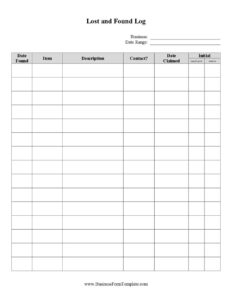
Lost And Found Log
Track and return misplaced items with our free Lost and Found Log template — record found items, owners, and pickups in PDF or DOCX, free download.
PDF
12 downloads
0
likes
Download Files
A Lost and Found Log is a simple tracking document used to record items that are found, stored, claimed, and returned within a business or facility. People most often use it to keep an organized, accountable record of misplaced property so items can be matched back to their rightful owners. It’s free to download here in both PDF and DOCX formats, with no signup required.
What Is a Lost and Found Log?
A Lost and Found Log is a running record that documents every item turned in to a lost-and-found area or front desk. It captures what the item is, when and where it was found, who found it, where it’s being stored, and what eventually happens to it — whether it’s claimed by the owner, donated, or discarded. Schools, hotels, gyms, offices, transit systems, and event venues all use these logs to bring order to an otherwise chaotic pile of misplaced belongings. The log creates a clear chain of custody so staff can prove an item was handled responsibly and returned to the correct person, reducing disputes and protecting the organization from accusations of loss or theft.
When Do You Need a Lost and Found Log?
Almost any organization that serves the public or houses many people will eventually need to track found property. A Lost and Found Log is helpful in situations such as:
- A hotel front desk receiving guest items left behind in rooms, the lobby, or the pool area after checkout.
- A school or university logging jackets, water bottles, electronics, and keys collected from classrooms and hallways.
- A gym or recreation center managing items left in locker rooms, on machines, or in group fitness studios.
- An office reception desk holding badges, phones, and umbrellas turned in by employees or visitors.
- An event venue, concert hall, or stadium collecting wallets, coats, and bags after a busy event.
- A retail store, library, or transit station tracking misplaced belongings and the date each was returned or disposed of.
What a Lost and Found Log Should Have
A complete Lost and Found Log gives staff everything they need to identify, store, and return an item with confidence. At minimum it should capture the date the item was found, a clear description of the item, the location where it was discovered, and the name of the person who turned it in. It should also note where the item is being stored, the owner’s name and contact details once known, and the final outcome — claimed, donated, or discarded. Space for staff initials and a claim or pickup date strengthens accountability. Consistent, legible entries are what transform a log from a scrap of paper into a reliable record.
How to Fill Out a Lost and Found Log
Because this is an open-format log, each row represents one found item. Fill it out completely as soon as an item is turned in:
- Date found: Record the exact date the item was discovered or handed in, so storage and disposal timelines can be tracked.
- Item description: Write a detailed description — color, brand, size, and any unique marks — rather than a vague label like “phone” or “jacket.”
- Location found: Note the specific spot, such as “Room 204” or “east parking lot,” to help verify ownership later.
- Found by: Enter the name of the staff member, guest, or visitor who turned in the item.
- Storage location: Record where the item is held, such as a labeled bin, drawer, or safe.
- Owner name and contact: Once the owner is identified, add their name and a phone number or email.
- Status / outcome: Mark whether the item was claimed, donated, or discarded, and the date it left your custody.
- Staff initials: Have the handling employee initial the entry to confirm the chain of custody.
Setting Up a Lost and Found Process
A log works best when it sits inside a clear, repeatable process. Designate a single secure location for storing found items and a standard intake point — usually a front desk or security office. Decide how long items will be held before being donated or discarded; many organizations use a 30, 60, or 90-day window depending on the value and type of item. Store valuables such as wallets, jewelry, and electronics in a locked area separate from low-value items like clothing. When someone claims an item, ask them to describe it before you reveal what you have, which helps confirm true ownership and prevents items from being handed to the wrong person.
Tips for Keeping an Accurate Log
Keep the log in a consistent, accessible place so every shift uses the same record. Train all staff to make an entry immediately rather than relying on memory at the end of a busy day. Periodically review old entries and follow your disposal schedule so the storage area doesn’t overflow. If you handle high volumes, consider a digital version of the log using the DOCX template, which makes it easy to sort, search, and back up your records while keeping the same fields.
Common Mistakes to Avoid
- Writing vague descriptions like “black bag” that make it impossible to match an item to its owner.
- Forgetting to record the storage location, leaving staff to search every bin when someone comes to claim an item.
- Leaving the status column blank, so no one knows whether an item was returned, donated, or thrown out.
- Handing over valuable items without verifying ownership or recording the claimant’s name.
- Failing to follow a consistent disposal timeline, causing the storage area to overflow with old items.
- Using loose scraps of paper instead of one central log, which leads to lost entries and gaps in the record.
Frequently Asked Questions
What is a Lost and Found Log used for? It is used to record every item that is found and turned in at a business or facility, along with details about where it was found, who found it, and how it was eventually returned or disposed of. The log creates an organized, accountable record that helps reunite items with their owners. It also protects the organization by documenting how each item was handled.
How do I fill out a Lost and Found Log? Create one row for each found item and complete it as soon as the item arrives. Record the date found, a detailed description, the location found, who turned it in, the storage location, and the final outcome. Add the owner’s name and contact details once they are identified, and have staff initial the entry.
Is a Lost and Found Log legally binding? The log itself is an internal record rather than a contract, so it is not a legally binding agreement. However, it can serve as important documentation of how property was handled if a dispute or claim arises. Local laws on unclaimed property vary, so check your regional rules for handling and disposal requirements.
How long should we keep found items? There is no single universal rule, and the right holding period depends on the item’s value and your local regulations. Many organizations hold items for 30 to 90 days before donating or discarding them. Set a clear, written timeline and apply it consistently to every entry.
How should we verify someone owns an item before returning it? Ask the claimant to describe the item in detail before you reveal what you have on hand, including unique features only the true owner would know. Record their name and contact information in the log and have staff initial the return. This simple step helps prevent items from being given to the wrong person.
Is this Lost and Found Log template really free? Yes. You can download the Lost and Found Log template free in both PDF and DOCX formats with no signup required. Print it as-is for your front desk or open the DOCX version to customize the columns to fit your facility.
This Lost and Found Log template is a general example provided for informational purposes only and is not legal advice. Laws governing unclaimed and found property vary by jurisdiction. Consult a qualified professional to ensure your handling, storage, and disposal practices comply with local requirements.
Related Forms
- Pledge Log
- Cash Envelope Tracker
- Change Log
- Short Term Disability Claims Tracker
- Daily Music Practice Log
- First Aid Inventory
Browse more in Log and Inventory.