
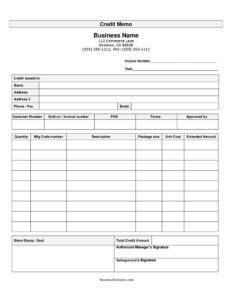
Credit Memo
Download a free Credit Memo template to refund or correct customer invoices accurately — fillable PDF and DOCX, no signup, free download.
PDF
DOCX
0
likes
Download Files
- DOCX
A credit memo is a document a seller issues to a customer to reduce or cancel an amount the customer owes, most often used to correct an overcharge, process a return, or apply a discount after an invoice has already been sent. It creates a clear paper trail tying the credit back to the original sale, and you can download a ready-to-use template here in both PDF and DOCX formats, free and with no signup required.
What Is a Credit Memo?
A credit memo — also called a credit memorandum or credit note — is a commercial document issued by a seller to a buyer that reduces the balance the buyer owes on a previous transaction. It is typically generated by the accounts receivable or sales department and references the original invoice it adjusts. Businesses use it to document returned merchandise, billing errors, damaged goods, pricing corrections, or promotional credits. Rather than refunding cash, a credit memo often lets the customer apply the value toward a future purchase. It is the opposite of an invoice: where an invoice increases what a customer owes, a credit memo decreases it, keeping both parties’ ledgers accurate and reconcilable.
When Do You Need a Credit Memo?
A credit memo comes into play any time a previously billed amount needs to be reduced. Common scenarios include:
- Returned goods: A customer ships back products and you credit their account for the returned quantity and value.
- Billing or pricing errors: An invoice charged the wrong unit cost, the wrong quantity, or applied incorrect terms, and you issue a credit to correct it.
- Damaged or defective items: Goods arrived broken or did not meet specifications, so you credit the customer instead of requiring a full return.
- Post-sale discounts: You agree to a volume rebate, loyalty discount, or negotiated reduction after the invoice has already been issued.
- Short shipments: The customer was billed for more units than were actually delivered, and the difference must be credited.
- Goodwill adjustments: You resolve a service complaint or delivery delay by applying a credit to the customer’s account.
What a Credit Memo Should Have
A complete credit memo leaves no ambiguity about who is being credited, why, and for how much. It should clearly identify the customer being credited, including their name, address, and customer number. It must reference the original sale through the invoice number and sale date so the credit can be matched against the correct transaction. The body should itemize each credited item with quantity, manufacturer code, description, package size, unit cost, and the extended amount. Shipping and payment context — the FOB point and the terms — should carry over from the original order. Finally, an authorization line showing who approved the credit provides internal accountability and helps prevent unauthorized adjustments.
How to Fill Out a Credit Memo
- Credit issued to / Name: Enter the business or individual receiving the credit, exactly as it appeared on the original invoice.
- Address: Record the customer’s billing address so records stay consistent across documents.
- Customer number: Add the account identifier used in your system to link the credit to the right ledger.
- Sold on / Invoice number: Reference the original sale date and the invoice you are adjusting — this is essential for reconciliation.
- FOB: Note the freight-on-board term from the original order, indicating where ownership and shipping responsibility transferred.
- Terms: Carry over the payment terms (for example, Net 30) that applied to the original transaction.
- Quantity: List the number of units being credited for each line.
- Mfg code number: Enter the manufacturer or product code so the item is unmistakably identified.
- Description: Briefly describe the product or service being credited.
- Package size: Specify the unit packaging (each, case, box) to match how the item was originally sold.
- Unit cost: Record the price per unit being credited.
- Extended amount: Multiply quantity by unit cost for each line, then total them for the credit value.
- Approved by: Have an authorized person sign or initial to validate the credit.
How a Credit Memo Affects Your Books
When you issue a credit memo, it should be recorded in your accounting system so receivables and revenue reflect the adjustment. Typically the credit reduces accounts receivable and either reverses a portion of recognized revenue or records a sales return and allowance. If the customer has already paid, the memo may convert into a cash refund or a credit balance applied to a future invoice. Assigning each credit memo a unique number and storing it alongside the original invoice keeps your audit trail clean. Many businesses also track credit memos for tax reporting, since they reduce taxable sales — how that is handled depends on local rules.
Credit Memo vs. Debit Memo and Refund
It is easy to confuse these related documents. A credit memo reduces what a customer owes the seller. A debit memo does the opposite, increasing the amount owed — for example, when additional charges apply after the original invoice. A refund involves actually returning money to the customer, whereas a credit memo usually leaves a credit balance on the account to be drawn down later. Choosing the right document depends on whether you are correcting a charge downward, adding to it, or returning funds.
Common Mistakes to Avoid
- Omitting the invoice reference: Without the original invoice number, the credit cannot be matched and your records become tangled.
- Incorrect extended amounts: Always recalculate quantity times unit cost; a math error here directly misstates the credit value.
- Skipping approval: Leaving the “approved by” line blank removes accountability and invites unauthorized credits.
- Mismatched customer details: Using a name or address that differs from the invoice can credit the wrong account.
- Forgetting to post it: A credit memo that never reaches your accounting system leaves receivables overstated.
- Vague descriptions: Generic line items make it hard to justify the credit later during an audit or dispute.
Frequently Asked Questions
What is a credit memo used for? A credit memo is used to reduce or cancel an amount a customer owes after an invoice has been issued. Common reasons include returned goods, billing errors, damaged items, and post-sale discounts. It documents the adjustment so both the seller’s and buyer’s records stay accurate.
Is a credit memo the same as a refund? Not exactly. A credit memo lowers the balance on a customer’s account or creates a credit they can apply to a future purchase, while a refund returns actual money to the customer. A credit memo can lead to a refund, but the two are distinct accounting actions.
Does a credit memo need to be signed? The template includes an “approved by” field, and having an authorized person sign or initial it is best practice for internal control. While a signature is not always legally mandated, authorization helps prevent unauthorized credits and supports your audit trail.
How do I calculate the credit amount? For each line, multiply the quantity by the unit cost to get the extended amount, then add the extended amounts together for the total credit. Make sure these figures match the original invoice values for the items being credited.
How much does this credit memo template cost? Nothing — it is completely free to download here in both PDF and DOCX formats, with no signup or account required. You can fill it in on screen or print it and complete it by hand.
Can I customize the credit memo template? Yes. The DOCX version is fully editable, so you can add your company logo, adjust the fields, or include extra columns such as tax. Tailor it to match your invoicing system and accounting workflow.
This credit memo template is provided as a general example for informational purposes only and does not constitute legal, financial, accounting, or tax advice. Requirements and accounting treatment vary by jurisdiction and industry — consult a qualified accountant or professional before relying on this document for your business.
Official resource: for the rules that apply to your situation, see the Consumer Financial Protection Bureau.
Related Forms
- Household Cash Envelope
- Employee Sales Commission Tracker
- Fun Cash Envelope
- Income Statement
- Travel Cash Envelope
- School Cash Envelope
Browse more in Money.