
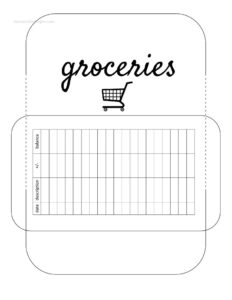
Grocery Cash Envelope
Use a free Grocery Cash Envelope template to budget food spending, track cash, and stick to your limit each pay period — free download in PDF and DOCX.
PDF
DOCX
0
likes
Download Files
- DOCX
A Grocery Cash Envelope is a simple budgeting tool that holds the physical cash you’ve set aside for food shopping during a set period, with a printed front you use to track your starting amount, purchases, and remaining balance. People most often use it to stop overspending at the supermarket by paying only with the cash inside the envelope. You can download this template free in both PDF and DOCX, with no signup required.
What Is a Grocery Cash Envelope?
A Grocery Cash Envelope is a labeled paper sleeve — part of the popular “cash envelope” or “cash stuffing” budgeting method — dedicated entirely to grocery spending. At the start of each week, fortnight, or month, you withdraw your planned grocery budget in cash and place it inside. The printed front lets you record the period, the budgeted amount, and each transaction as you spend. Anyone managing a household budget can use it: individuals, couples, families, students, or anyone trying to reduce reliance on cards. Because the cash is finite, the envelope creates a natural spending limit and makes food costs visible and tangible in a way that swiping a card rarely does.
When Do You Need a Grocery Cash Envelope?
This envelope fits a wide range of money-management situations. Common reasons to use one include:
- Curbing overspending: You consistently blow past your food budget and want a hard cap that a debit card doesn’t provide.
- Starting a cash budget: You’re adopting the envelope system and need a dedicated container for the grocery category alongside others like gas, dining out, and personal care.
- Paying down debt: You’re following a debt-reduction plan and need to free up cash by tightly controlling variable expenses like groceries.
- Sharing a household budget: Two partners both shop, and a single tracked envelope keeps everyone honest about what’s left for the period.
- Teaching money skills: You want a teen or young adult to see, in real cash, how grocery spending adds up.
- Rebuilding after a tight month: You’re resetting your finances and want immediate, visible feedback on every dollar spent on food.
What a Grocery Cash Envelope Should Have
A useful grocery envelope is more than a blank sleeve — the printed front should make tracking effortless. The key elements are a clear category label (Groceries), the budget period it covers, the budgeted (starting) amount of cash inside, and a running transaction log with space for the date, store or item, and amount spent. It should also include a running balance column or a final “remaining” line so you always know how much is left without counting the cash. Plenty of lines for individual purchases keep the log from filling up before the period ends.
How to Fill Out a Grocery Cash Envelope
Follow these steps to set up and maintain your envelope:
- Label the category: Confirm the envelope is marked “Groceries” so it isn’t confused with other cash envelopes you keep.
- Write the budget period: Enter the dates this envelope covers — for example, the week, pay period, or month.
- Record the budgeted amount: Write the total cash you’re placing inside, then physically add that amount of cash to the envelope.
- Log each purchase: Every time you shop, write the date, the store or a short note about what you bought, and the amount spent.
- Update the running balance: Subtract each purchase from the previous balance and write the new total so you always see what remains.
- Return the change: Put any leftover cash and the receipt back into the envelope after each trip.
- Reconcile at period end: Compare the cash left against your written balance, then decide whether to roll leftover money forward or move it to savings.
Tips for Making the Cash Envelope Method Stick
The envelope only works if you use it consistently. Withdraw your grocery cash on the same day each period so the routine becomes automatic. Keep the envelope somewhere you’ll actually grab it — a wallet, purse, or by your keys — rather than buried in a drawer. Round your budgeted amount to a number that’s easy to withdraw in bills, and resist the temptation to “borrow” from other envelopes when groceries run low; that defeats the purpose of the limit. If you run out before the period ends, treat it as data: it tells you the budget may be too tight or that habits need adjusting. Many people pair the grocery envelope with a meal plan and a shopping list to make the fixed amount go further.
Cash Envelope vs. Budgeting App
A grocery cash envelope and a budgeting app aim for the same goal but feel very different. An app tracks spending after the fact and relies on you to check it; the envelope enforces the limit in real time because once the cash is gone, shopping stops. Physical cash also tends to feel more “real” than a card swipe, which can naturally reduce impulse buys. Some people use both — an app for the big picture and the envelope for the single category they most want to control. There’s no wrong choice; the envelope simply offers a tactile, low-tech way to stay accountable.
Common Mistakes to Avoid
- Forgetting to log small trips: Quick convenience-store runs add up; record every purchase, no matter how minor.
- Borrowing from other envelopes: Pulling cash from your gas or dining envelope hides the real cost of groceries and breaks the system.
- Not updating the balance: Skipping the running total leaves you guessing and risks overspending late in the period.
- Setting an unrealistic budget: An amount that’s too low guarantees failure; base it on past spending, then trim gradually.
- Leaving change at the register: Always return leftover cash to the envelope so your written balance stays accurate.
- Carrying large amounts unsafely: Don’t load the envelope with more cash than you need for upcoming trips.
Frequently Asked Questions
What is a grocery cash envelope? It’s a labeled paper envelope that holds the cash you’ve budgeted for food shopping during a set period. The printed front lets you record your starting amount, log each purchase, and see how much you have left, helping you avoid overspending.
How do I fill out the envelope? Write the budget period and the total cash you’re putting inside, then place that amount of cash in the envelope. Each time you shop, note the date, store, and amount on the log and subtract it from the running balance so you always know what remains.
How much should I put in a grocery envelope? Base the amount on your recent grocery spending, then adjust toward a realistic target. Review a few weeks of receipts or bank statements to find an average, and set a number you can comfortably withdraw in cash for the period.
What do I do with leftover cash? You can roll it forward into the next period, move it to savings, or reward yourself with a small treat. Many people prefer rolling unused grocery cash into a savings goal to reinforce good habits.
Can I use this envelope alongside other budget categories? Yes. The cash envelope method works best when you create a separate, labeled envelope for each variable expense — groceries, gas, dining out, and so on — so each category has its own clear limit.
Is this template really free? Yes, this Grocery Cash Envelope template is completely free to download in PDF and DOCX with no signup required. Print as many copies as you need and reuse the design every budgeting period.
This template is a general example provided for informational purposes only and does not constitute financial, tax, or budgeting advice. Individual circumstances vary, and you should consult a qualified financial professional before making decisions about your personal budget or finances.
Official resource: for the rules that apply to your situation, see the Consumer Financial Protection Bureau.
Related Forms
- Payroll Budget Estimate
- Pets Cash Envelope
- Sinking Funds Tracker
- Automatic Payment Dates Tracker
- Entertainment Cash Envelope
- Daily Cash Sheet (3 shifts)
Browse more in Money.