
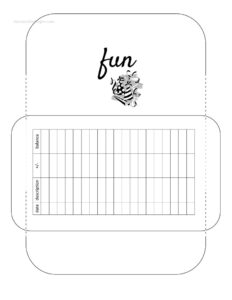
Fun Cash Envelope
Use a free Fun Cash Envelope template to budget guilt-free spending money for entertainment, hobbies, and treats — free download in PDF and DOCX.
PDF
DOCX
0
likes
Download Files
- DOCX
A Fun Cash Envelope is a simple budgeting tool that holds the physical cash you set aside for guilt-free spending — things like movies, dining out, hobbies, and small treats. People most often use it to keep entertainment spending in check while still enjoying their money, and you can download it free in both PDF and DOCX with no signup required.
What Is a Fun Cash Envelope?
A Fun Cash Envelope is a labeled envelope used in the cash envelope budgeting method, where you divide your income into categories and store each category’s cash in its own envelope. The “fun” envelope is dedicated to discretionary, non-essential spending — the purchases that bring enjoyment but aren’t bills or necessities. Once the cash inside runs out for the period, spending in that category stops until the next refill. Individuals, couples, families, and anyone trying to curb impulse purchases use this envelope to make spending tangible and intentional. It turns an abstract budget line into something you can hold, see, and physically empty, which makes overspending much harder to ignore.
When Do You Need a Fun Cash Envelope?
This envelope is useful any time you want to enjoy your money without losing track of it. Common situations include:
- You’re starting a cash envelope or zero-based budget and need a category for discretionary spending.
- You tend to overspend on dining out, streaming, games, or small luxuries and want a hard limit.
- You and a partner share finances and want an agreed “fun money” allowance each.
- You’re paying down debt or saving aggressively but still want a small, guilt-free reward fund.
- You’re teaching kids or teens how to manage spending money in a hands-on way.
- You’re going on a trip, festival, or weekend out and want to cap how much you’ll spend.
What a Fun Cash Envelope Should Have
An effective fun cash envelope makes the purpose and limit obvious at a glance. The essentials are a clear category label (“Fun Money” or something more personal), the budgeted amount for the period, the start and end dates of that period, and a space to track what you spend and what’s left. Many people also add a short list of what counts as “fun” spending so the envelope doesn’t quietly absorb groceries or gas. A running balance line keeps you honest, and a notes area lets you jot reminders — like a concert you’re saving toward — so the envelope works as both a wallet and a simple log.
How to Fill Out a Fun Cash Envelope
This template is intentionally flexible, so adapt the labels to your own budget. Follow these steps:
- Name the envelope. Write a clear title such as “Fun Money,” “Entertainment,” or a personal nickname so it’s never confused with essential categories.
- Set the budget amount. Write the total cash you’re allotting for this period — for example, $100 for the month.
- Add the time period. Note the start and end dates so you know how long the cash needs to last.
- Define what counts. List the spending types this envelope covers — dining out, movies, hobbies, treats — to avoid category creep.
- Insert the cash. Place the exact budgeted amount inside the envelope.
- Log each purchase. Each time you spend, record the date, what you bought, and the amount on the envelope.
- Update the running balance. Subtract each purchase to see how much fun money remains.
- Reconcile at period end. Decide whether to roll leftover cash forward, move it to savings, or start fresh next period.
Tips for Making the Cash Envelope Method Work
The fun envelope is often the first category people overspend, so a few habits help it stick. Withdraw your cash in small bills, which makes the money feel slower to spend than a single large note. Keep the envelope somewhere visible but not in your everyday wallet, so spending it is a deliberate choice rather than a reflex. Resist the urge to “borrow” from other envelopes — that defeats the entire system. If you find the amount is consistently too low or too high, adjust it at the next budgeting cycle rather than breaking the rule mid-period. And when the envelope is empty, treat that as the natural stop sign; the discipline is the whole point.
How It Fits Into a Larger Budget
A fun cash envelope rarely stands alone. It usually sits alongside envelopes for groceries, transportation, personal care, and other variable expenses, while fixed bills like rent and utilities are typically paid electronically. In a zero-based budget, every dollar of income is assigned a job, and the fun envelope is simply the line item for enjoyment. Keeping discretionary spending in cash while paying fixed costs from your account gives you the best of both worlds: predictability for bills and a hard ceiling for the spending that’s easiest to let slip. Reviewing the envelope monthly also reveals patterns — you might learn your real fun budget is higher or lower than you assumed.
Common Mistakes to Avoid
- Not setting a clear amount. An unlabeled or open-ended envelope offers no limit and defeats its purpose.
- Raiding other envelopes. Pulling cash from groceries or savings to fund more fun breaks the system entirely.
- Forgetting to log purchases. If you don’t record spending, you lose the running balance and the awareness it creates.
- Mixing in essentials. Letting bills or necessities sneak into the fun envelope blurs the categories.
- Setting the amount unrealistically low. An impossibly tight fun budget leads to frustration and abandoning the method.
- Refilling early. Topping up before the period ends removes the natural spending limit.
Frequently Asked Questions
What is a fun cash envelope used for? It’s used to hold and limit the cash you spend on non-essential, enjoyable purchases like dining out, entertainment, and hobbies. By giving discretionary spending its own physical envelope, you can enjoy your money while staying within a set budget for the period.
How much should I put in my fun envelope? There’s no universal figure — it depends on your income, fixed expenses, and savings goals. Many people start with a modest amount and adjust after a month or two once they see their actual spending patterns; the key is choosing an amount you can comfortably afford after essentials are covered.
What happens when the fun envelope is empty? When the cash runs out, that category is done for the period. The discipline of stopping is the main benefit of the method, so resist borrowing from other envelopes and wait until your next budgeting cycle to refill it.
Can I roll over leftover fun money? Yes, that’s entirely your choice. Some people roll unspent cash forward to save for a bigger treat, others sweep it into savings, and some reset to the same amount each period — pick whichever keeps you motivated.
Is the cash envelope method good for couples? It can work very well for couples, especially when each partner gets an agreed individual fun envelope. This gives both people guilt-free personal spending while keeping shared categories transparent and reducing money-related friction.
Is this fun cash envelope template free to download? Yes. You can download this Fun Cash Envelope template free in PDF and DOCX formats with no signup required, print it, and customize the labels, amounts, and dates to fit your own budget.
This template is a general example provided for informational purposes only and does not constitute financial, tax, or budgeting advice. Individual circumstances and best practices vary, so consider consulting a qualified financial professional before making decisions about your personal finances.
Official resource: for the rules that apply to your situation, see the Consumer Financial Protection Bureau.
Related Forms
- Weekly Bookkeeping Record
- Large Check Register
- Tax Refund Planner
- Client Income Tracker
- Open Orders Tracker
- Grocery Cash Envelope
Browse more in Money.