
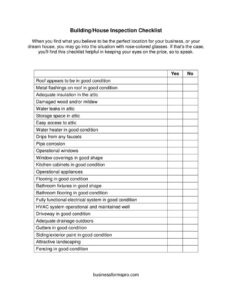
Inspection Checklist
Use this free Inspection Checklist template to walk through a building or house room by room before you buy or rent — free download in PDF and DOCX.
PDF
DOCX
3 downloads
0
likes
Download Files
- DOCX
An Inspection Checklist is a structured walkthrough form used to systematically evaluate the condition of a building or house before you buy, rent, or take possession. People most often reach for one when they fall in love with a property and need a level-headed way to document what’s actually working and what isn’t. You can download it free in PDF and DOCX, with no signup required.
What Is an Inspection Checklist?
An Inspection Checklist is a document that lists the major systems and surfaces of a property — roof, attic, plumbing, electrical, HVAC, interior finishes, and exterior — so an inspector, buyer, tenant, or landlord can check each item and note its condition. It is typically used by prospective homebuyers, commercial tenants, property managers, and landlords conducting move-in or move-out reviews. The form documents observable facts at a single point in time, creating a written record you can refer back to during negotiations or to compare a property’s condition before and after occupancy. It does not replace a licensed professional inspection, but it keeps your evaluation organized and consistent.
When Do You Need an Inspection Checklist?
This checklist earns its keep whenever you need an objective look at a property rather than an emotional one. Common situations include:
- House hunting: Touring a home you’re considering buying and wanting to catch costly issues like a failing roof or corroded pipes.
- Commercial leasing: Evaluating a retail or office space to confirm the building can support your business operations.
- Rental move-in: A tenant documenting the condition of every fixture and surface before signing a lease and taking the keys.
- Rental move-out: A landlord comparing current condition against move-in notes to fairly assess any damage beyond normal wear.
- Pre-listing prep: A seller walking the property to identify repairs worth making before putting it on the market.
- Periodic maintenance: A property manager performing routine seasonal checks of the roof, gutters, HVAC, and drainage.
What an Inspection Checklist Should Have
A useful Inspection Checklist groups items by area so nothing gets missed. The exterior section should cover roof, flashings, siding, gutters, driveway, drainage, landscaping, and fencing. The interior should address windows, flooring, kitchen cabinets, appliances, and bathroom fixtures. Critical systems — plumbing, the water heater, the electrical system, and HVAC — deserve their own attention because they are the most expensive to repair. The attic section captures insulation, water leaks, damaged wood or mildew, storage, and access. Each line item needs a simple way to mark condition (good, fair, poor, or needs attention) and space for notes describing exactly what you observed.
How to Fill Out an Inspection Checklist
- Start at the roof: Note whether the roof and metal flashings appear to be in good condition, ideally viewed from a safe vantage point.
- Inspect the attic: Check for adequate insulation, look for water leaks, and flag any damaged wood or mildew. Note whether there is usable storage space and whether access is easy.
- Test the plumbing: Confirm the water heater is in good condition, run faucets to check for drips, and look for pipe corrosion under sinks.
- Check windows: Verify windows are operational and that window coverings are in good shape.
- Walk the kitchen: Inspect cabinets for damage and run each appliance to confirm it is operational.
- Review interior surfaces: Note flooring condition throughout, then move to bathrooms and check fixtures and bathroom flooring.
- Test major systems: Confirm the electrical system is fully functional and that the HVAC system is operational and well maintained.
- Walk the exterior: Assess the driveway, outdoor drainage, gutters, siding and exterior paint, landscaping, and fencing, marking each item and adding notes.
How to Use Your Findings
Once the checklist is complete, the marked items become a working punch list. For buyers, every item flagged as poor or needing attention is a potential negotiating point — you can request repairs, a price reduction, or a credit at closing. For tenants, a thorough move-in checklist protects your security deposit by proving a problem existed before you arrived. Take dated photos of anything you note, and where possible, have the property owner or agent acknowledge the completed checklist so both parties share the same record. Keep a copy for yourself; a written, signed record is far more persuasive than memory if a dispute arises later.
Inspection Checklist vs. Professional Inspection
This checklist is a do-it-yourself tool for spotting obvious issues and organizing your impressions — it is not a substitute for a licensed home inspector. A professional inspection involves specialized equipment, code knowledge, and access to areas you may not safely reach, such as the roof surface or crawl spaces. Use this checklist during your own showings to decide whether a property is worth pursuing and to brief a professional on areas of concern. For a major purchase, follow your walkthrough with a formal inspection before finalizing any agreement.
Common Mistakes to Avoid
- Rushing the walkthrough: Excitement leads people to skip the attic or skim the exterior — the very places big problems hide.
- Not testing what you can test: Leaving faucets, appliances, windows, and HVAC unchecked defeats the purpose of the form.
- Failing to take notes: A checkbox alone won’t help later; describe what you saw and add photos.
- Ignoring drainage and gutters: Poor outdoor drainage and clogged gutters cause some of the most expensive water damage.
- Treating the checklist as the final word: It guides your evaluation but does not replace a licensed inspection.
- Skipping the signature: For rentals especially, an unacknowledged checklist carries little weight in a deposit dispute.
Frequently Asked Questions
What is an Inspection Checklist used for? It is used to systematically evaluate the condition of a building or house — covering the roof, attic, plumbing, electrical, HVAC, interior finishes, and exterior. Buyers, tenants, landlords, and property managers use it to document what is working and what needs attention before making a decision or taking possession.
Does an Inspection Checklist replace a professional home inspection? No. This checklist helps you organize your own observations and catch obvious issues, but it does not replace a licensed inspector who has the training and equipment to assess hidden problems. Use it to decide whether to pursue a property and to brief a professional on areas of concern.
How do I fill out the Inspection Checklist? Work area by area — start with the roof and attic, move through plumbing and the water heater, then windows, kitchen, bathrooms, electrical, and HVAC, and finish with the exterior. Mark each item’s condition and add notes describing exactly what you observed, ideally with dated photos.
Is this checklist suitable for rental move-in and move-out? Yes. Tenants can use it to document condition at move-in to protect a security deposit, and landlords can use the same form at move-out to fairly assess any damage beyond normal wear and tear.
How much does this Inspection Checklist cost? It is completely free to download here in both PDF and DOCX formats, with no signup or payment required. You can print the PDF for an in-person walkthrough or edit the DOCX to add your own line items.
Should both parties sign the completed checklist? For rentals and purchase situations, having both parties review and sign the completed checklist creates a shared, dated record that is far more persuasive than memory if a disagreement comes up later. It is a simple step that prevents many disputes.
This Inspection Checklist template is provided as a general example for informational purposes only and is not legal, financial, or professional inspection advice. Property requirements and disclosure rules vary by jurisdiction, and this form does not replace a licensed inspection. Consult a qualified professional before relying on it for a major decision.
Official resource: for the rules that apply to your situation, see HUD.
Related Forms
- Real Estate Listing Tracker
- Property Appraisal Form
- Rental Lease Extension Request
- Home Utility Provider List
- Neighborhood Checklist
- Open House Sign In Sheet
Browse more in Rental and Real Estate.