
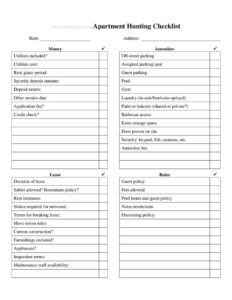
Apartment Hunting Checklist
Use this free Apartment Hunting Checklist template to compare units, track rent and amenities, and pick the right rental — free download in PDF and DOCX.
PDF
DOCX
6 downloads
0
likes
Download Files
- DOCX
An Apartment Hunting Checklist is a structured worksheet renters use to evaluate and compare apartments side by side so they can choose the best home for their budget and lifestyle. The single most common reason people use it is to avoid forgetting key details — like included utilities, parking, or lease length — when touring several units in a short window. This template is free to download in PDF and DOCX, with no signup required.
What Is an Apartment Hunting Checklist?
An Apartment Hunting Checklist is a personal organizing tool that lists every factor worth weighing before signing a lease, from monthly rent and deposit to noise levels, natural light, and proximity to work. It is used by individual renters, couples, roommates, and families during the search process, not by landlords or property managers. The checklist documents what you saw and felt at each property so you can compare options objectively after the tours blur together. Unlike a lease, it carries no legal weight — its job is simply to capture the details that influence your decision. Many people print one copy per apartment they tour, then rank them once the search is complete.
When Do You Need an Apartment Hunting Checklist?
- You are touring multiple apartments in one day and need to remember which had in-unit laundry, dishwashers, or a balcony.
- You are relocating to a new city and comparing neighborhoods you do not yet know well.
- You and roommates need a shared way to score units against everyone’s must-haves and deal-breakers.
- You are budgeting carefully and want to track total monthly cost, including utilities, parking, and pet fees, not just base rent.
- You are a first-time renter who wants to inspect each unit thoroughly and ask the right questions before committing.
- You are downsizing or upgrading and need to confirm a new place fits your furniture, storage, and commute.
What an Apartment Hunting Checklist Should Have
A complete checklist captures both the hard numbers and the easy-to-overlook impressions. Key elements include the property address and contact, the monthly rent and required deposit, lease term and move-in date, and which utilities are included versus billed separately. It should also cover the unit itself — square footage, number of bedrooms and bathrooms, appliances, storage, and condition of floors and walls. Building and neighborhood factors matter too: parking, laundry, security, pet policy, noise, safety, and distance to work, transit, and groceries. Finally, leave space for your own rating and notes so you can rank each apartment fairly after the tour.
How to Fill Out an Apartment Hunting Checklist
- Record the basics: Write the apartment address, the date you toured, and the leasing agent or landlord’s name and phone number.
- Log the costs: Note the monthly rent, security deposit, application fee, and any pet or parking fees, then add them up for a true monthly figure.
- Capture lease terms: Write the lease length, available move-in date, and renewal or early-termination details.
- Describe the unit: Mark the number of bedrooms and bathrooms, square footage, and which appliances are included.
- Check utilities: Indicate which utilities are covered by the landlord and which you pay, plus internet availability.
- Inspect amenities: Tick off laundry, parking, storage, air conditioning, and outdoor space.
- Assess the surroundings: Rate noise, safety, parking, and the commute to work or transit.
- Add your rating: Give the apartment an overall score and jot quick notes while the visit is fresh.
Tips for Touring Efficiently
Bring a printed checklist for every appointment and a pen, plus your phone to photograph each room as you go — photos and notes together prevent confusion later. Tour at the time of day you would actually be home so you experience real light and noise levels. Test water pressure, open and close windows, check cell reception, and look under sinks for leaks or pests. Ask the agent directly about average utility costs, renewal terms, and how maintenance requests are handled. If you tour with roommates, have each person fill out their own copy, then compare scores afterward to surface disagreements before anyone signs.
Comparing Apartments After the Tours
The checklist becomes most powerful once the touring is done. Lay your completed sheets side by side and compare them on the factors that matter most to you — total monthly cost, commute, space, and any non-negotiables like pet policy or in-unit laundry. Weight the categories so a slightly higher rent with included utilities does not lose to a cheaper unit that nickel-and-dimes you. A consistent rating system turns a stressful, emotional decision into a clear ranking you can act on quickly, which matters in competitive markets where good units rent within hours.
Common Mistakes to Avoid
- Focusing only on base rent and ignoring utilities, parking, pet fees, and renter’s insurance that inflate the real monthly cost.
- Relying on memory instead of writing notes — three apartments later, the details run together.
- Skipping the neighborhood at night, when noise, lighting, and safety can be very different.
- Forgetting to ask about lease length, renewal terms, and early-termination penalties before you fall in love with a unit.
- Not measuring rooms or doorways, then discovering your furniture or appliances will not fit.
- Overlooking deal-breakers like a no-pet policy or street-only parking until after you have applied.
Frequently Asked Questions
What is an apartment hunting checklist used for? It is a worksheet that helps renters evaluate and compare apartments on consistent criteria — rent, amenities, location, and condition. By recording the same details for every unit you tour, you can rank options objectively instead of relying on memory or first impressions.
How do I fill out the checklist for each apartment? Print one copy per unit, then fill in the address, rent and fees, lease terms, unit features, utilities, amenities, and neighborhood notes as you tour. Finish with an overall rating and quick comments while the visit is still fresh in your mind.
Is the apartment hunting checklist a legal document? No. It is a personal organizing tool with no legal effect — it does not bind you or the landlord to anything. The lease you eventually sign is the legally binding agreement, so always read it carefully before committing.
What questions should I ask while touring? Ask about average utility costs, what is included in rent, parking and pet policies, lease length, renewal and early-termination terms, and how maintenance is handled. Recording the answers on your checklist keeps these crucial details from slipping through the cracks.
How much does this checklist cost? Nothing — it is completely free to download here in both PDF and DOCX formats, with no signup or account required. You can print it as many times as you need or edit the DOCX version to add your own must-haves and deal-breakers.
Can I customize the checklist for roommates or specific needs? Yes. The DOCX version is fully editable, so you can add rows for items like soundproofing, bike storage, gym access, or accessibility features. Roommates can each complete a copy and compare scores to reach a decision everyone agrees on.
This template is a general example provided for informational purposes only and does not constitute legal, financial, or real estate advice. Rental laws, lease terms, and tenant rights vary by jurisdiction — consult a qualified professional or your local housing authority for guidance on your specific situation.
Official resource: for the rules that apply to your situation, see HUD.
Related Forms
- Credit Drop Letter Of Explanation Mortgage
- Landlord Move-Out Letter
- Landlord Lease Renewal Letter
- Property Management Agreement
- Rental Agreement
- Complaint Letter Against Tenant
Browse more in Rental and Real Estate.