
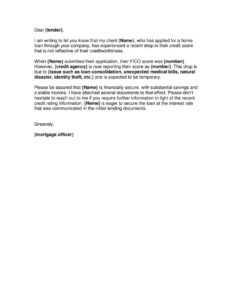
Credit Drop Letter Of Explanation Mortgage
Download a free Credit Drop Letter of Explanation for your mortgage to explain a recent score decline to underwriters — free template in PDF and DOCX.
PDF
DOCX
1 downloads
0
likes
Download Files
- DOCX
A Credit Drop Letter of Explanation Mortgage is a short written statement a borrower gives to a lender to explain why their credit score recently fell. People most often use it when an underwriter flags a sudden score drop during the loan approval process and asks for a reason in writing. You can download this letter free in PDF and DOCX, with no signup required.
What Is a Credit Drop Letter of Explanation Mortgage?
A Credit Drop Letter of Explanation Mortgage is a borrower-written document that tells the mortgage underwriter what caused a recent decline in your credit score. Lenders review your credit closely before funding a home loan, and an unexpected drop can raise questions about your financial stability. This letter lets you explain the cause — such as a missed payment, a new account, a high balance, or a billing dispute — and reassure the lender the issue is understood and under control. It is typically requested during underwriting, attached to your loan file, and read alongside your credit report, pay stubs, and bank statements to give context the raw numbers cannot.
When Do You Need a Credit Drop Letter of Explanation Mortgage?
Underwriters request a letter whenever something in your credit history needs human context. Common situations include:
- Your score dropped between the initial pre-approval pull and a later credit refresh before closing.
- You opened a new credit card, auto loan, or store account, which temporarily lowered your average account age.
- A single late or missed payment appeared on a card or loan you usually pay on time.
- Your credit utilization spiked because of a large purchase, a medical bill, or a balance transfer.
- You are disputing an inaccurate item, a duplicate account, or a charge you believe is fraudulent.
- A closed account, a paid-off loan, or a collection update changed your reported balances and dinged the score.
In each case, the lender wants to confirm the drop is explainable and not a sign of ongoing financial trouble that could affect your ability to repay the mortgage.
What a Credit Drop Letter of Explanation Should Have
A strong letter is brief, factual, and directly tied to the items the underwriter flagged. It should clearly identify you and the loan, state the specific reason for the score change, and confirm your current standing. Include these elements:
- Your full name, date, and the loan or application number if you have one.
- The lender or loan officer’s name and the property address being financed.
- A clear statement of which credit event caused the drop.
- The date the event occurred and whether it has been resolved.
- Any supporting facts — such as a payment now caught up or a dispute filed.
- Your signature confirming the explanation is true and accurate.
How to Fill Out a Credit Drop Letter of Explanation Mortgage
Because this letter is a free-form statement, build it in clear, dated paragraphs:
- Date the letter. Put the current date at the top so the underwriter knows it reflects your present situation.
- Address the recipient. Write to your loan officer, the underwriting department, or the lender by name.
- Identify yourself and the loan. State your full legal name, the application or loan number, and the property address.
- Name the specific item. Reference the exact account or credit event the underwriter questioned, including the creditor and approximate date.
- Explain the cause. Describe in one or two honest sentences why the score dropped — for example, a one-time late payment or a new account opened for a planned purchase.
- Confirm the resolution. State whether the balance is paid, the payment is current, or a dispute is in progress.
- Reassure the lender. Note that the event was isolated and your finances are stable.
- Sign and print your name. Add your signature, printed name, and contact phone or email so the lender can follow up.
Tips for Writing a Convincing Explanation
Keep the letter to a single page and stick strictly to facts the lender can verify. Avoid emotional language, blame, or long backstories; underwriters read many letters and value clarity. Match your explanation to documents already in the file — if you say a payment is now current, the supporting statement should show it. If more than one item caused the drop, address each one in its own short paragraph so nothing is overlooked. Write in the first person, use plain dates and dollar context where helpful, and never speculate about anything you cannot back up.
How This Differs From Other Letters of Explanation
Lenders request several kinds of explanation letters during underwriting, and it helps to know how this one fits. A general letter of explanation might cover a large deposit, a gap in employment, or an address discrepancy. A credit drop letter is narrower: it focuses only on why your credit score declined. A separate credit inquiry letter explains why new hard pulls appeared on your report. Use this credit drop letter specifically when the underwriter’s question is about the score itself moving down, and keep its scope tight rather than mixing in unrelated issues.
Common Mistakes to Avoid
- Being vague — saying “I had some trouble” instead of naming the exact account and date.
- Writing too much, burying the key fact under unnecessary personal detail.
- Contradicting the documents already in your file, which undermines your credibility.
- Failing to mention that the issue is resolved or being actively addressed.
- Forgetting to include your loan number, property address, or signature.
- Submitting late and stalling your closing — send the letter as soon as it is requested.
Frequently Asked Questions
What is a credit drop letter of explanation for a mortgage? It is a short written statement explaining why your credit score recently declined, requested by the underwriter during the loan approval process. The letter gives context the credit report alone cannot, helping the lender understand the cause and confirm your finances remain stable.
How do I write one? Date the letter, address it to your loan officer or underwriter, identify yourself and the loan, name the specific credit event that caused the drop, explain the cause honestly, confirm whether it is resolved, and sign it. Keep it to one page and stick to verifiable facts.
Does a credit drop letter need to be notarized? Generally no — most lenders accept a signed letter without notarization. However, requirements vary by lender, so follow the exact instructions your loan officer or underwriter provides for your file.
Will explaining the drop fix my credit score? No. The letter does not change your score or remove items from your report; it only provides context for the underwriter’s decision. If an item is inaccurate, you must dispute it separately with the credit bureau or creditor.
Is this letter legally binding? The letter is a factual statement you sign as true, not a contract. Providing false information to a lender can have serious consequences, so only state things you can document and verify.
How much does this template cost? Nothing — you can download this Credit Drop Letter of Explanation Mortgage template free in PDF and DOCX from Business Forms Pro, with no signup required, and edit it to fit your situation.
This template is a general example provided for informational purposes only and is not legal, financial, or tax advice. Mortgage underwriting standards and documentation requirements vary by lender and jurisdiction. Consult your loan officer or a qualified professional about your specific situation.
Official resource: for the rules that apply to your situation, see HUD.
Related Forms
- Open House Sign In Sheet
- Rent Increase
- Complaint Letter Against Tenant
- Landlord Move-Out Letter
- Reasonable Accommodation Request Wheelchair
- Covid Eviction Moratorium Tenant
Browse more in Rental and Real Estate.