
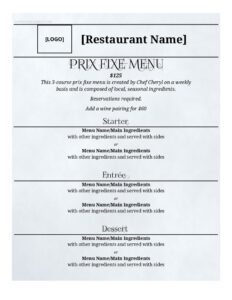
Prix Fixe Menu Options
Design multi-course set menus with this free Prix Fixe Menu Options template—organize courses, pricing, and pairings, free download in PDF and DOCX.
DOCX
2 downloads
0
likes
Download Files
- DOCX
A Prix Fixe Menu Options template is a structured layout restaurants use to present a fixed-price, multi-course meal where guests choose one dish per course. It’s the most common way to streamline service for special events, holidays, and tasting nights—and you can download it free here in both PDF and DOCX formats with no signup required.
What Is a Prix Fixe Menu Options Template?
“Prix fixe” is French for “fixed price.” A Prix Fixe Menu Options template is a planning and presentation document used by restaurant owners, chefs, and front-of-house managers to lay out a complete meal sold for a single set price. Instead of ordering à la carte, guests select one option from each course—typically an appetizer, an entrée, and a dessert. The template documents the courses, the choices within each course, any beverage pairings or upgrades, and the all-in price per person. It keeps the kitchen, servers, and guests aligned, simplifies pricing math, and creates a clean, professional menu that can be printed for tables or shared digitally.
When Do You Need a Prix Fixe Menu Options Template?
A fixed-price format works best when you want predictable kitchen workflow and clear guest expectations. Common situations include:
- Holiday and seasonal dining — Valentine’s Day, New Year’s Eve, Mother’s Day, or Thanksgiving service where you expect high volume and want streamlined courses.
- Restaurant Week or promotional events — a curated three-course menu at a single advertised price to attract new diners.
- Private parties and group bookings — offering a limited set menu keeps the kitchen efficient and billing simple for large tables.
- Tasting and chef’s menus — multi-course experiences that showcase signature dishes with optional wine pairings.
- Weddings, rehearsal dinners, and corporate events — caterers and venues use prix fixe selections to confirm counts in advance.
- Daily lunch specials — a quick two-course set menu priced for the midday crowd to boost turnover.
Types of Prix Fixe Menus
Not every fixed-price menu looks the same, and the template adapts to several formats. A standard prix fixe offers a few options per course at one price. A table d’hôte menu is similar but may bundle a beverage or include limited substitutions. A tasting menu presents many small courses with no choices, designed as a guided experience. A set group menu is built for parties booking ahead, often with a deposit. Pick the structure that matches your service style, then adjust the number of courses and options accordingly.
What a Prix Fixe Menu Should Include
A complete prix fixe menu communicates everything a guest and a server need to know at a glance. Strong menus include:
- A clear menu title and the occasion or date range it applies to.
- The fixed price per person, stated prominently and clearly.
- Each course labeled in order (first course, second course, dessert).
- The dish options within each course, with brief, appetizing descriptions.
- Optional add-ons such as wine pairings, premium upgrades, or supplements.
- Dietary indicators (vegetarian, vegan, gluten-free) and allergen notes.
- Service details—tax and gratuity policy, minimum party size, or reservation requirements.
How to Fill Out a Prix Fixe Menu Options Template
- Add the menu header. Enter the menu name and the event, date, or season it covers (for example, “New Year’s Eve Three-Course Dinner”).
- Set the fixed price. Write the per-person price and note whether tax and gratuity are included or added separately.
- Define each course. Label your courses in sequence—first course, main course, dessert—and decide how many options each will offer.
- List the dish options. Under each course, enter the dish name and a short description highlighting key ingredients and preparation.
- Mark dietary and allergen details. Tag vegetarian, vegan, or gluten-free dishes and note common allergens.
- Add upgrades and pairings. Record any optional wine pairing, premium protein supplement, or beverage add-on with its extra charge.
- Note service terms. Include reservation policy, minimum party size, and any deposit or cancellation rules.
- Review and finalize. Confirm pricing math, proofread descriptions, then export to PDF for printing or DOCX for further editing.
Pricing Your Prix Fixe Menu
The advantage of a fixed price is predictability, so build the number carefully. Calculate the plate cost of every option a guest could choose, then set the menu price against your most expensive likely combination rather than the cheapest. Because guests pick from a curated list, your food cost is more controlled than à la carte service, which lets you offer a value perception while protecting margins. If certain dishes cost noticeably more—a premium steak or seafood—add a small supplement rather than raising the entire menu price. Always state clearly whether beverages, tax, and gratuity are part of the price so there are no surprises at the table.
Tips for a Smoother Service
Limit each course to two or three options so the kitchen can prep efficiently and servers can describe everything confidently. Balance the menu across proteins and cooking methods to avoid bottlenecks at a single station. Print a clean guest-facing version and keep an internal version with plate costs and allergen flags for staff. For event bookings, collect selections in advance whenever possible to lock in counts and reduce waste.
Common Mistakes to Avoid
- Burying the price — guests should see the fixed price immediately, not hunt for it.
- Offering too many options — large choice lists slow the kitchen and defeat the purpose of a set menu.
- Omitting allergen and dietary information — this frustrates guests and creates safety risks.
- Forgetting to state tax and gratuity policy — unclear totals lead to disputes at checkout.
- Unbalanced costing — pricing against your cheapest dish can erode margins when guests pick the expensive option.
- Not updating seasonal menus — listing out-of-season or out-of-stock items damages credibility.
Frequently Asked Questions
What does prix fixe mean? Prix fixe is French for “fixed price” and refers to a multi-course meal sold for one set price. Guests typically choose one dish from each course rather than ordering individual à la carte items.
How many courses should a prix fixe menu have? Three courses—an appetizer, an entrée, and a dessert—is the most common format. Tasting menus may include many more small courses, while a quick lunch set menu might offer just two.
Is this Prix Fixe Menu Options template free to download? Yes. You can download it free from Business Forms Pro in both PDF and DOCX formats, with no signup or payment required. Use the PDF for printing and the DOCX to edit courses and prices.
Can I include wine pairings or upgrades? Absolutely. The template has space for optional add-ons such as wine pairings, premium protein supplements, or beverage upgrades, each with its own extra charge listed separately from the base price.
How do I price a prix fixe menu? Calculate the plate cost of each possible selection and price against the most expensive likely combination to protect your margin. Add supplements for high-cost dishes rather than raising the entire menu price.
Should I list allergens and dietary options? Yes. Clearly marking vegetarian, vegan, and gluten-free dishes and noting common allergens helps guests order confidently and reduces the risk of an avoidable reaction.
This Prix Fixe Menu Options template is a general example provided for informational purposes only and is not legal, financial, or food-safety advice. Menu labeling, allergen disclosure, and pricing requirements vary by jurisdiction—consult a qualified professional and your local health authority to ensure compliance.
Related Forms
- See Host Table Sign
- Sandwich Menu
- Alcohol Inventory Log
- Freezer Temperature Log
- Restaurant Sanitation Checklist
- Reservations List
Browse more in Restaurant.