
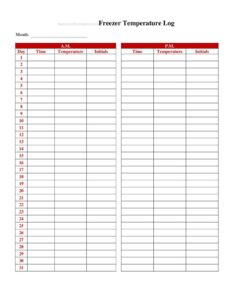
Freezer Temperature Log
Download a free Freezer Temperature Log template in PDF or DOCX to record freezer temps, protect food safety, and stay HACCP compliant—free download.
PDF
DOCX
3 downloads
0
likes
Download Files
- DOCX
A Freezer Temperature Log is a simple record-keeping sheet that lets restaurant and food-service staff document freezer temperatures at regular intervals throughout the day. The most common reason people use it is to prove that frozen food has stayed at a safe temperature and to satisfy health inspectors and HACCP requirements. You can download this template free in PDF or DOCX with no signup required.
What Is a Freezer Temperature Log?
A Freezer Temperature Log is a monitoring document used in kitchens, walk-in freezers, reach-in units, and cold storage areas to track that equipment is holding frozen product at a safe temperature—generally at or below 0°F (-18°C). It is typically completed by line cooks, shift leads, or kitchen managers and reviewed by the person responsible for food safety. The log records the date, time, the temperature read from a thermometer, the initials of the person checking, and any corrective action taken when a reading falls out of range. Together these entries create a written history that demonstrates ongoing compliance and helps catch equipment failures before food spoils.
When Do You Need a Freezer Temperature Log?
Almost any operation that stores frozen food benefits from logging temperatures consistently. Common situations include:
- Daily restaurant operations—checking freezers at opening, mid-shift, and closing to confirm they hold safe temperatures.
- Health inspections—providing inspectors with documented proof that frozen food has been monitored and stored correctly.
- HACCP and food safety plans—satisfying a critical control point that requires regular temperature monitoring and recordkeeping.
- Equipment troubleshooting—spotting a gradual rise in temperature that signals a failing compressor, worn door gasket, or iced-up coil before product is lost.
- Power outages or deliveries—verifying that frozen stock stayed safe after a disruption or recording temps when new frozen product arrives.
- Multi-unit chains—standardizing how every location records freezer data so corporate food-safety teams can audit consistently.
What a Freezer Temperature Log Should Have
A complete and useful log captures enough detail to be meaningful during an audit while staying quick to fill in. Key elements include the freezer or unit identification (so multi-freezer kitchens know which appliance was checked), the date, the time of each reading, the recorded temperature with its unit (°F or °C), the acceptable temperature range for reference, the initials of the staff member who took the reading, and a corrective-action column for noting what was done when a temperature was out of range. A space for a manager or supervisor to verify and sign off, plus a target temperature printed at the top, rounds out a log that holds up to scrutiny.
How to Fill Out a Freezer Temperature Log
Follow these steps to complete the log accurately and consistently:
- Label the unit. At the top, write the freezer name or number (for example, “Walk-in Freezer 1” or “Reach-in by prep line”) so the record is tied to a specific appliance.
- Enter the date. Record the day each set of readings is taken; start a fresh sheet for each new day or week as your routine requires.
- Note the time. Write the exact time of each check, such as opening, mid-shift, and closing, to show monitoring across the day.
- Record the temperature. Read the unit’s thermometer or a calibrated probe and write the value, including whether it is °F or °C.
- Compare to the target. Check the reading against the safe range printed on the log (generally 0°F or below).
- Document corrective action. If a reading is too high, note what you did—adjusted the thermostat, closed a propped door, called maintenance, or moved product.
- Add your initials. Sign each entry so the record shows who took the reading.
- Have a manager verify. At the end of the shift or day, the supervisor reviews and signs the log.
Setting a Monitoring Schedule
Consistency is what makes a temperature log valuable. Decide how often freezers will be checked and stick to that cadence. Many kitchens check at least twice per shift—once near the start and once near the end—while high-volume operations check more frequently. Post the log near each freezer with a reliable thermometer so staff can record readings on the spot rather than from memory. Calibrate thermometers regularly and use the same instrument each time for comparable results. A predictable schedule also makes it easier to spot trends: a temperature that drifts upward over several entries often points to a developing equipment problem rather than a one-time fluctuation.
Responding to Out-of-Range Readings
An out-of-range temperature is exactly why the log exists, so treat it as an action trigger rather than a number to ignore. First confirm the reading with a second thermometer to rule out a faulty gauge. Check obvious causes such as a door left ajar, overpacked shelves blocking airflow, or frost buildup, and correct them. If the temperature does not recover, contact maintenance and consider relocating product to a backup unit. Always record what you found and what you did in the corrective-action column. This written trail shows inspectors and managers that problems were identified and handled, and it helps determine whether any food must be evaluated for safety.
Common Mistakes to Avoid
- Back-filling entries—writing in several readings at once at the end of a shift defeats the purpose and is easy for inspectors to spot.
- Leaving corrective action blank—recording a high temperature with no follow-up note suggests the problem was ignored.
- Omitting units—a temperature without °F or °C is ambiguous and can cause confusion.
- Using an uncalibrated thermometer—inaccurate readings make the entire log unreliable.
- Not identifying the freezer—in kitchens with multiple units, an unlabeled log makes it impossible to trace a problem.
- Skipping the manager review—without supervisor sign-off, no one is verifying that issues were addressed.
Frequently Asked Questions
What temperature should a freezer be kept at? Most food-safety guidance recommends keeping freezers at or below 0°F (-18°C) to keep food frozen solid and safe. Always follow your local health code and your facility’s HACCP plan, since specific requirements can vary by jurisdiction and by the type of product stored.
How often should I record freezer temperatures? A common practice is to check and log at least twice per shift, such as at opening and closing, with additional checks during busy periods or after deliveries. Higher-risk operations may monitor more frequently, so set a schedule that matches your menu, volume, and local rules.
Who should fill out the Freezer Temperature Log? Any trained staff member responsible for the kitchen can record readings—often line cooks, shift leads, or prep staff—while a manager typically reviews and signs off. Assigning clear responsibility helps ensure the log is completed consistently rather than forgotten.
Is a Freezer Temperature Log legally required? Many jurisdictions and food-safety programs expect documented temperature monitoring as part of an active managerial control or HACCP plan, and inspectors frequently ask to see these records. Because exact requirements vary, check your local health department rules to confirm what your operation must keep.
What do I do if the temperature is out of range? Verify the reading with a second thermometer, look for causes like an open door or blocked vents, and correct them. Record the corrective action you took in the log, and if the unit cannot recover, contact maintenance and protect or relocate the affected product.
How much does this template cost? This Freezer Temperature Log template is completely free to download from Business Forms Pro in both PDF and DOCX formats, with no signup required. You can print it for posting beside each freezer or edit the DOCX version to add your unit names and target temperatures.
This template is provided as a general example for informational purposes only and does not constitute legal, food-safety, or regulatory advice. Food-handling and recordkeeping requirements vary by jurisdiction and by operation. Consult your local health department or a qualified food-safety professional to ensure your monitoring practices meet applicable rules.
Related Forms
- Drink Menu
- Line Starts Here Sign
- Employees Only Sign
- Please Pay At The Counter Sign
- Kids Menu
- Alcohol Refusal Tracker
Browse more in Restaurant.