
Restaurant Reservation Request
Download a free Restaurant Reservation Request form template in PDF and DOCX to capture guest details, party size, allergens, and special requests easily.
PDF
DOCX
0
likes
Download Files
- DOCX
A Restaurant Reservation Request form is a simple document restaurants use to collect a guest’s booking details — date, time, party size, contact information, and any dietary needs — before confirming a table. It’s the most common way to organize incoming bookings and prepare the kitchen and floor in advance. You can download this template for free in PDF and DOCX, with no signup required.
What Is a Restaurant Reservation Request?
A Restaurant Reservation Request is a structured intake form that captures everything a host or reservations team needs to hold a table for a guest. It’s typically filled out by the guest (online, by email, or in person) or by staff taking the booking over the phone. The form documents who is dining, when they want to come, how many people are in the party, and any allergens or special requests the kitchen should know about. Unlike a generic sign-in sheet, this form is forward-looking: it gathers preferences ahead of the visit so the restaurant can plan seating, staffing, and menu prep. Once reviewed, the request becomes a confirmed reservation in the booking system.
When Do You Need a Restaurant Reservation Request?
This form is useful any time a restaurant manages bookings rather than relying purely on walk-ins. Common situations include:
- Fine-dining venues where prix fixe menus and timed seatings require advance planning and accurate party counts.
- Allergy-conscious kitchens that need to flag peanuts, shellfish, gluten, or dairy before service so the chef can adapt dishes safely.
- Large group and event bookings such as birthdays, business dinners, or anniversaries that need a guaranteed table.
- Busy weekend or holiday periods when demand outstrips capacity and the team needs to schedule seatings efficiently.
- Restaurants offering bar seating as an alternative, where confirming whether a guest will accept the bar helps maximize covers.
- Email or website-based reservations where a standardized form prevents missing details that lead to mix-ups at the door.
What a Reservation Request Form Should Have
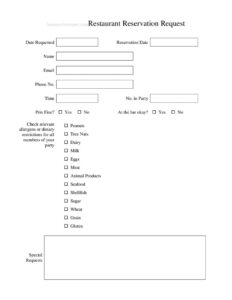
A complete Restaurant Reservation Request balances guest convenience with the information staff need to deliver good service. At minimum it should capture the date the request was made and the requested dining date so bookings can be sorted chronologically. It needs the guest’s full name and reliable contact details — email and phone — so the restaurant can confirm or follow up. Party size, requested time, and seating flexibility (bar acceptable or not) drive table assignments. A clear allergen and dietary section protects guests and the kitchen, and a free-text special requests field captures everything from window seats to celebration cakes. Together these fields turn a casual inquiry into an actionable booking.
How to Fill Out a Restaurant Reservation Request
- Date Requested: Enter the date you are submitting the form so staff can prioritize by when the request arrived.
- Reservation Date: Write the actual date you wish to dine.
- Name: Provide the full name the reservation should be held under.
- Email: Add a working email address for confirmation and any updates.
- Phone No.: Include a phone number so the restaurant can reach you quickly on the day.
- Time: State your preferred seating time; offer a small window if you’re flexible.
- No. in Party: Enter the total number of guests, including yourself and any children.
- Prix Fixe?: Mark Yes or No to indicate whether your party wants the set menu.
- At the bar okay?: Mark Yes or No to show whether bar seating is acceptable if tables are full.
- Allergens / dietary restrictions: Check every relevant box — Peanuts, Tree Nuts, Dairy, Milk, Eggs, Meat, Animal Products, Seafood, Shellfish, Sugar, Wheat, Grain, Gluten — for any member of your party.
- Special Requests: Note anything else, such as a high chair, accessible seating, or a celebration.
Using the Allergen and Dietary Section Effectively
The allergen checklist is one of the most valuable parts of this form. Guests should mark every applicable item — even if only one person in the party is affected — because cross-contamination concerns apply to the whole table. The list covers common allergens and dietary categories: nuts (Peanuts and Tree Nuts are separate for a reason, since some people react to only one), dairy items (Dairy and Milk), Eggs, Meat, Animal Products for vegan guests, Seafood and Shellfish, plus Sugar, Wheat, Grain, and Gluten. For the kitchen, this advance notice means the chef can confirm which dishes are safe, prepare substitutions, and avoid last-minute scrambling. Encourage guests to use the Special Requests box to add severity notes, such as a life-threatening allergy, so staff treat it with appropriate care.
Tips for Restaurants Managing Requests
Treat a submitted form as a request, not a guaranteed booking, until your team confirms availability. Reply promptly by email or phone, restate the date, time, and party size, and note any allergens you’ve flagged for the kitchen. Keep completed forms organized by reservation date so the host stand has a clear daily list. If you use a digital booking system, transfer the details accurately and keep the original form on file in case of disputes about what was requested. A consistent process reduces no-shows and double-bookings.
Common Mistakes to Avoid
- Leaving the time blank or writing something vague like “dinner,” which makes it impossible to assign a seating.
- Underestimating party size — always count children and late additions so the table fits.
- Skipping the allergen section when someone has a restriction, putting that guest at risk.
- Providing an unreachable phone or email, so the restaurant can’t confirm or notify you of changes.
- Confusing Date Requested with Reservation Date, which scrambles the booking order.
- Assuming the request is confirmed before the restaurant replies — always wait for confirmation.
Frequently Asked Questions
What is a Restaurant Reservation Request form used for? It’s used to collect a guest’s booking details — date, time, party size, contact information, and dietary needs — so a restaurant can review availability and confirm a table. It standardizes incoming requests and helps the kitchen and floor prepare in advance.
Is submitting this form a guaranteed reservation? No. The form is a request, and the booking is only confirmed once the restaurant reviews availability and responds. That’s why accurate contact details are essential — the venue needs to reach you to confirm or suggest an alternative time.
Why does the form ask about allergens for the whole party? Because cross-contamination and shared dishes can affect everyone at a table, the kitchen needs to know every allergen present. Marking all relevant boxes — even for a single guest — lets the chef plan safe dishes and substitutions before you arrive.
What does “Prix Fixe?” mean on the form? Prix fixe is a fixed-price set menu with a limited number of courses. Marking Yes tells the restaurant your party intends to choose the set menu, which helps with kitchen planning and timing for that seating.
Can I fill this out for a large group or special occasion? Yes. Enter the full party count under No. in Party and use the Special Requests field to note the occasion, seating preferences, or anything like a cake or accessible seating. Larger groups often benefit from booking earlier so the restaurant can accommodate them.
Is this template free to download? Yes. You can download the Restaurant Reservation Request template for free in both PDF and DOCX formats, with no signup required. Restaurants can customize the fields, add branding, or adjust the allergen list to match their menu.
This template is a general example provided for informational purposes only and is not legal, food-safety, or business advice. Allergen handling rules and food-service requirements vary by jurisdiction — consult the appropriate health authority or a qualified professional to ensure your restaurant’s practices meet local regulations.
Related Forms
- Football Sponsorship Form
- Potluck Sign Up Sheet
- Silent Auction Bid Sheet
- Sports Signup Sheet
- Class Registration Form
- Childcare Check-In Sheet
Browse more in Sign In / Sign Up Sheets.