
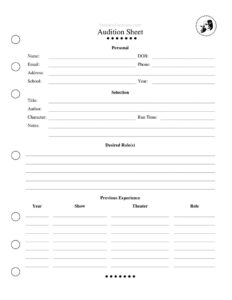
Audition Sheet
Download a free Audition Sheet template in PDF and DOCX to record performer details, audition notes, and casting decisions quickly and consistently.
PDF
DOCX
13 downloads
0
likes
Download Files
- DOCX
An Audition Sheet is a one-page form used to record information about each performer who tries out for a play, musical, film, dance piece, or other production. It gives directors and casting panels a consistent way to capture contact details, experience, and audition notes so casting decisions are organized and fair. You can download this Audition Sheet free in PDF and DOCX — no signup required.
What Is an Audition Sheet?
An Audition Sheet is a structured intake and evaluation form created by a casting director, stage manager, or production team to document everyone who auditions for a role. It typically combines a performer’s basic information — name, contact details, the role they are reading for — with space for the panel to score or comment on their performance. The sheet serves two purposes: it acts as a record of who showed up and what they brought, and it becomes a reference tool during callbacks and final casting. Whether you are running a community theater open call or a school musical tryout, the Audition Sheet keeps every candidate’s details in one comparable, easy-to-file place.
When Do You Need an Audition Sheet?
Any time you are seeing multiple performers and need to compare them later, a written sheet beats relying on memory. Common situations include:
- Open casting calls for a community or regional theater production where dozens of actors read in a single day.
- School and university productions where faculty and student directors must justify casting choices fairly.
- Musical auditions that test acting, singing, and dance, requiring separate notes for each discipline.
- Film, commercial, or short-film casting where a self-tape or in-person read needs to be logged alongside contact info.
- Dance company or choreography tryouts where physical ability, timing, and technique are evaluated.
- Callback rounds, where you revisit your top candidates and compare new notes against the original audition.
Types of Audition Sheets
Although the core structure is similar, productions adapt the sheet to their needs. A simple intake sheet captures only contact details and the role auditioned for, useful when a single director will remember each read. A scored evaluation sheet adds rating scales for voice, movement, and acting so a panel can tally results objectively. A group or ensemble sheet lists several performers per page for fast-moving cattle-call situations. Choose the version that matches the scale and formality of your production.
What an Audition Sheet Should Have
A complete Audition Sheet balances candidate information with evaluation space. Strong sheets include the performer’s full name and reliable contact details, the production and role they are reading for, an audition number or date, relevant experience or training, conflicts or scheduling notes, vocal range or special skills where applicable, and a clear area for the panel’s ratings and comments. Leaving room for a casting decision — cast, callback, hold, or pass — turns the sheet from a record into a working decision tool.
How to Fill Out an Audition Sheet
Fill out the top portion before or as the performer enters, and complete the evaluation as they read:
- Date and production: Write the audition date and the name of the show or project at the top.
- Performer name: Record the actor’s full legal name, and a stage name if different.
- Contact information: Enter phone and email so you can reach them for callbacks.
- Role or part: Note the specific role they are auditioning for, or “open” if reading for any.
- Audition number: Assign a sequential number to keep sheets in order.
- Experience and training: Jot relevant credits, schools, or workshops.
- Special skills: Record vocal range, dance styles, accents, or instruments.
- Conflicts: List rehearsal or performance dates the performer cannot attend.
- Evaluation notes: During the read, score or comment on voice, movement, presence, and direction-taking.
- Decision: Mark cast, callback, hold, or pass, and sign or initial the sheet.
Tips for Running Smooth Auditions
Prepare a stack of sheets and a clipboard before the first performer arrives, and pre-fill the production name and date to save time. Use a consistent rating scale across all panel members so scores mean the same thing on every sheet. Keep your written notes professional and factual — describe what you observed rather than personal characteristics — since these documents may be reviewed by others on the production team. After each session, sort sheets by role and decision so callback planning is quick. Finally, store completed sheets securely, as they contain personal contact information.
Audition Sheet vs. Casting Breakdown
These two documents are easy to confuse but serve different roles. A casting breakdown is published before auditions to describe the roles available, the characters, and the qualities you are seeking. An Audition Sheet is filled in during auditions to capture and evaluate the people who respond to that breakdown. Used together, the breakdown defines what you need and the sheet records who might fill it.
Common Mistakes to Avoid
- Skipping contact details: Forgetting a phone or email makes it impossible to invite a strong candidate to callbacks.
- Vague notes: Writing only “good” or “no” gives you nothing to compare later — be specific about strengths and concerns.
- Inconsistent scoring: When panelists rate differently, totals become meaningless; agree on the scale first.
- Ignoring conflicts: Casting someone who can’t make key rehearsals creates problems later — always capture scheduling notes.
- Mixing up sheets: Unnumbered or undated pages get shuffled; label every sheet clearly.
- Leaving the decision blank: Without a marked outcome, you’ll re-debate the same performer twice.
Frequently Asked Questions
What is an Audition Sheet used for? It is used to record each performer’s details and the panel’s evaluation during a tryout for a play, musical, film, or dance production. It keeps casting organized and lets directors compare candidates objectively after the auditions end.
How do I fill out an Audition Sheet? Enter the date, production, and performer’s name and contact information at the top, note the role and any experience or conflicts, then score and comment on the audition as it happens. Finish by marking a decision such as cast, callback, hold, or pass.
Is an Audition Sheet a legal document? No, it is an internal record and evaluation tool rather than a binding contract. It helps document your casting process, but actual hiring or casting agreements are handled in separate paperwork.
Can I customize this Audition Sheet for a musical? Yes. The DOCX version is fully editable, so you can add rating fields for singing, dancing, and acting, include a vocal range box, or insert your theater’s logo and specific role list.
Should performers fill out part of the sheet themselves? Many productions have actors complete the contact, experience, and conflict sections while waiting, then hand the sheet to the panel for the evaluation portion. This saves time and ensures details are accurate.
How much does this Audition Sheet template cost? It is completely free to download from Business Forms Pro in both PDF and DOCX formats, with no signup or account required. You can print as many copies as you need for your auditions.
This Audition Sheet template is a general example provided for informational purposes only and does not constitute legal, employment, or professional advice. Casting and hiring requirements vary by organization and jurisdiction; consult a qualified professional for guidance specific to your production.
Related Forms
Browse more in Theater.