
Callback Sheet
Download a free Callback Sheet template for theater auditions to track actor details, skills, and availability — free PDF and DOCX download.
PDF
DOCX
13 downloads
0
likes
Download Files
- DOCX
A Callback Sheet is the form a theater production uses to capture an actor’s vital details when they are called back for a second-round audition. Directors and casting teams use it most often to record physical attributes, performance skills, role interests, and scheduling conflicts in one organized place. You can download this Callback Sheet free in PDF and DOCX with no signup required.
What Is a Callback Sheet?
A Callback Sheet is a single-page intake form used by directors, casting directors, and stage managers during the callback phase of casting a play or musical. It documents who the performer is, what they look like, what they can do, and when they are available to rehearse and perform. Unlike a basic sign-in sheet, it gathers the deeper information a team needs to make final casting decisions — vocal range, dance ability, willingness to alter appearance, and date-specific conflicts. The completed sheet stays on file so the production can compare candidates side by side, confirm logistics, and reach the actor quickly once roles are assigned.
When Do You Need a Callback Sheet?
The Callback Sheet comes into play whenever a production moves past the open audition and needs detailed information from the actors still in consideration. Common scenarios include:
- Running callbacks for a community theater, school, or regional stage production and needing standardized information from each performer.
- Casting a musical where vocal range, singing, and dancing ability must be documented for every shortlisted actor.
- Confirming whether an actor is willing to cut, dye, or grow out their hair, or change their weight, for a specific role.
- Comparing candidates for the same role while also noting which other parts or tech positions they could fill.
- Collecting rehearsal availability and known conflicts before locking a calendar with the production team.
- Building a quick-reference contact file so the stage manager can reach actors once the cast list is posted.
What a Callback Sheet Should Have
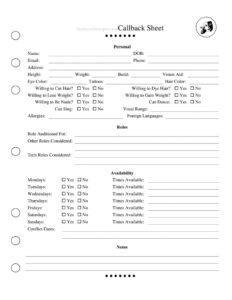
A complete Callback Sheet is organized into clear sections so information is easy to scan during a busy callback. It should include a personal/contact block (name, date of birth, email, phone, address), a physical description (height, weight, build, eye color, hair color, vision aid, tattoos), and flexibility questions about appearance and willingness to perform certain content. It should also capture performance skills such as singing, dancing, vocal range, foreign languages, and allergies that might affect costuming or props. Finally, it needs a roles section for the part auditioned for and any alternates, plus a detailed availability grid covering each day of the week, times, and conflict dates. A notes area rounds it out for the director’s observations.
How to Fill Out a Callback Sheet
- Under Personal, enter the actor’s full Name, DOB, Email, Phone, and Address so the team can reach them later.
- Record physical details: Height, Weight, Build, and whether the actor uses a Vision Aid (glasses or contacts) onstage.
- Note Eye Color, Hair Color, and any visible Tattoos that may need covering or could suit a role.
- Answer the flexibility questions honestly: Willing to Cut Hair?, Willing to Dye Hair?, Willing to Lose Weight?, Willing to Gain Weight?, and Willing to Be Nude?
- Check off skills under Can Dance and Can Sing, then list the Vocal Range, any Allergies, and Foreign Languages spoken.
- In the Roles section, write the Role Auditioned For, then any Other Roles Considered and Tech Roles Considered.
- Complete the Availability grid for Mondays through Sundays, add Times Available, list Conflicts Between the two date fields, and use Notes for anything else.
Why Each Section Matters in Casting
Every block on the Callback Sheet feeds a real decision. The physical description and appearance-flexibility answers help a director picture an actor in costume, in wigs, or alongside other cast members for visual balance. Skill fields — singing, dancing, vocal range, and languages — separate candidates who can carry a demanding role from those better suited to ensemble work. The allergy field is a safety consideration, since some productions use stage fog, certain fabrics, or food props. The roles section lets a director see flexibility: an actor who auditioned for a lead might be ideal for a supporting part or even a backstage tech role, and noting that early prevents losing good people from the production entirely.
Tips for Using the Availability Grid
The scheduling portion is where many productions run into trouble after casting. Encourage actors to be specific in the daily grid rather than writing a blanket “available.” If someone can rehearse Monday through Thursday evenings but not weekends, that belongs in the Times Available and day fields. The Conflicts Between [Date] and [Date] line is for vacations, exams, other shows, or work trips that fall during the rehearsal and performance window. Capturing this honestly up front protects everyone — a director can weigh conflicts before offering a role, and the stage manager can build a realistic calendar. Always confirm the production’s start and closing dates so actors know exactly which conflicts to disclose.
Common Mistakes to Avoid
- Leaving contact fields incomplete — a missing phone or email can mean an actor never hears about the cast list.
- Vague availability that simply says “flexible” instead of listing specific days and times.
- Skipping the appearance-flexibility questions, which leaves the director guessing about hair and weight options.
- Forgetting to list the conflict dates, leading to scheduling clashes during tech week or performances.
- Overstating skills like vocal range or dance ability that cannot be backed up in the room.
- Not noting allergies, which can create safety problems with stage materials, costumes, or props.
Frequently Asked Questions
What is a Callback Sheet used for? It is used by theater productions to collect detailed information from actors invited to a second-round audition. The sheet records contact details, physical attributes, performance skills, role interests, and rehearsal availability so the casting team can compare candidates and make informed final decisions.
How do I fill out a Callback Sheet? Start with the personal and contact information, then complete the physical description and appearance-flexibility questions. Add your singing, dancing, and language skills, indicate the role you auditioned for and any alternates, and finish with a detailed availability grid noting your weekly schedule and any conflict dates.
Is a Callback Sheet legally binding? No, a Callback Sheet is an informational intake form for casting purposes and is not a contract. Casting offers, employment terms, and any union agreements are handled separately through formal documents, so the sheet itself does not commit either party.
Why does the form ask about willingness to cut or dye hair? Many roles call for a specific look, and changing hair or weight is a common request in theater. Answering these questions up front lets the director know which transformations you are open to before a role is offered, avoiding surprises later.
Do I have to answer every field? Productions generally prefer complete forms, but you should answer honestly and leave blank anything that doesn’t apply or that you’re not comfortable disclosing. The availability and contact sections are the most important to complete fully so the team can schedule and reach you.
How much does this Callback Sheet template cost? Nothing — this Callback Sheet is completely free to download from Business Forms Pro in both PDF and DOCX formats. There is no signup required, and you can edit the DOCX version to match your production’s specific roles, dates, and branding.
This Callback Sheet template is provided as a general example for informational purposes only and does not constitute legal, employment, or professional advice. Casting practices, union rules, and disclosure requirements vary by organization and jurisdiction — consult the appropriate professional or your production’s leadership for guidance specific to your situation.
Related Forms
Browse more in Theater.