
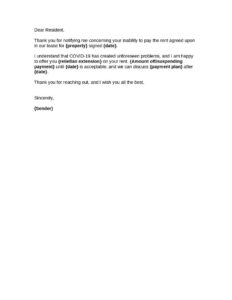
Covid Rent Extension Landlord
Use this free COVID Rent Extension Landlord form to document a temporary rent payment extension for tenants in writing — free download in PDF and DOCX.
DOCX
0
likes
Download Files
- DOCX
A COVID Rent Extension Landlord form is a written agreement a landlord provides to a tenant to formally grant extra time or an adjusted schedule for paying rent during a hardship period such as the COVID-19 pandemic. People use it most often to document a temporary deferral or repayment plan so both sides have a clear, signed record instead of a verbal promise. You can download this template free in PDF and DOCX, with no signup required.
What Is a COVID Rent Extension Landlord Form?
A COVID Rent Extension Landlord form is a short, plain-language document a landlord issues to confirm that a tenant may pay rent later than the normal due date, or in agreed installments, because of pandemic-related financial hardship. It identifies the property, the parties, the amount affected, and the new payment terms. It does not cancel the rent obligation; it simply restructures the timing so the tenant avoids immediate default and the landlord keeps a paper trail. Landlords, property managers, and small private owners use it to keep tenancies stable during difficult periods while protecting their right to collect the full balance once the agreed extension period ends.
When Do You Need a COVID Rent Extension Landlord Form?
- A tenant has lost income due to a layoff, reduced hours, or business closure and asks for more time to pay the current month’s rent.
- You want to convert an informal phone conversation about late rent into a written, signed agreement.
- A reliable long-term tenant falls behind temporarily and you prefer a documented repayment plan over starting eviction.
- You manage multiple units and need a consistent, fair form to offer the same terms to several affected tenants.
- A tenant has applied for rental assistance and needs proof that you have agreed to delay enforcement while funds arrive.
- You need a clear record of any extension for your bookkeeping, lender, or insurer.
What a COVID Rent Extension Landlord Form Should Have
To be useful and enforceable as an addendum to the lease, the form should clearly capture several elements. These include the full legal names of the landlord and tenant, the rental property address, and a reference to the original lease. It should state the rent amount affected, the original due date, and the new due date or installment schedule. It should also note whether late fees are waived during the extension, confirm that the underlying rent is still owed, and include the date the agreement is signed plus signature lines for both parties. A short statement that all other lease terms remain in full force ties the extension back to the existing agreement.
How to Fill Out a COVID Rent Extension Landlord Form
- Date the agreement. Enter the date you and the tenant are signing so the timeline is clear from the start.
- Identify the parties. Write the landlord’s (or property manager’s) full legal name and the tenant’s full legal name exactly as they appear on the original lease.
- Enter the property address. Include the unit number, street, city, state, and ZIP so the form ties to a specific tenancy.
- Reference the lease. Note the date of the original lease being modified by this extension.
- State the affected rent. Record the monthly rent amount and the period or months for which payment is being extended.
- Set the new terms. Specify the new due date, or list the installment amounts and dates if the balance will be repaid over time.
- Address late fees. Indicate whether late charges are waived or suspended during the extension window.
- Confirm the balance remains owed. Make clear the rent is deferred, not forgiven.
- Sign and keep copies. Both the landlord and tenant sign and date; give the tenant a copy and retain the original.
Deferral, Forgiveness, or Repayment Plan?
It helps to be precise about what you are actually offering, because the words carry very different financial consequences. A deferral simply pushes the same amount to a later single date. A repayment plan spreads the past-due balance across several future months on top of ongoing rent. Forgiveness means you waive part or all of the rent and will never collect it — a major decision that most landlords avoid unless rental assistance covers the gap. This form is generally used for deferral or repayment, so make sure the language you fill in matches your intent. Spelling this out prevents a tenant from later believing the rent was forgiven when you meant it was only delayed.
Keeping It Attached to the Lease
Treat this document as an addendum rather than a replacement for the lease. Reference the original lease by date, state that every other term remains unchanged, and store it with your lease file. If your jurisdiction enacted temporary pandemic protections, repayment timelines, or notice requirements, your written terms should not conflict with them. Because emergency rules changed frequently and varied widely by city and state, check what currently applies in your area before finalizing terms. When in doubt, keep the language simple and consistent with the protections your tenant may already have.
Common Mistakes to Avoid
- Leaving the agreement verbal — without signatures, neither party can prove what was promised.
- Failing to state clearly that the rent is deferred and still owed, which can create a dispute later.
- Forgetting to specify exact new due dates or installment amounts, leaving the schedule open to interpretation.
- Not addressing whether late fees apply, which often becomes the biggest point of friction.
- Using tenant names or addresses that don’t match the original lease, weakening the connection to the tenancy.
- Ignoring local emergency ordinances that may set minimum repayment periods or override your terms.
Frequently Asked Questions
What is a COVID Rent Extension Landlord form used for? It is used to document, in writing, that a landlord agrees to give a tenant extra time or a modified schedule to pay rent during pandemic-related hardship. It protects both parties by recording the new terms while confirming the rent remains owed. It is most often used instead of starting eviction over a temporary shortfall.
Does this form forgive the tenant’s rent? No, not unless you specifically write that in. By default this form defers or reschedules rent — the tenant still owes the full amount under the new timeline. If you intend to waive any portion of the rent, you must state that forgiveness explicitly and clearly.
Does the form need to be notarized or witnessed? In most situations a signed agreement between landlord and tenant is sufficient and notarization is not required. However, requirements vary by location, and some landlords add witness or notary lines for extra certainty on larger balances. Check your local rules if you are unsure.
Is a signed rent extension legally binding? Once both the landlord and tenant sign, the document generally functions as an enforceable addendum to the existing lease. To hold up well, the terms should be specific, consistent with the original lease, and not in conflict with any local emergency tenant protections. Keeping a signed copy is essential.
How much does this template cost? The COVID Rent Extension Landlord template is completely free to download from Business Forms Pro in both PDF and DOCX formats. There is no signup or payment required. You can edit the DOCX version to match your property and terms.
Can I use this for non-COVID hardship too? Yes. While the form is framed around pandemic hardship, the same structure works for any temporary financial difficulty a tenant faces, such as job loss or a medical emergency. Simply adjust the reason and terms to fit the situation.
This template is a general example provided for informational purposes only and is not legal, financial, or tax advice. Landlord-tenant rules and emergency protections vary by jurisdiction and change over time. Consult a qualified attorney or housing professional before relying on this document.
Official resource: for the rules that apply to your situation, see HUD.
Related Forms
- Rent Demand Letter
- Covid Utilities Relief Landlord
- Rental Agreement Violation
- Agreement On Tenant Alterations To Rental Unit
- Consent To Assignment Of Lease
- Tenant Late Rent Log
Browse more in Landlord Documents.